

That pile of worn-out denim in your closet is not trash. It is inventory. Denim is one of the most durable fabrics you can work with, and buyers actively seek out handmade pieces that carry an upcycled story.
The global resale and upcycling market keeps growing because people want items that feel intentional, not mass-produced. You do not need a studio or expensive equipment. A pair of scissors, a needle, and a free afternoon are enough to start.
Below are 14 denim craft ideas that real people are making and selling right now. Some take twenty minutes. Others take a weekend. All of them turn discarded jeans into something someone will pay for.
1. Cement-Dipped Denim Planters
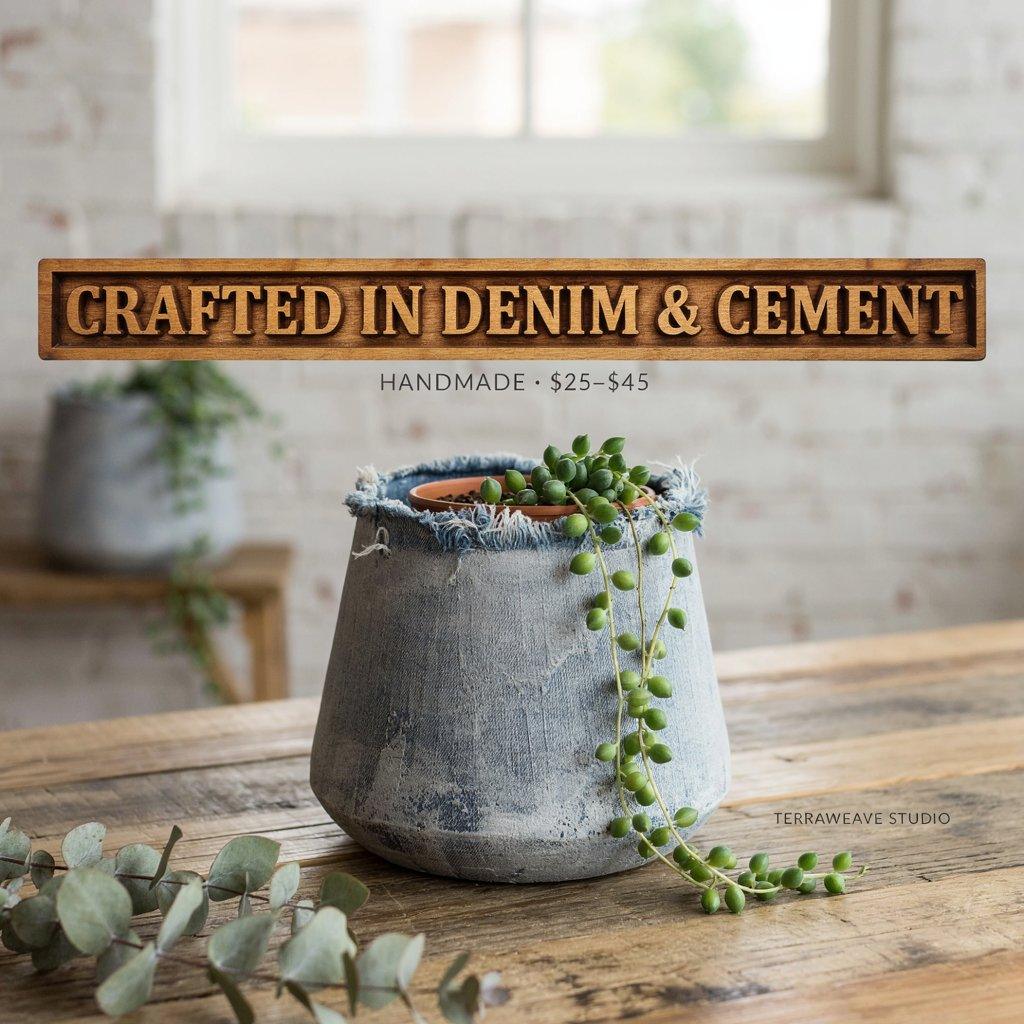
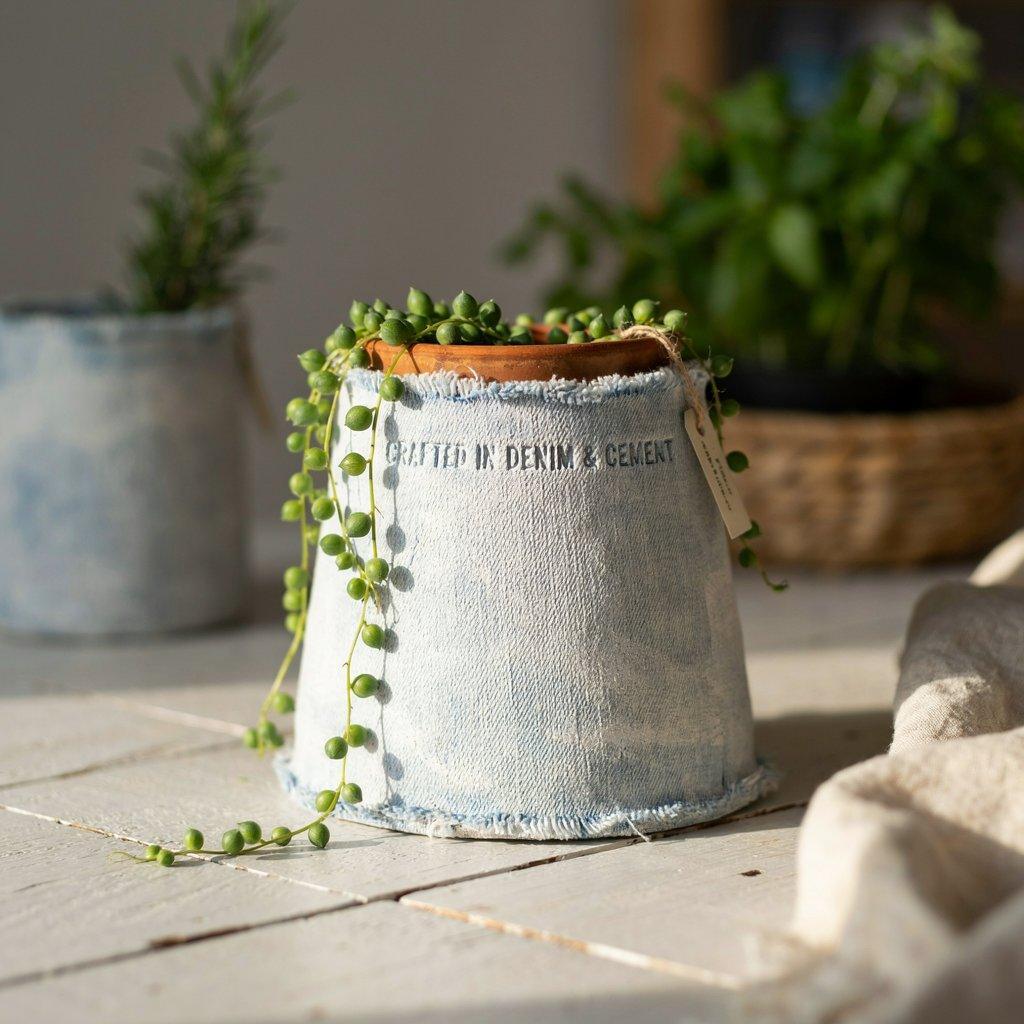
This one surprises people every time. You soak strips of old denim in a cement slurry, drape them over an upside-down bucket, and let them harden.
The result is a sculptural, industrial-style planter that looks like it came from a boutique. Mix Portland cement with water until it reaches a thick, yogurt-like consistency, then dip your denim strips and layer them into shape. Once dry, the fabric holds its form permanently.
These sell well at farmers markets and garden centers. Price them between $25 and $45 depending on size. Use a nursery pot inside rather than planting directly, so the cement does not crack from moisture.
2. Braided Denim Dog Chew Toys

Dog owners spend real money on toys that survive more than a week. Denim is one of the few fabrics that can handle heavy chewers.
Cut three long strips from a jeans leg, about two inches wide and twenty inches long. Knot them at one end and braid tightly. Add a squeaker in the middle if you want, then knot the other end securely. Thick, non-stretch denim works best.
These toys cost almost nothing to make and sell for $12 to $18 at craft fairs and online pet marketplaces. Batch production is key here. Cut twenty sets of strips at once, then braid assembly-line style while watching TV.

3. Layered Denim Earrings
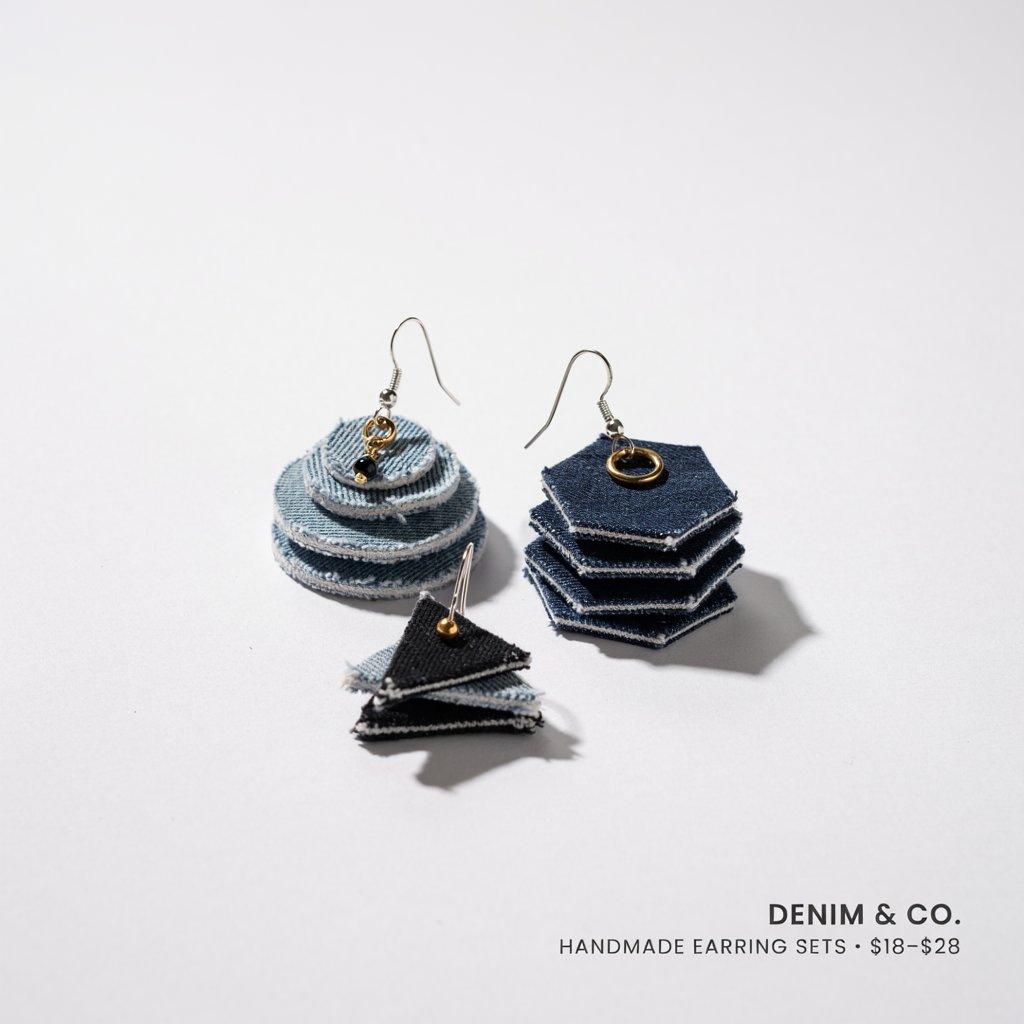
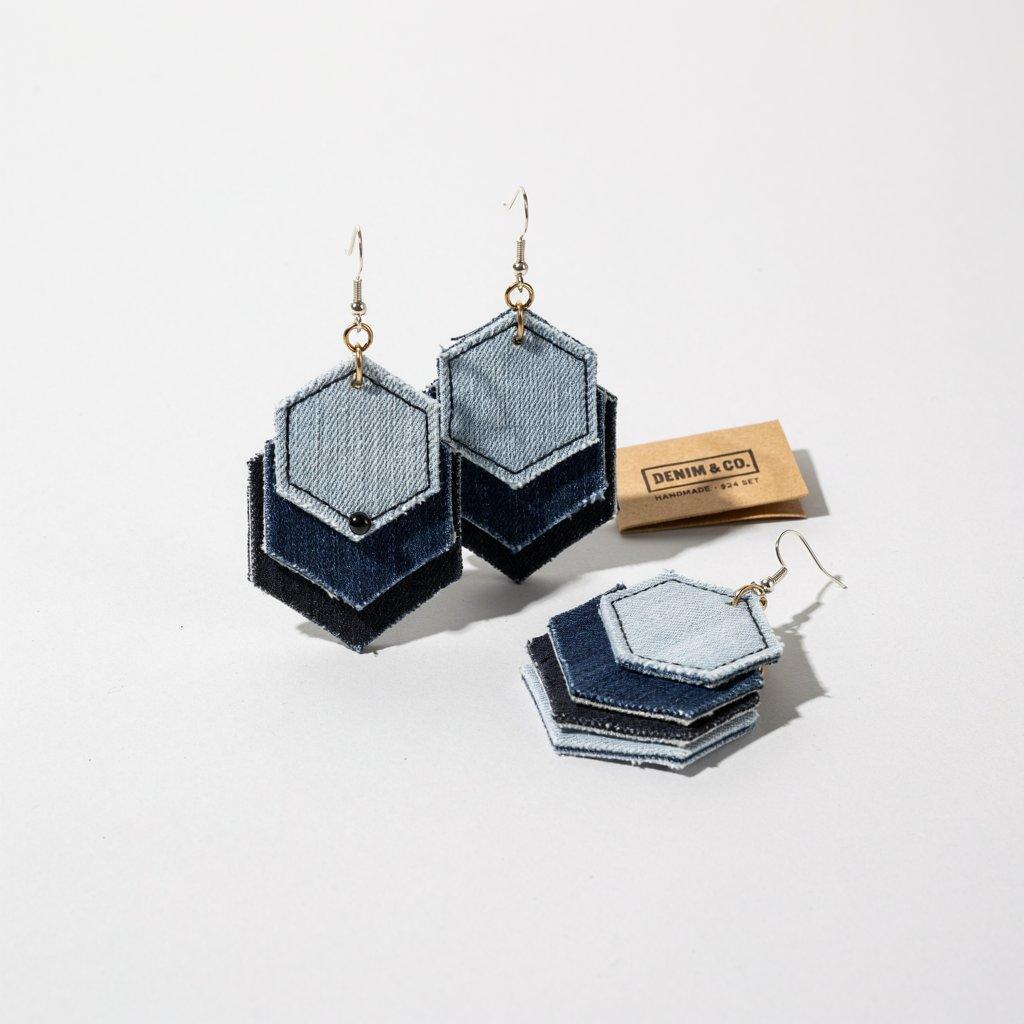
Denim jewelry sounds odd until you see it. Multiple layers of denim scraps glued together create a lightweight, geometric shape that feels modern and organic.
Cut small circles, triangles, or hexagons, stack three to four layers with fabric glue, and attach hypoallergenic hooks. Add a single bead or a brass ring for contrast. A pair takes under fifteen minutes to assemble. Sell them as sets at $18 to $28. The key is color variation.
Use light wash, dark indigo, and black denim in the same collection so buyers can mix and match. Photograph them on a plain white background with natural light.
4. Denim Book Covers and Journals
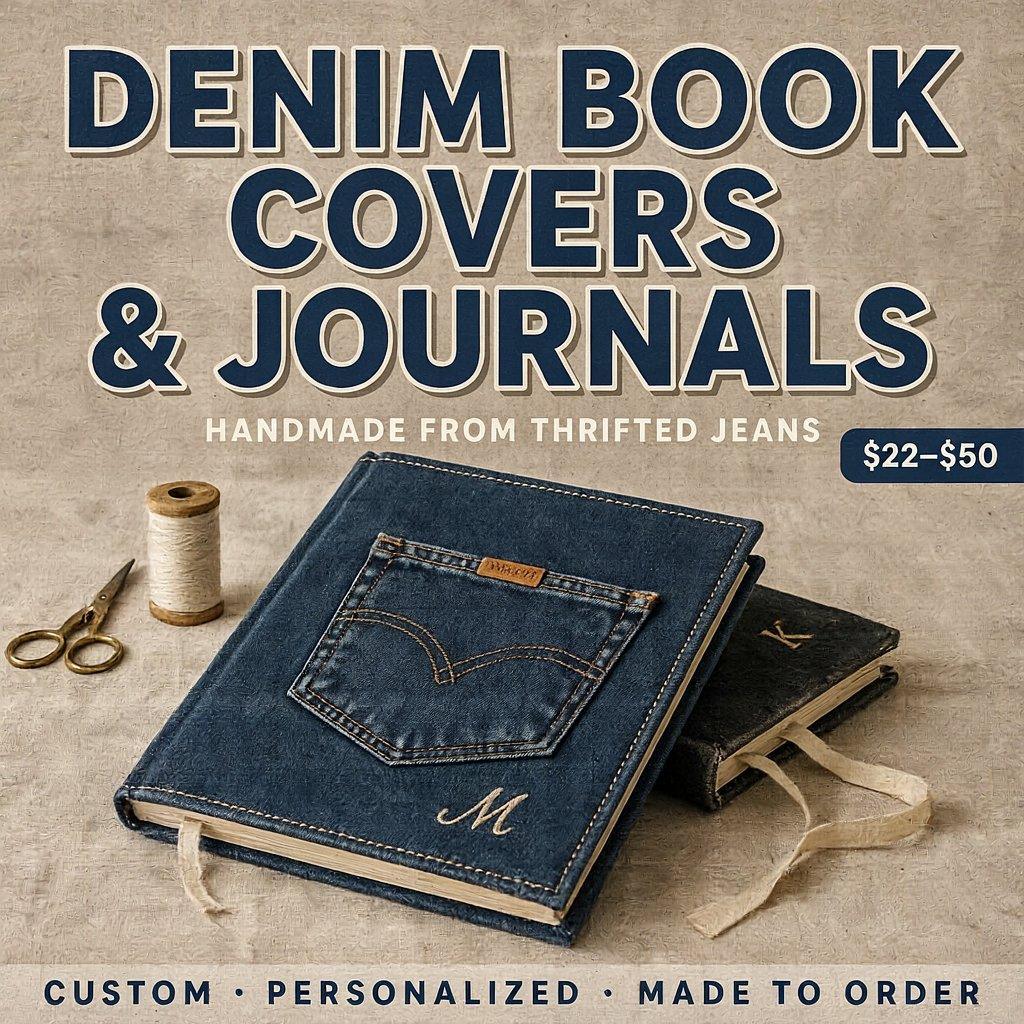
Thrifted denim makes excellent bookcloth because it is thick and holds structure. Cut a rectangular panel from a jeans leg, fold the edges inward, and stitch pockets at both ends to hold the book cover.
You can add a back pocket from the original jeans as a functional detail. These sell particularly well as custom journals and sketchbook covers.
Offer personalization with a stamped initial or a small embroidered patch. Price plain covers at $22 to $30, personalized ones at $35 to $50. The thicker the denim, the better the result. Avoid stretchy jeans for this project.

5. Denim Laptop Sleeves
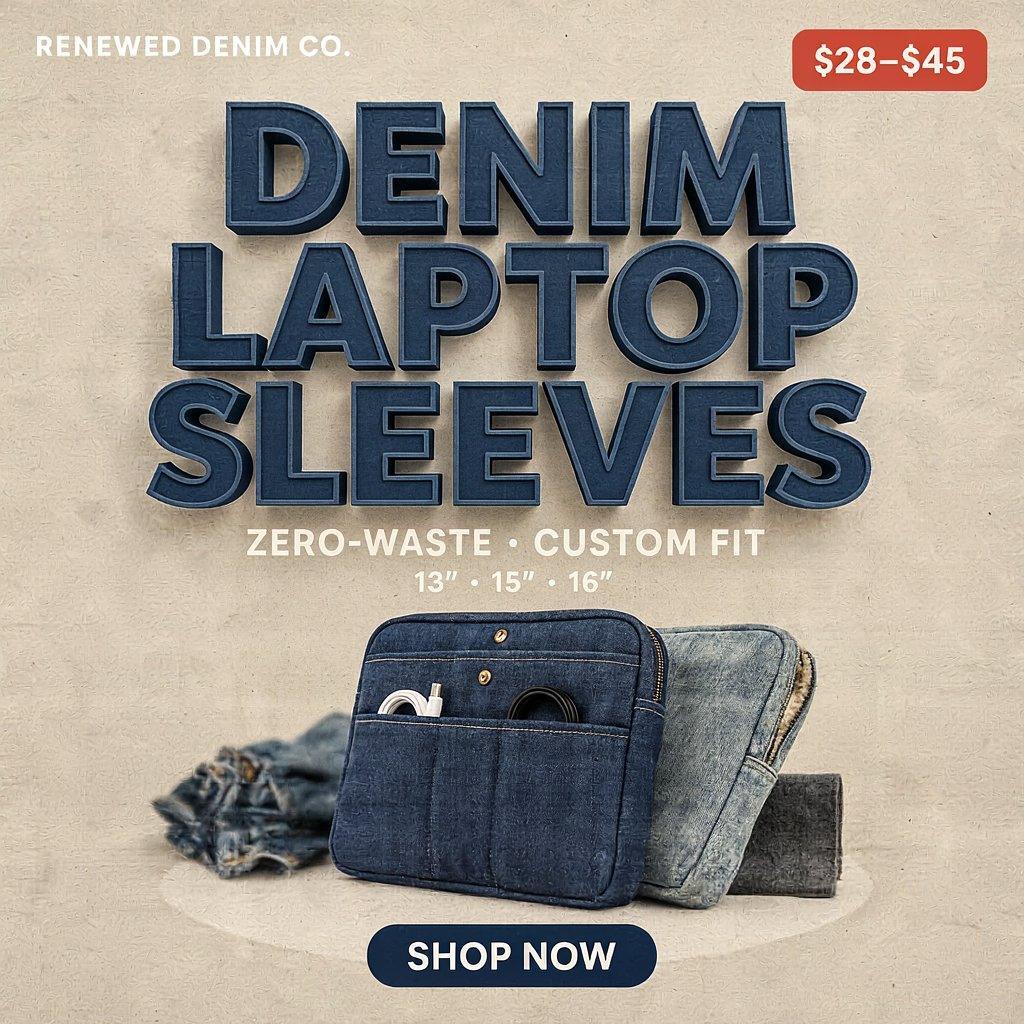
A laptop sleeve made from old jeans is durable, padded, and genuinely protective. You need two rectangular panels of denim, a fleece or felt lining, and a closure.
Cut the denim about an inch larger than your laptop on all sides, sew the lining to the inside, and add a snap or Velcro closure. Add a small denim pocket on the front for cables.
These sell for $28 to $45 depending on size and finish. Custom sizing is a selling point. Offer sleeves for 13-inch, 15-inch, and 16-inch laptops and market them as zero-waste alternatives to neoprene cases.

6. Woven Denim Wall Hangings

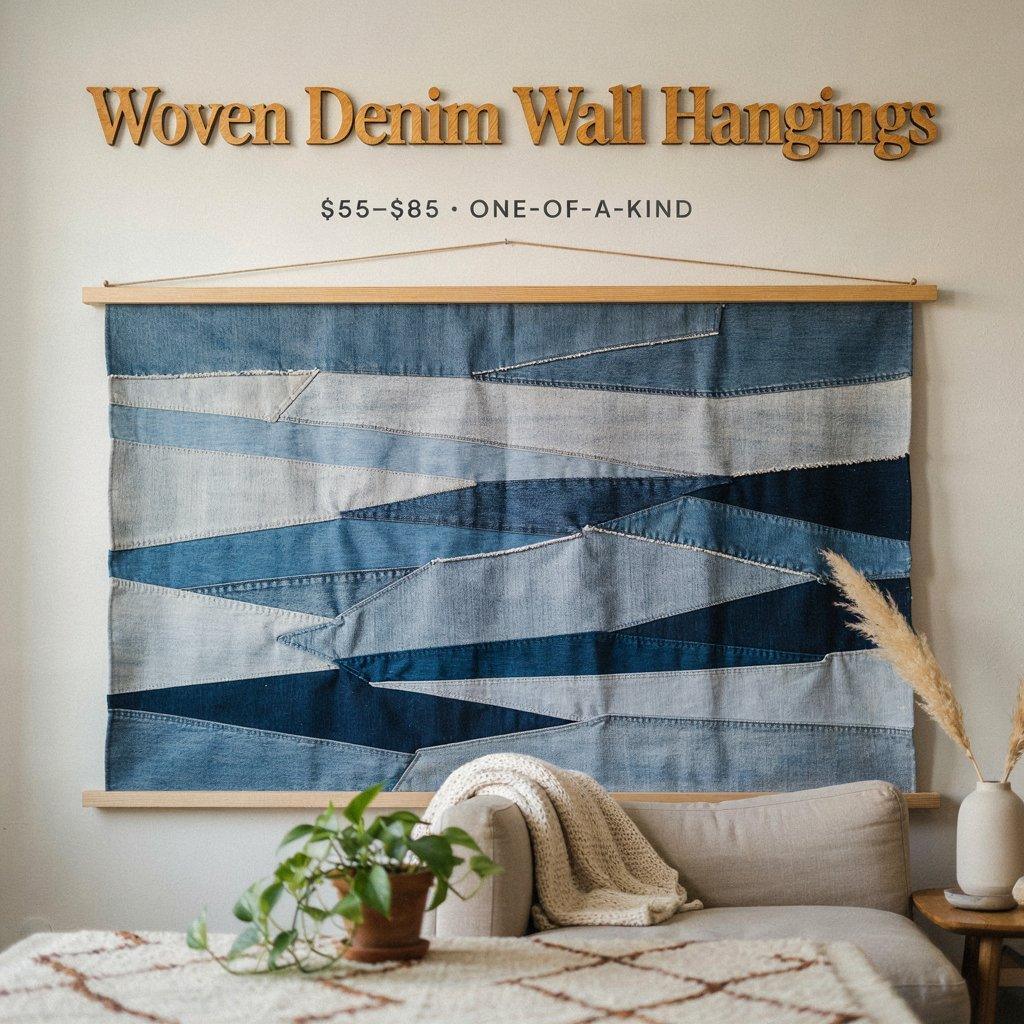
Textile wall art is trending, and denim’s natural texture makes it a perfect medium. Cut denim into thin strips and weave them through a simple wooden frame or an embroidery hoop.
Overlap pieces at angles for a layered, abstract look. Mix light and dark washes to create visual depth. A medium-sized piece, around 16 by 20 inches, sells for $55 to $85.
Larger statement pieces can reach $150. The beauty of this craft is that no two are identical. Buyers pay for the one-of-a-kind factor. Use a staple gun for the backing and a simple dowel for hanging.
7. Denim Cord Organizers and Cable Wraps
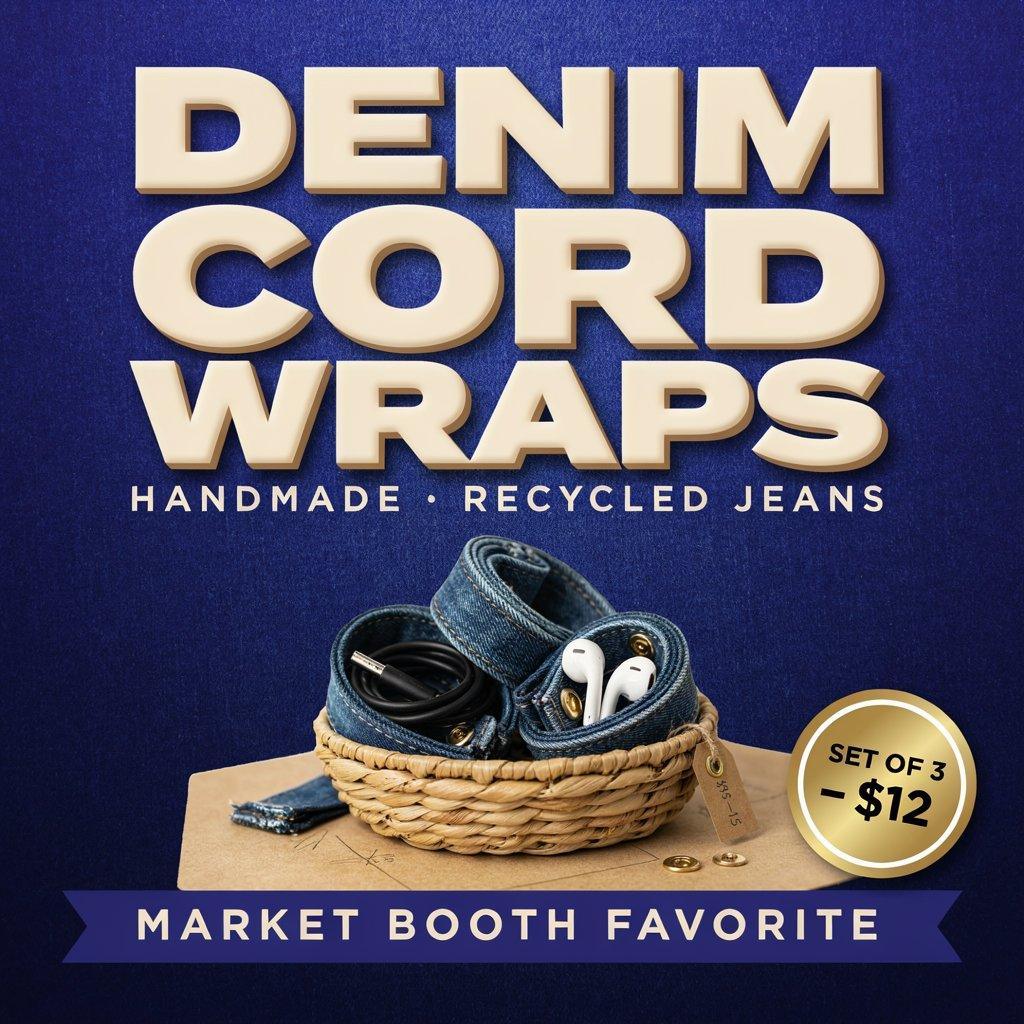
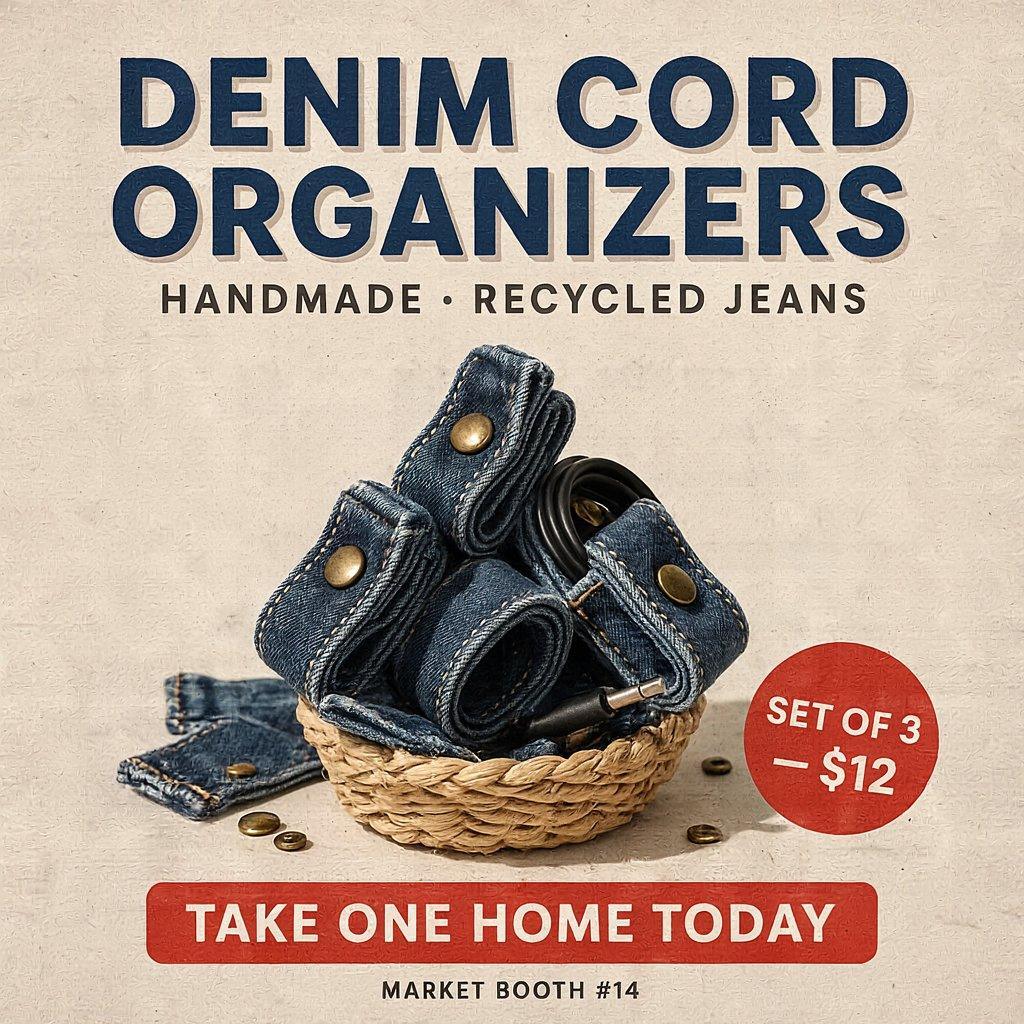
This is the impulse buy that every market booth needs. Cut denim into strips about one inch wide and six inches long.
Fold them into a loop, add a snap fastener, and you have a cord wrap that keeps headphones and charging cables tidy. The Economic Times highlights cord organizers as one of the most popular handmade items from old jeans because they are fast to make and easy to sell.
Make them in sets of three and price each set at $10 to $15. They cost pennies in materials and take under five minutes each. Display them in a small basket near your register.
8. Upcycled Pocket Pouches
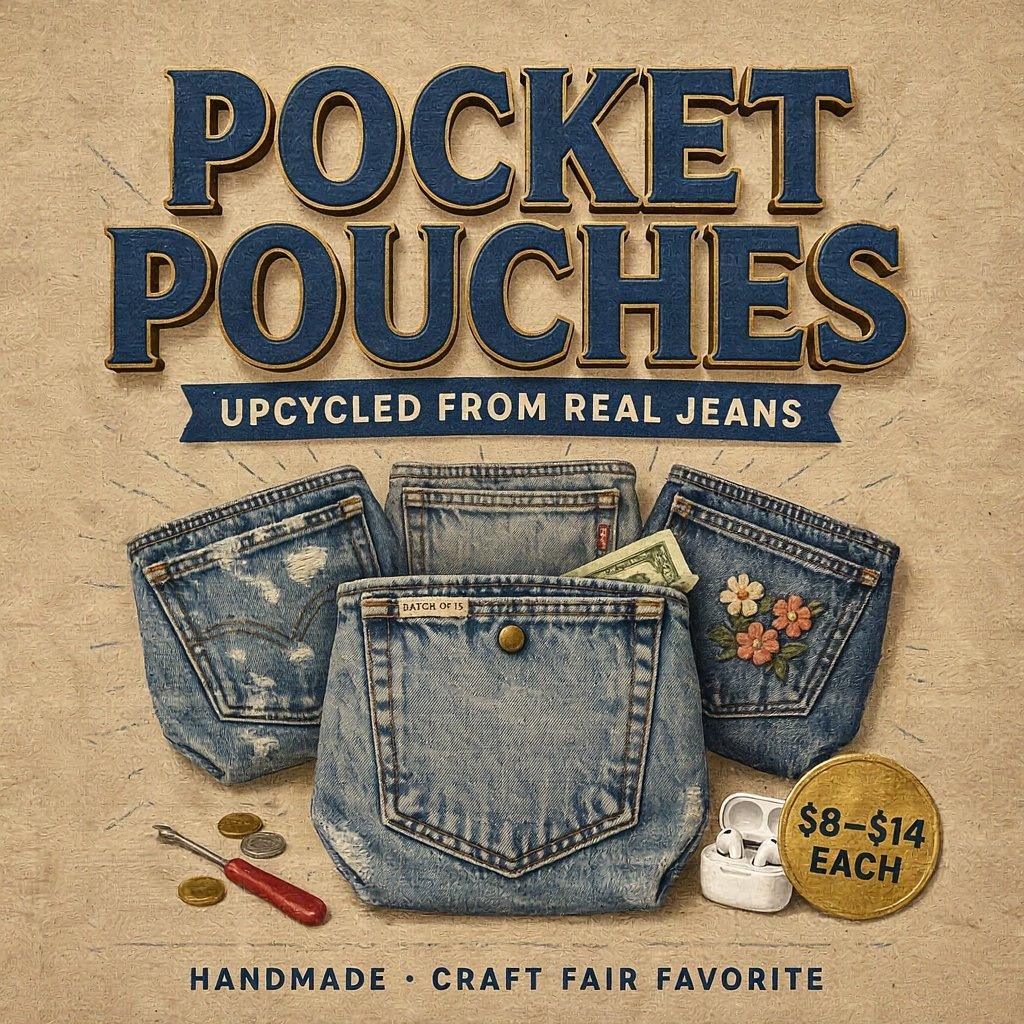
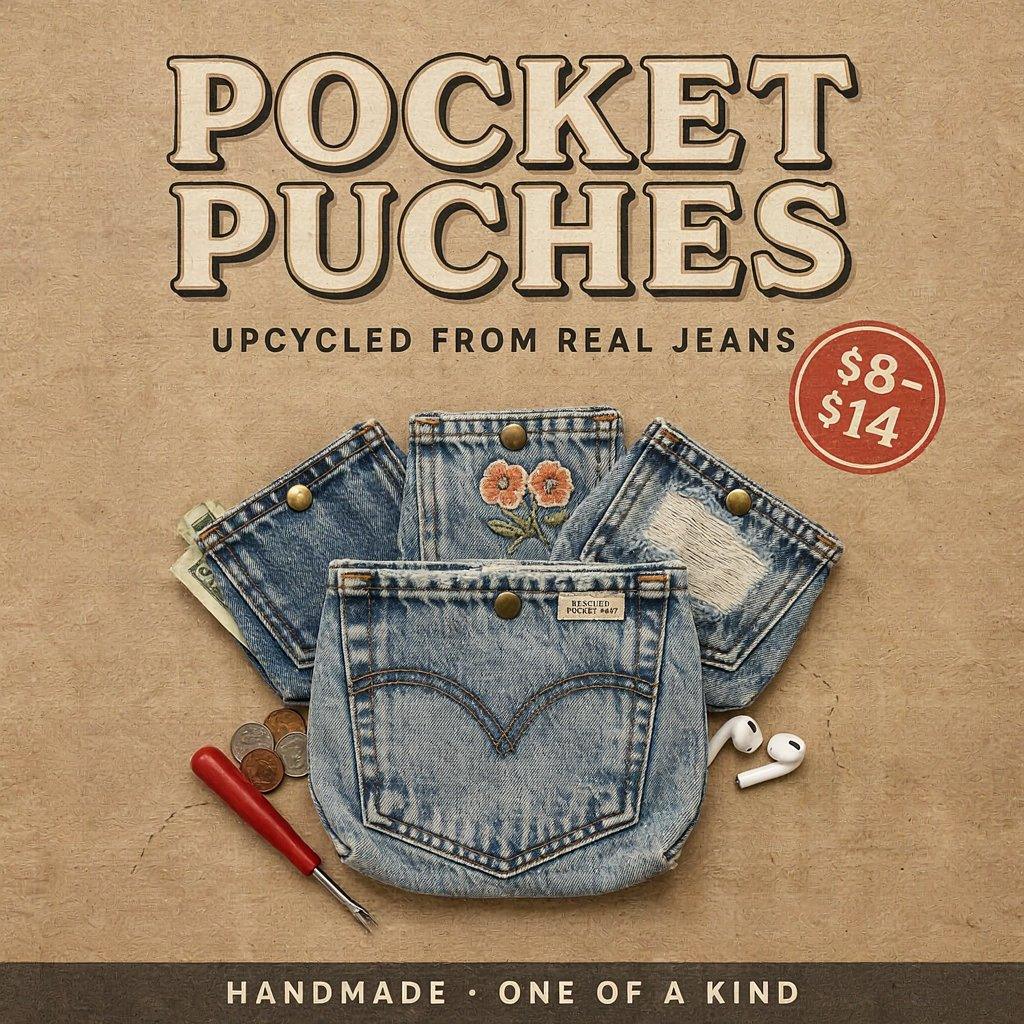
The back pockets of jeans already have stitching, wear patterns, and character. Use a seam ripper to remove them intact, then add a magnetic closure near the top opening.
These tiny pouches hold coins, earbuds, or cash. They sell for $8 to $14 each. The key is choosing pockets with interesting fading or embroidery. Batch fifteen at a time.
Attach a small label that explains the pocket came from a real pair of jeans. Buyers respond to that authenticity. This is one of the fastest denim crafts to produce and one of the easiest to sell at craft fairs.
9. Denim Table Runners

A table runner made from mixed denim washes brings a weight and texture that other fabrics cannot match. Sew rectangular panels together lengthwise, press the seams flat, and finish the edges with a simple hem. Standard runners sell for $35 to $55.
Wider or longer pieces with decorative top-stitching command $65 to $90. Sets of two are especially popular for holiday markets.
Use heavyweight denim for structure and avoid lightweight stretch fabrics, which pucker when sewn. This project takes longer than the small accessories, but the profit margin per piece is significantly higher.

10. Denim Phone Cases and Sleeves

A fabric phone case made from denim is soft, protective, and customizable. Cut a rectangle that covers your phone plus seam allowance, add a lining, and sew the sides closed.
Add a Velcro tab for closure and a small loop for a wrist strap. These sell for $15 to $22. The real selling point is decoration. Add bead embroidery, a painted design, or a small embroidered initial. Custom orders are where the money is.
Offer a “send me your old jeans” service where customers mail you their denim and you return a phone case made from their own fabric. Charge $35 to $45 for that.

11. Denim Lampshades

Covering an old lampshade with denim gives it a rustic, industrial feel that fits modern interiors. Cut denim into small rectangular patches and glue or stitch them onto the shade surface.
You can also weave denim strips around a wire frame for a more sculptural look. These sell at vintage markets and home decor boutiques for $40 to $70.
The project takes an evening but uses up small scraps that would otherwise be thrown away. Use a neutral, warm-toned bulb so the blue denim does not cast a cold light. Pair with a simple wooden or metal base.

12. Denim Coasters with Frayed Edges

Frayed denim coasters are the entry-level product every denim crafter should make first. Cut four-inch squares from jeans legs, then pull loose threads along the edges to create a soft fringe.
Denim absorbs condensation well, so they are genuinely functional. Bundle a set of four with twine and sell for $12 to $18. These take about ten minutes per set once you have a rhythm.
They are perfect for market booths because they are small, lightweight, and priced low enough for impulse purchases. Use 100% cotton denim, not stretch blends, for the best fraying.

13. Denim Keychains and Tassels
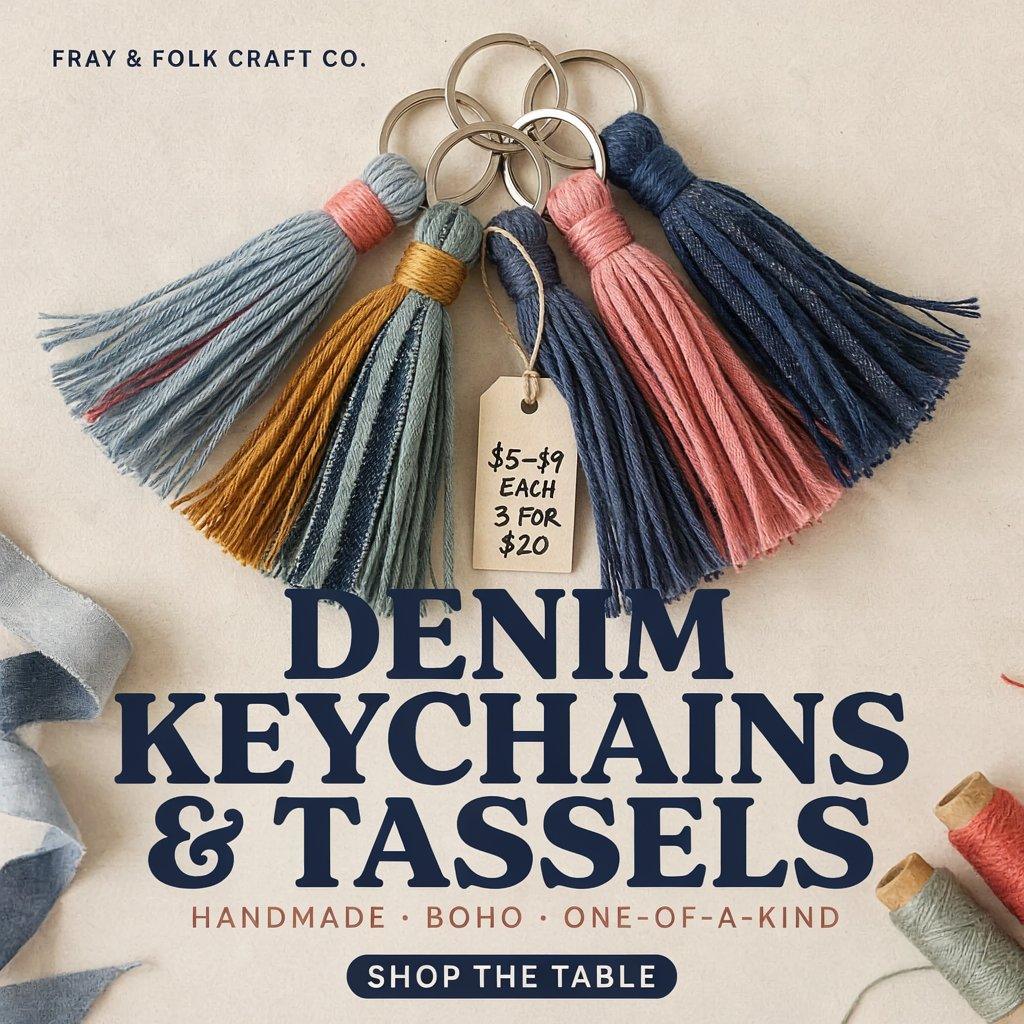
Slice leftover denim into thin ribbons, thread them through a split key ring, and bind the top section tightly with colorful craft thread. The frayed ends create a boho tassel effect that buyers love.
These sell for $5 to $9 each, or three for $20. They are the cheapest item on your table and the one that gets people to stop and look.
Once someone picks up a keychain, they are far more likely to browse your larger pieces. Make them in every color of denim you have, from pale wash to near-black.

14. No-Sew Denim Journals
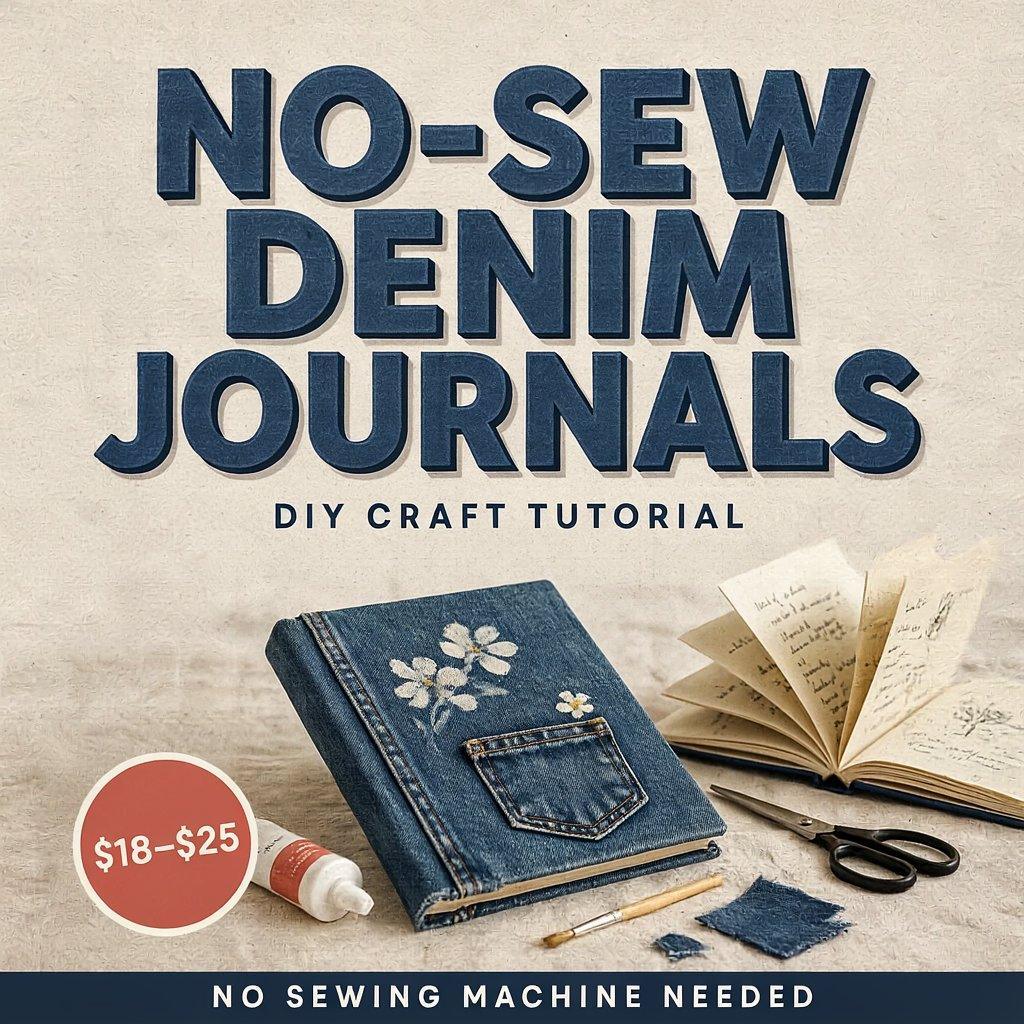
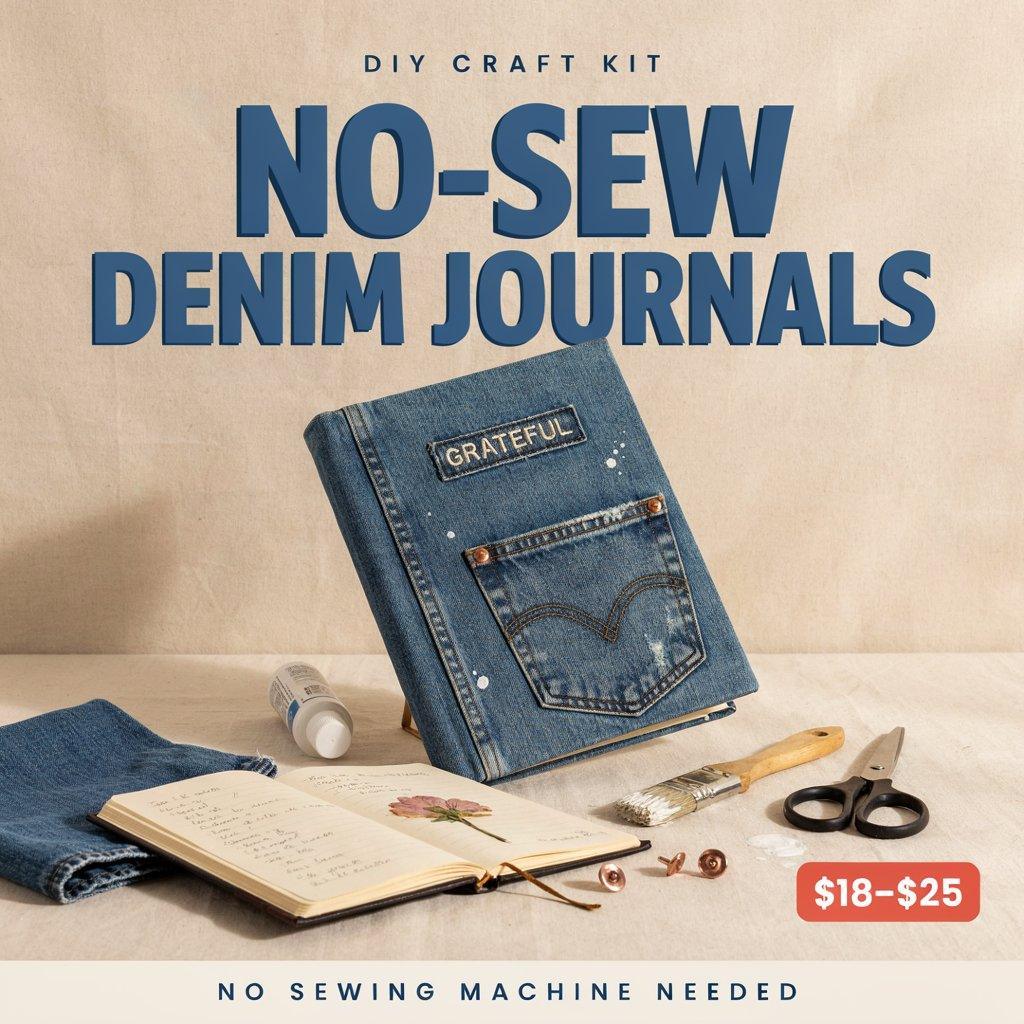
If you do not own a sewing machine, this is your project. Wrap a plain notebook in a panel of denim cut from a jeans leg. Use fabric glue to secure the edges, then add a decorative element like a painted design, a stitched-on patch, or a small back pocket from the original jeans.
No-Sew Denim Journals can be filled with whatever pages you like, making them flexible for different buyers. Sell them as gratitude journals, recipe books, or sketchbooks. Price at $18 to $25. The no-sew approach means anyone can start making these today with materials already in their home.
Frequently Asked Questions
What kind of denim works best for these crafts?
Heavyweight, 100% cotton denim without stretch is best for almost every project. Stretch denim is harder to cut cleanly and does not hold shape well for structured items like planters or pouches. Check the label for at least 98% cotton.
How do I source old jeans cheaply?
Thrift stores often sell damaged jeans in bargain bins for a dollar or two. Ask friends and family for their unwearable pairs. Most people are happy to give away torn clothing rather than throw it out. Estate sales and garage sales are also good sources.
How should I price my denim crafts?
Small items like keychains and coasters should be priced for impulse buys, between $5 and $15. Mid-range items like pouches and earrings sit comfortably at $12 to $28. Larger pieces like table runners and wall hangings can go for $35 to $150 depending on size and finish.
Do I need a sewing machine?
No. Several projects on this list, including the journals, the coasters, and the keychains, require no sewing at all. A sewing machine expands what you can make, but it is not a barrier to starting.
Where can I sell these items?
Local craft fairs, farmers markets, and community flea markets work well for in-person sales. Online, Etsy and Facebook Marketplace are the most accessible starting points. Instagram and Pinterest are effective for driving traffic to your listings if you post process photos.
Conclusion
Old jeans are not waste. They are raw material. The fourteen projects above range from ten-minute keychains to weekend planters, and every single one can be made with tools you already have. The denim crafting market rewards people who move quickly and price fairly.
Start with one project. Make five of them. See what sells. Then scale what works. Your closet is full of inventory, and someone out there is willing to pay for what you make from it.
Related Post: