
Your backyard should be a place where to relax. But if you’re tripping over garden tools, kids’ toys, and sports equipment every time you step outside, it’s hard to unwind.
Outdoor storage doesn’t have to be expensive or complicated. Whether you have a small patio or a big yard, there’s a solution that works for your space and your budget.
This guide covers 25 outdoor storage ideas. Some are ready-to-buy products that arrive in a box. Others are DIY projects you can build in a weekend using basic tools. Pick what fits your needs.
Large Outdoor Storage Sheds (Ready to Assemble)
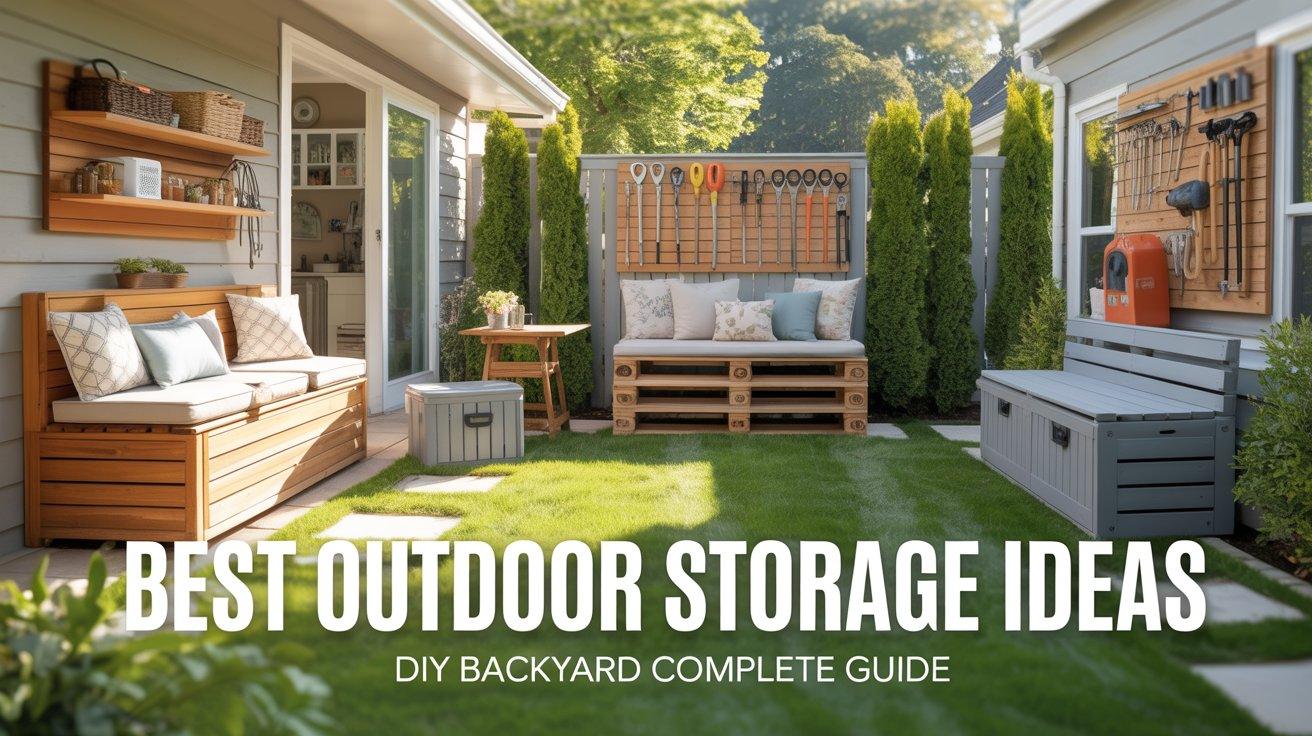
These sheds are your best bet if you need to store lawnmowers, bikes, patio furniture, or lots of gardening supplies. They come in large boxes and take a weekend to assemble.
1. Lifetime 15×8 Ft Dual‑Entry Outdoor Storage Shed
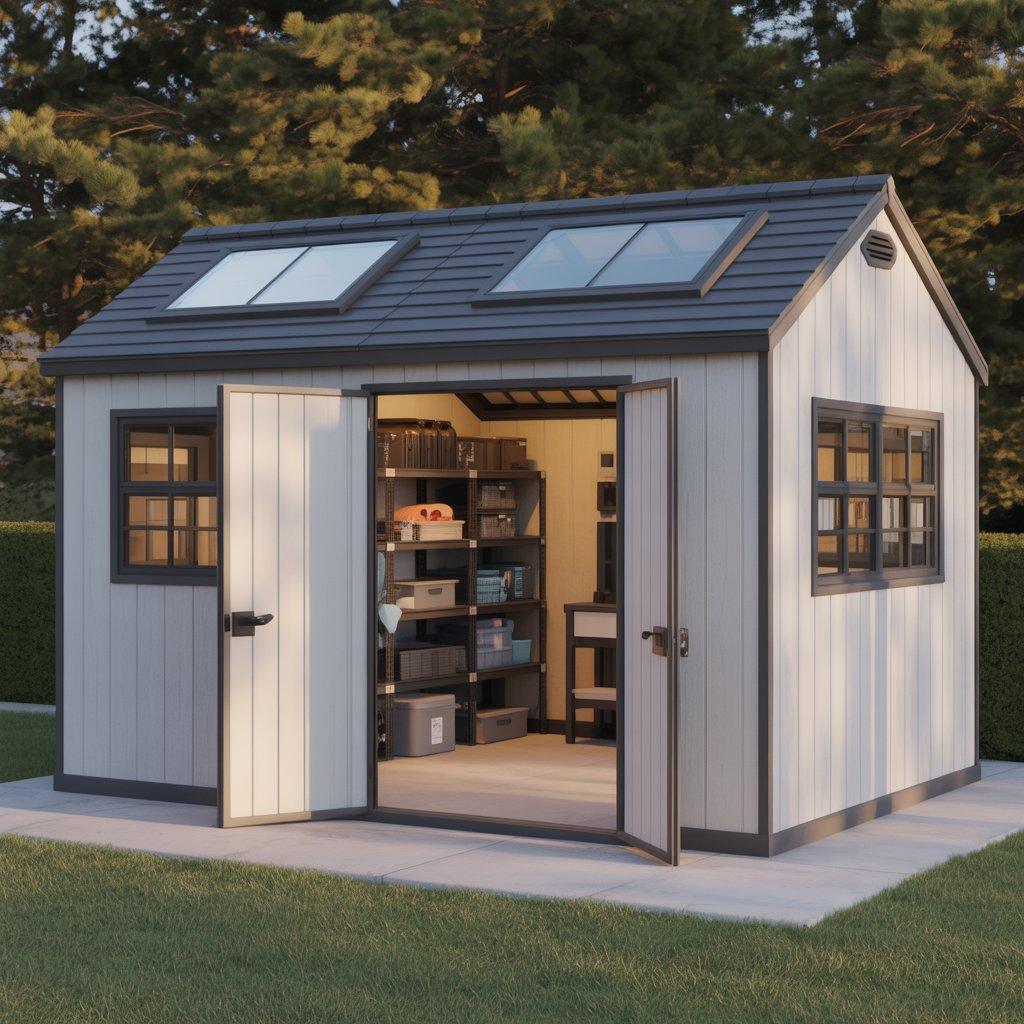
A spacious steel-reinforced shed with dual entry doors, skylights, windows, and built-in shelving.
This shed gives you 109 square feet of interior space. The exterior is made of high-density polyethylene (HDPE) that resists UV rays and cracking. You never have to paint it. Two skylights let in natural light.
The floor is slip-resistant and stands up to oil and solvents. Two windows open for ventilation. The double doors are lockable for security. Assembly takes two people and a level foundation.
Pros: No maintenance, large capacity, includes floor and shelving, UV-protected, looks attractive.
Cons: Heavy (around 600 lbs), requires a concrete or gravel base, assembly takes 6‑10 hours.
Check price on Amazon.com – Lifetime Dual Entry Outdoor Storage
2. Lifetime 20×8 Ft Outdoor Storage Shed
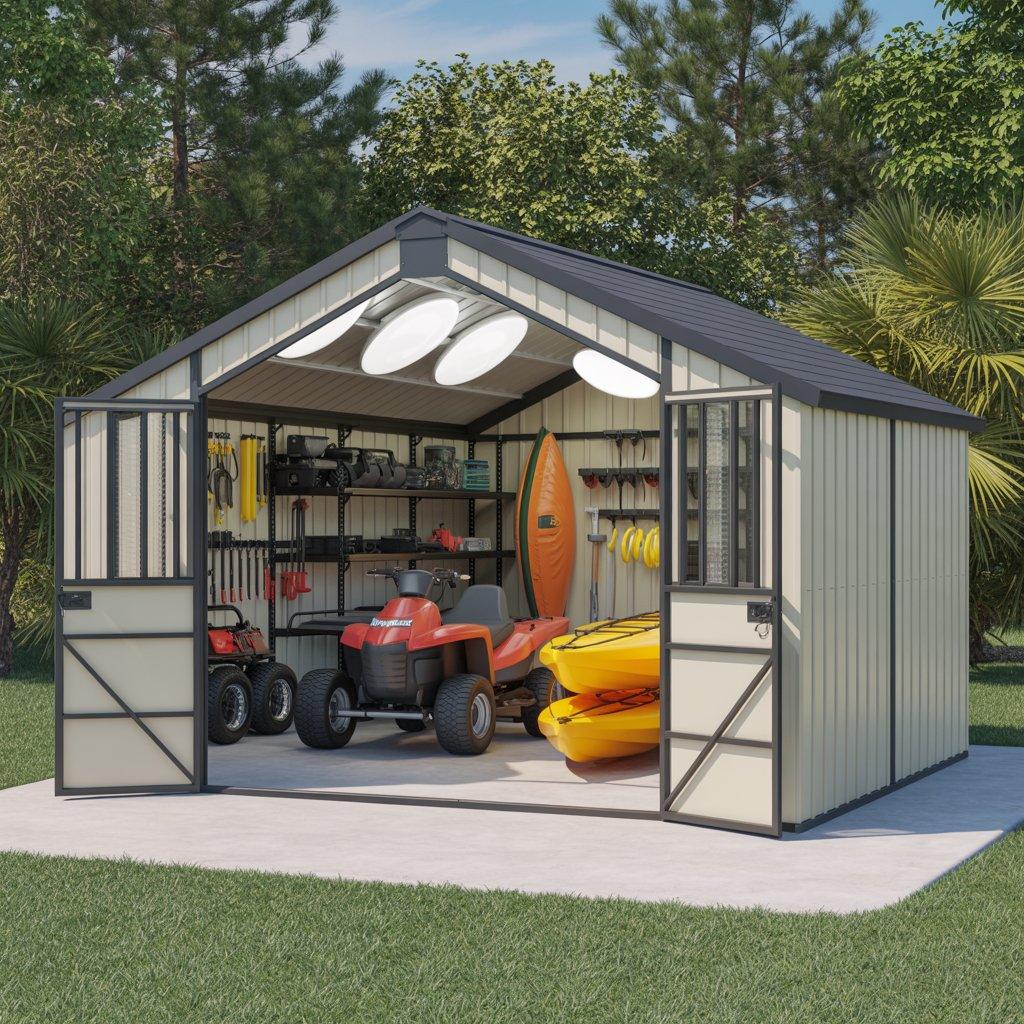
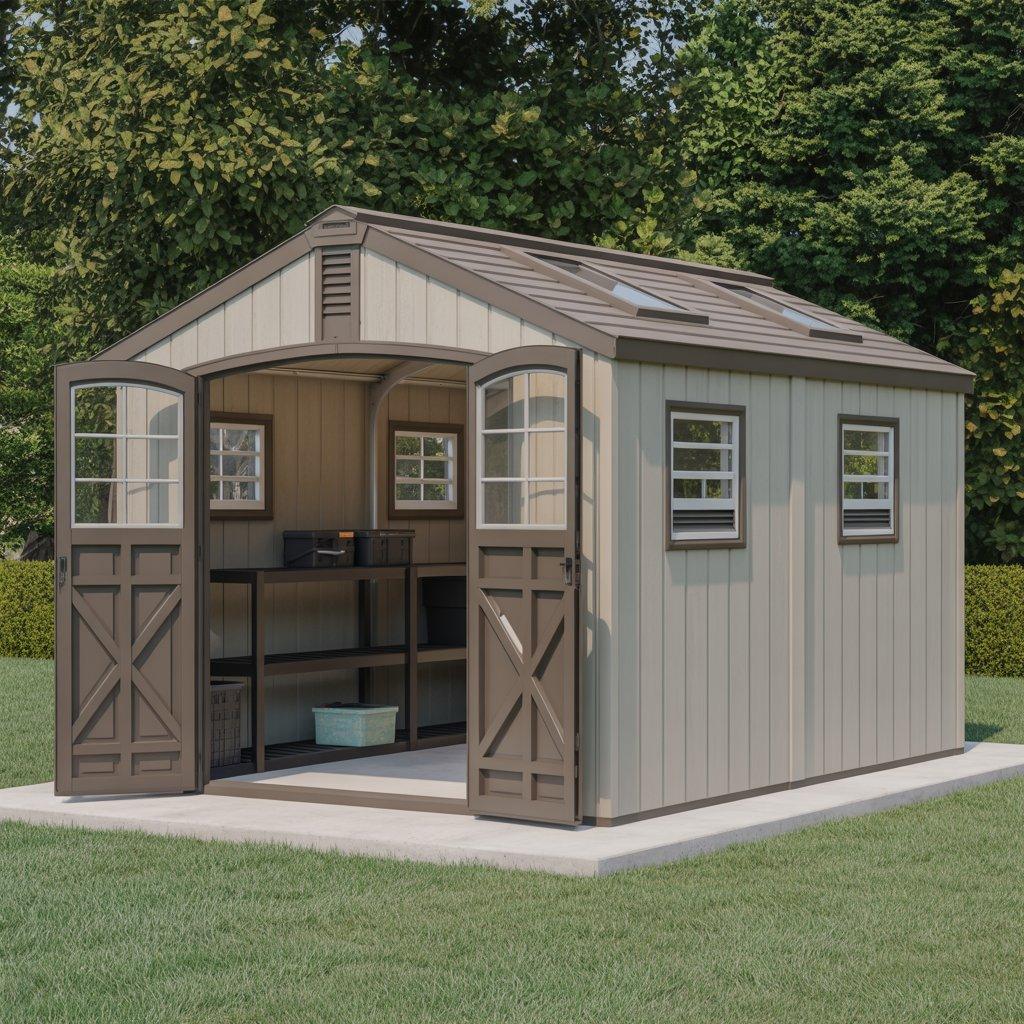
A massive 20‑foot‑long shed with steel-reinforced HDPE walls, lockable doors, windows, skylights, and adjustable shelving.
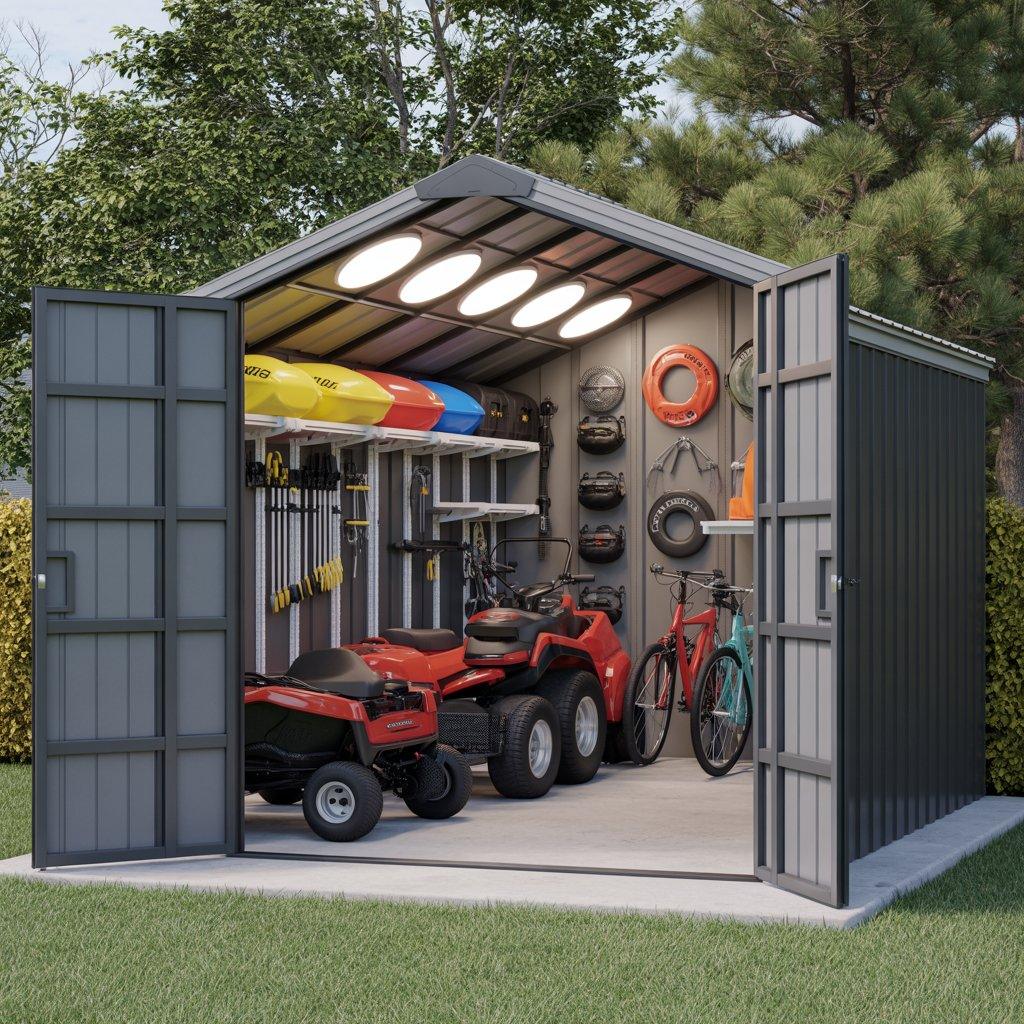
This is the big brother of the 15×8. It holds 146 square feet (1,008 cubic feet) of space. You can store a riding mower, ATV, kayaks, bicycles, and still have room left over.
The shed comes with shelves, tool hooks, and storage pouches to help you stay organized. Two large bubble skylights run the full length of the roof. The high-pitched roof drains rain and snow quickly. The doors are reinforced with steel and lockable.
Pros: Huge capacity, includes organization accessories, commercial-grade durability.
Cons: Expensive (around $2,900), requires professional delivery, heavy (over 600 lbs).
Check price on Amazon.com – Lifetime 20 x 8 Ft. Outdoor Storage
3. Lifetime 8×15 Ft Outdoor Storage Shed (Desert Sand)
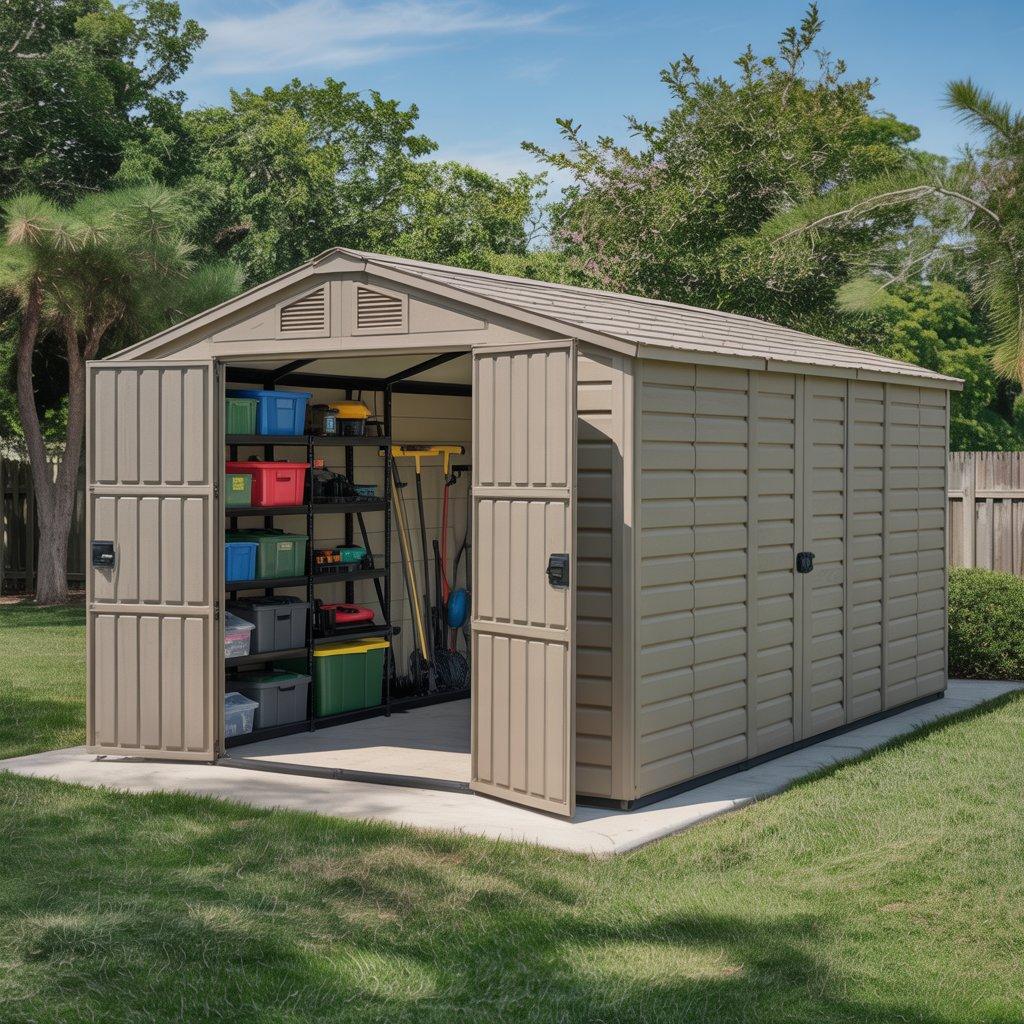
A resin backyard tool shed with lockable doors and weather resistant panels.
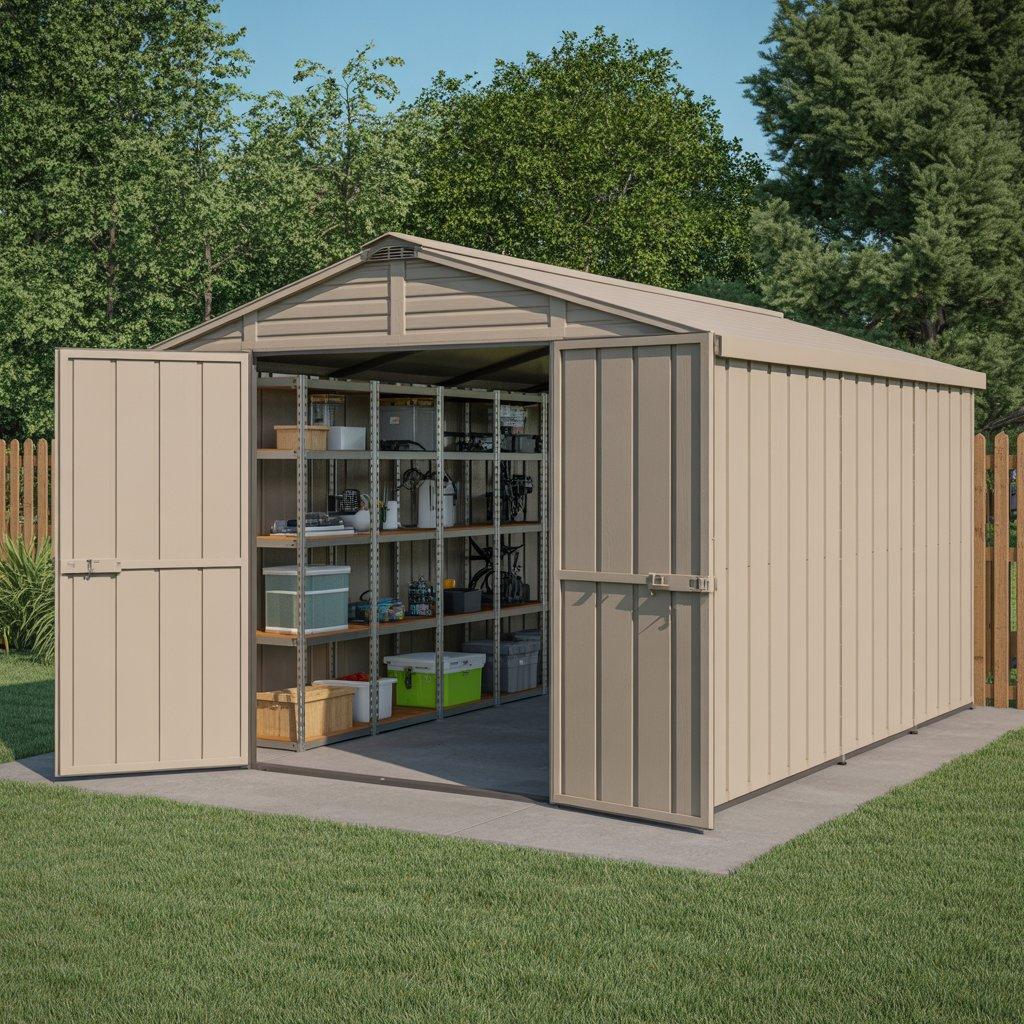
This is a slightly different model from the 15×8 listed above. It has many of the same features but with a different door layout. The exterior dimensions are 180 inches long, 96 inches wide, and 96 inches high.
Inside, you get 174 inches of length and 90 inches of width. The customizable shelving system lets you add more shelves as needed. The steel trusses keep the roof strong even under heavy snow. It’s low-maintenance and never needs painting.
Pros: Steel-reinforced construction, customizable storage, good value for the size.
Cons: Assembly can be tricky with door alignment, requires a perfectly level base.
Check price on Amazon.com – Lifetime Outdoor Storage Shed, 8×15
Storage Cabinets for Garages and Patios
Not everyone needs a full shed. Sometimes you just want an organized place to keep smaller items like gardening supplies, grill tools, or pool chemicals.
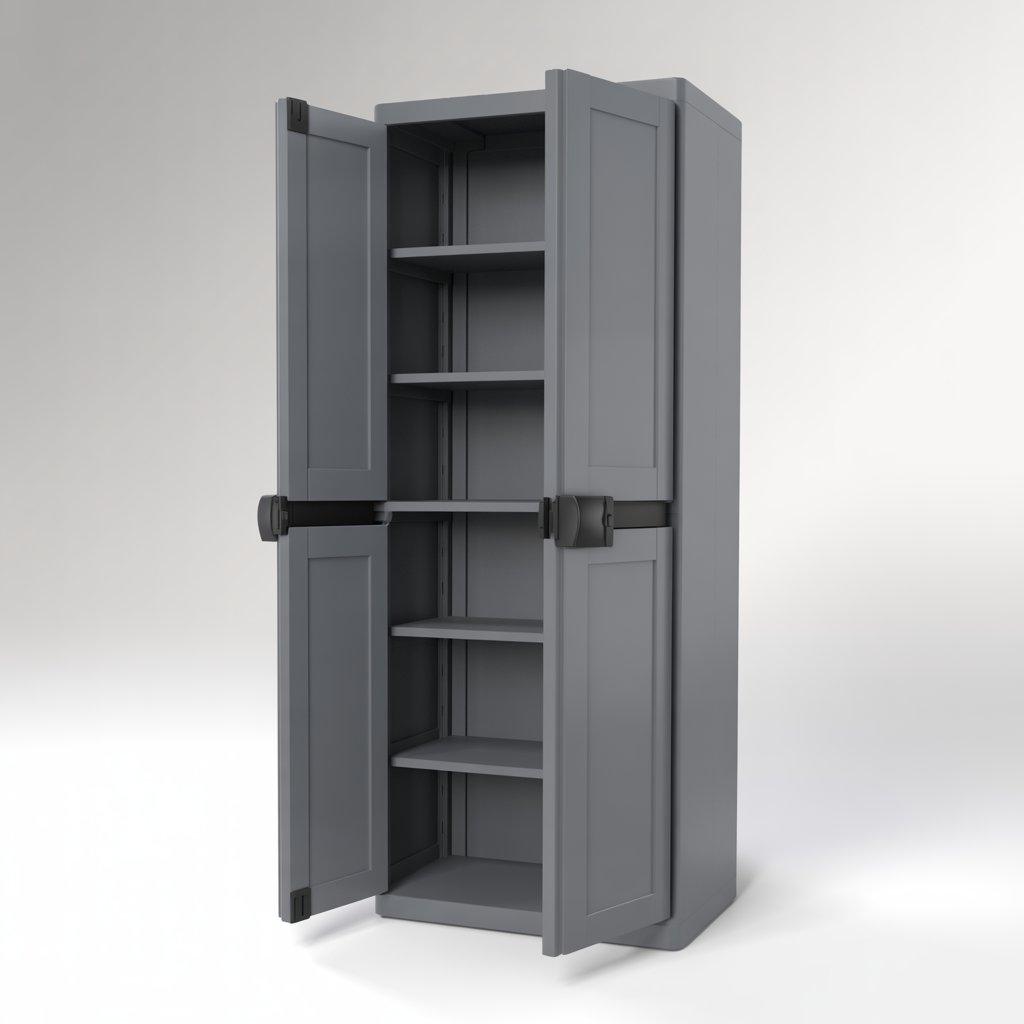
4. Sterilite 4‑Shelf Cabinet
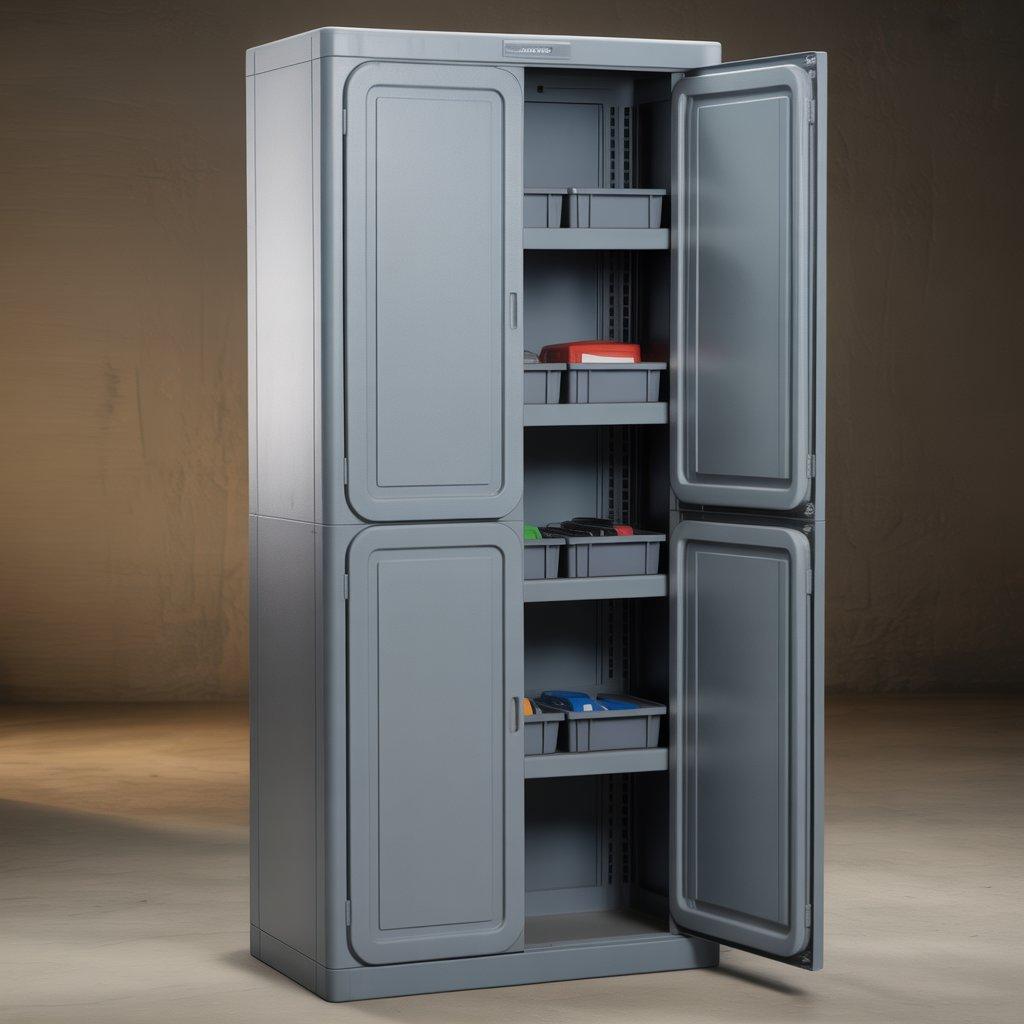
A heavy duty plastic storage cabinet with adjustable shelves, lockable doors, and no tool assembly
This cabinet is a perfect fit for garages, basements, mudrooms, or covered patios. It weighs only 40 pounds but holds up to 40 pounds per shelf. The heavy-duty plastic won’t dent, chip, peel, or rust.
The doors swing open easily and close securely. You can add a standard padlock for security. Assembly takes about 30 minutes and requires no tools – just snap the pieces together. The flat gray color blends into any space.
Pros: Easy assembly, rugged plastic construction, adjustable shelves, affordable price.
Cons: Not fully weather‑proof (best in sheltered areas), plastic can soften in extreme heat.
Check price on Amazon.com – Sterilite 4 Shelf Cabinet, Heavy Duty
Big DIY Outdoor Storage Projects
If you enjoy building things yourself, these projects give you storage exactly where you want it.
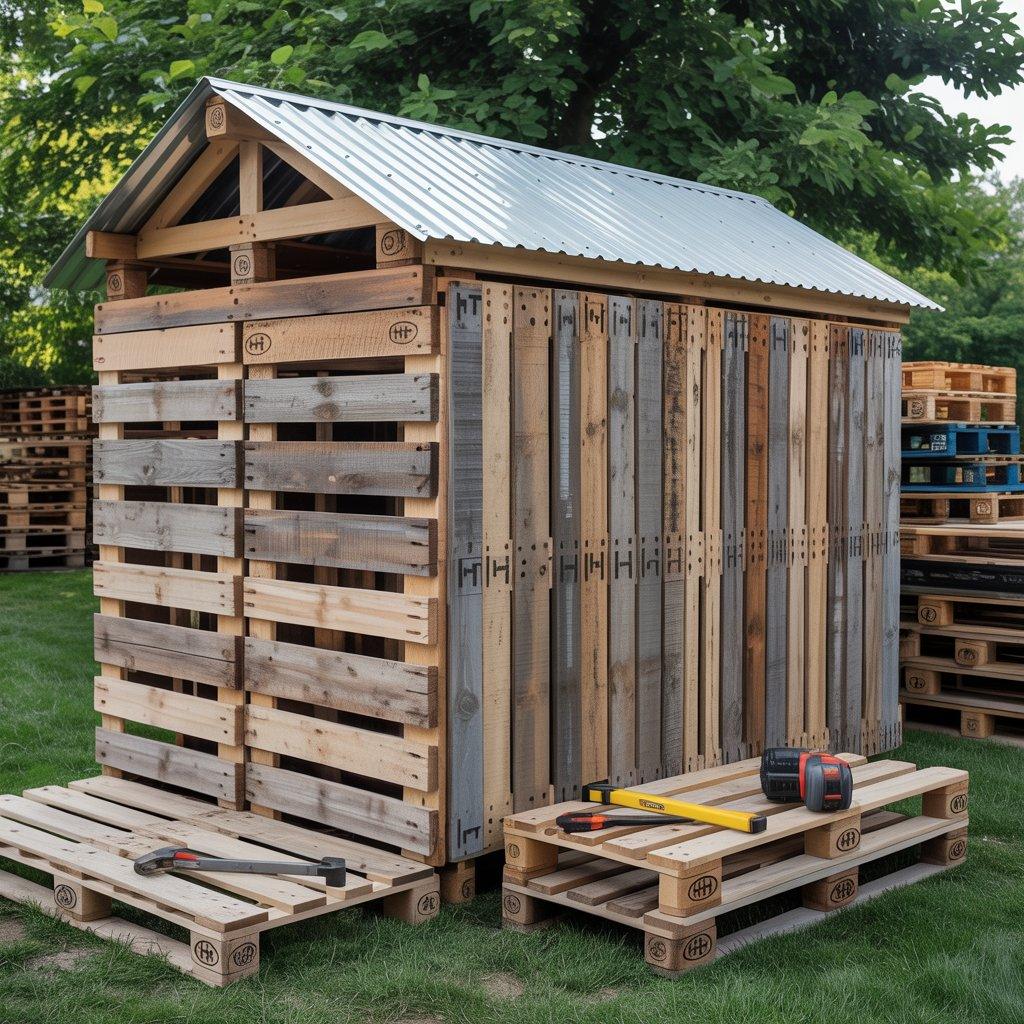
5. DIY Pallet Shed
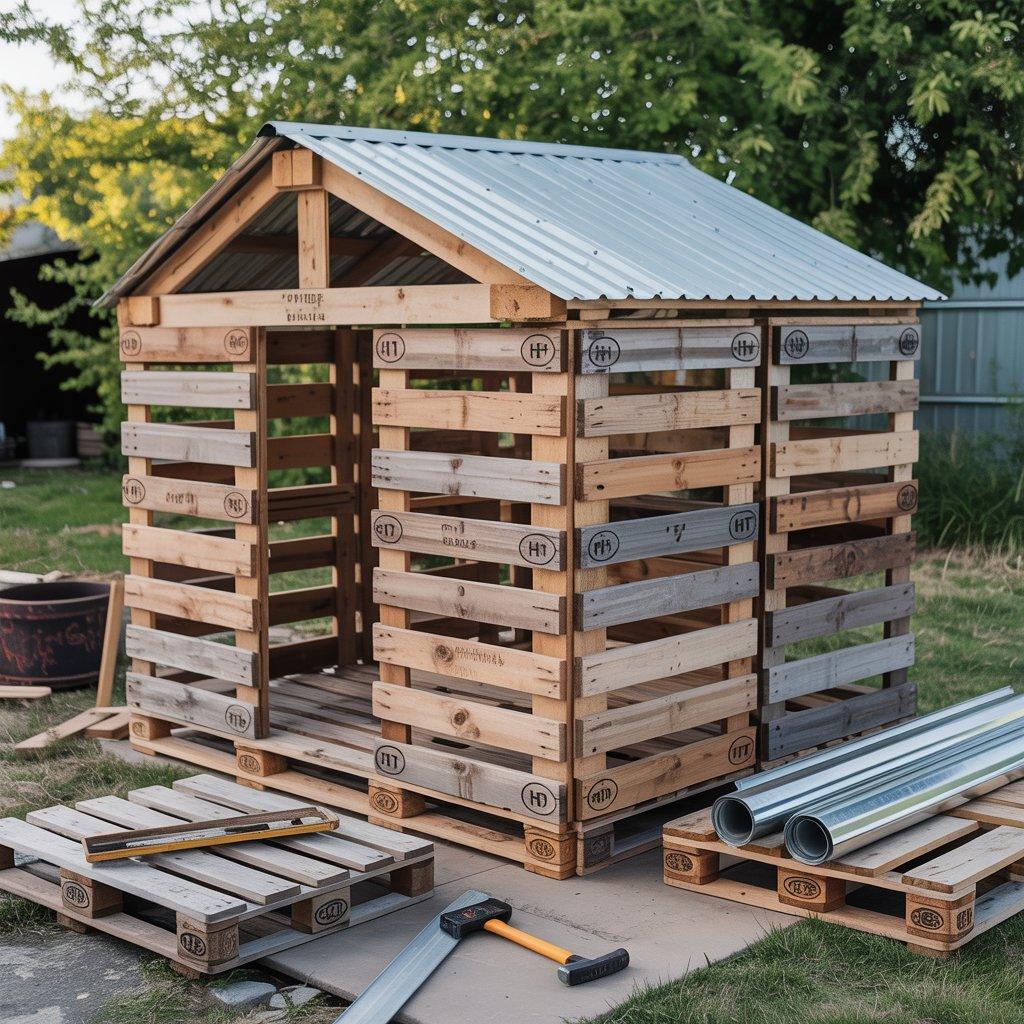
A full-sized storage shed built almost entirely from recycled wood pallets.
You can often get pallets for free from local businesses. With about 47 pallets, you can build an 8×12 shed. Some people have built pallet sheds for less than $100 using reclaimed materials. The key is to find pallets marked “HT” (heat treated) not “MB” (methyl bromide, a chemical).
You’ll also need a saw, hammer, nails, and a level. The walls go up quickly because pallets are already square. Cover the outside with plywood or more pallets. Add a simple shed roof with corrugated metal.
Pros: Very low cost, eco-friendly, customizable.
Cons: Pallet quality varies, takes time to collect enough pallets, need to inspect for chemical treatments.
Check price on Amazon.com – build a back yard shed from pallets
6. DIY Outdoor Storage Bench
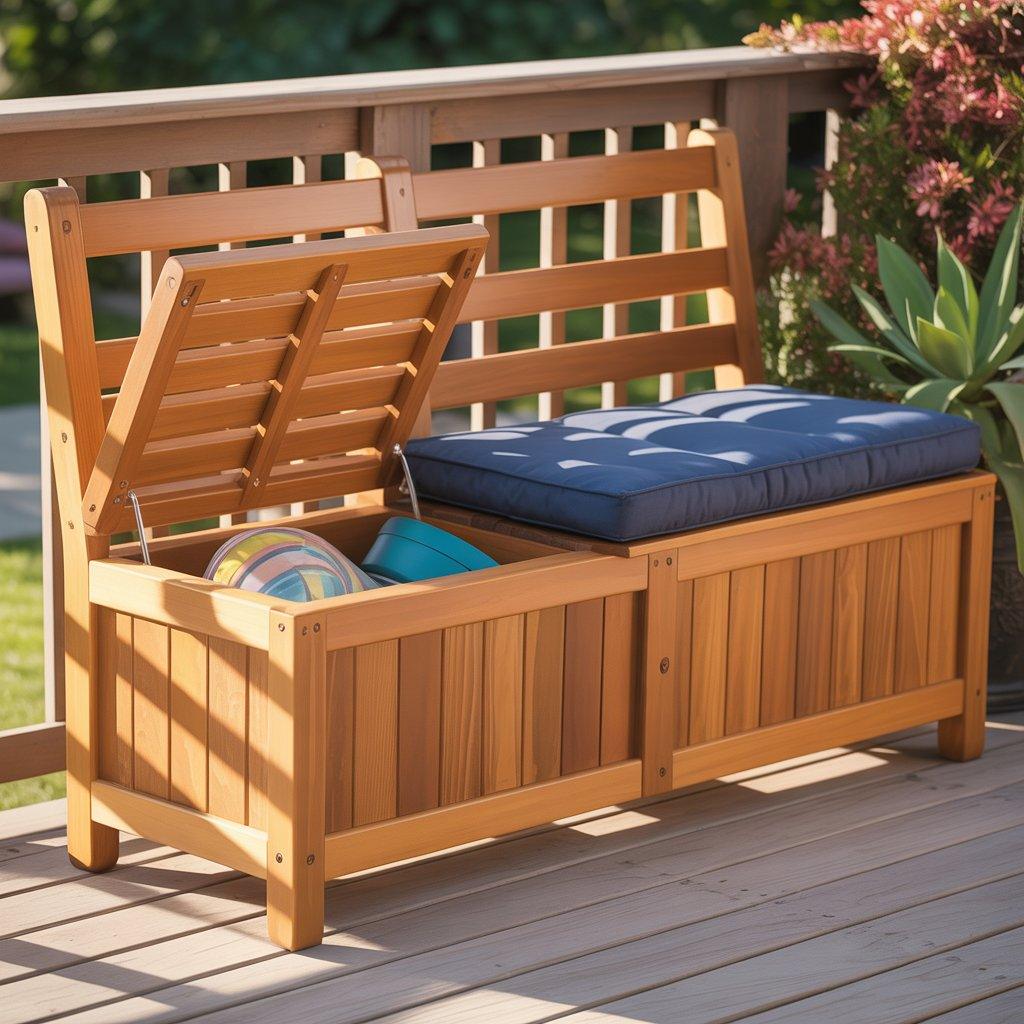
A wooden bench with hidden storage inside the seat
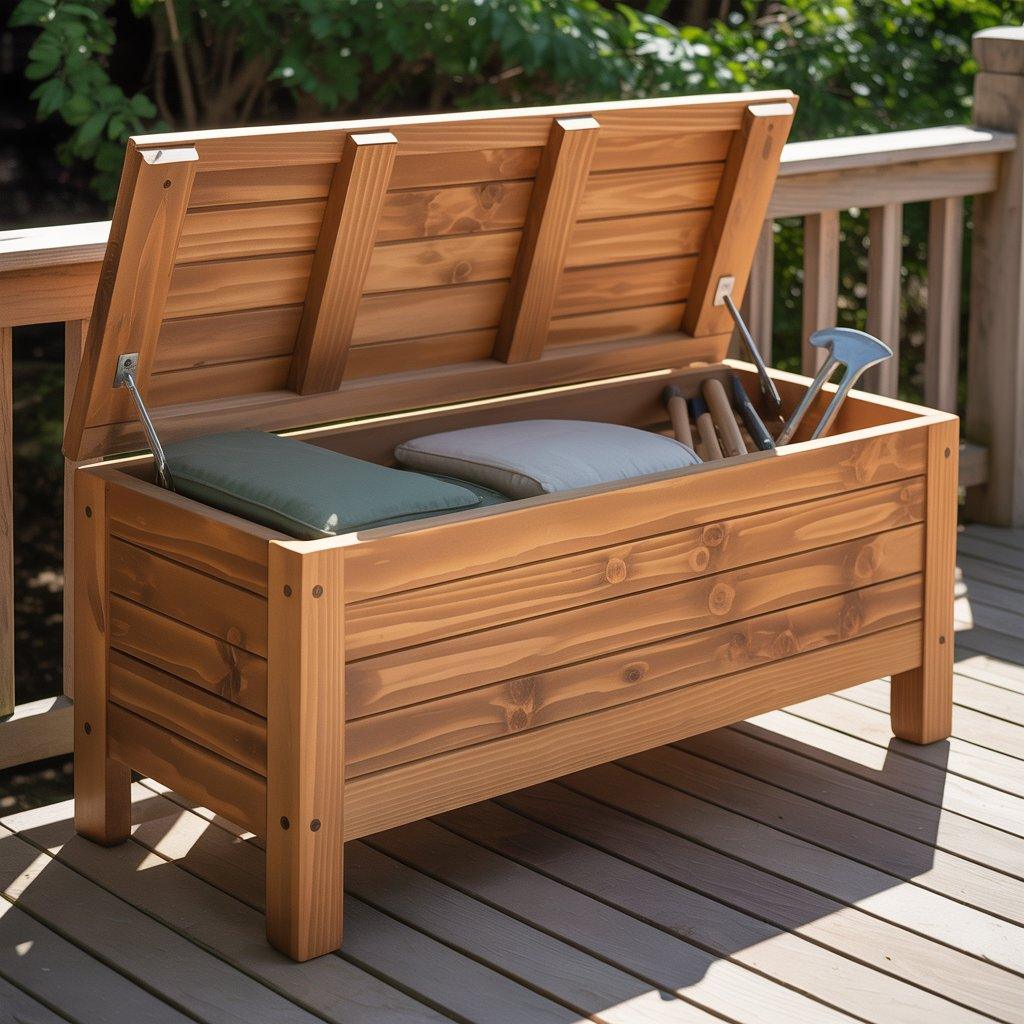
This is a classic DIY project because it’s both functional and attractive. You can build it using plywood and 2×4 lumber. A standard 4×8 sheet of plywood gives you enough material for a bench up to 8 feet long. Cut the sides, front, back, and a top for the seat. Attach the seat with two hinges so it lifts up.
Add a simple latch or a gas strut to keep the lid open. Sand everything smooth and seal it with outdoor paint or stain. Inside, you can store patio cushions, garden tools, or kids’ outdoor toys. Place it on a patio or deck. Add a foam pad and outdoor fabric to turn the lid into comfortable seating.
Pros: Dual-purpose (storage + seating), looks great on a patio, keeps things hidden.
Cons: Requires basic woodworking skills and tools (circular saw, drill, sander).
Check price on Amazon.com – Outdoor Storage Benches
Remaining Storage Ideas + Additional Sections
7. DIY Multi-Use Deck Box
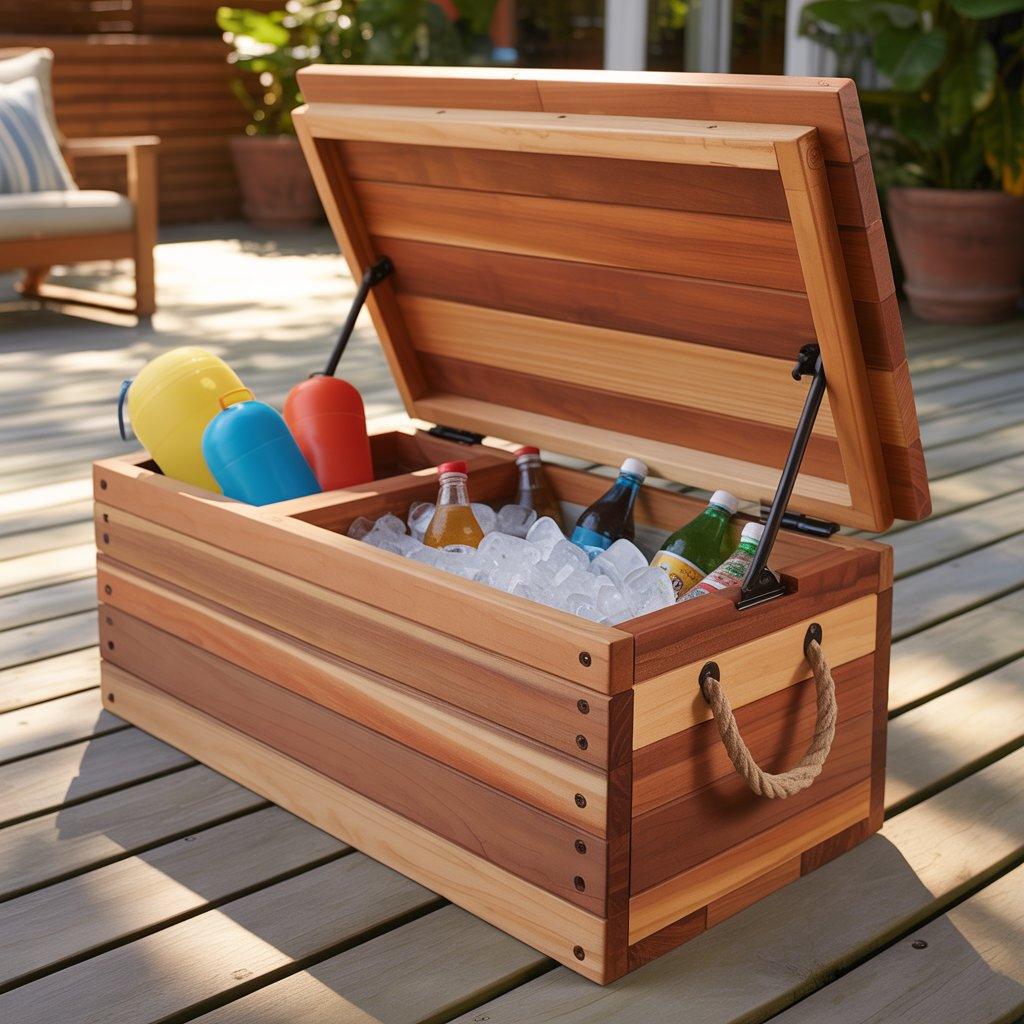
A sturdy lidded box that works as storage, seating, or even a cooler
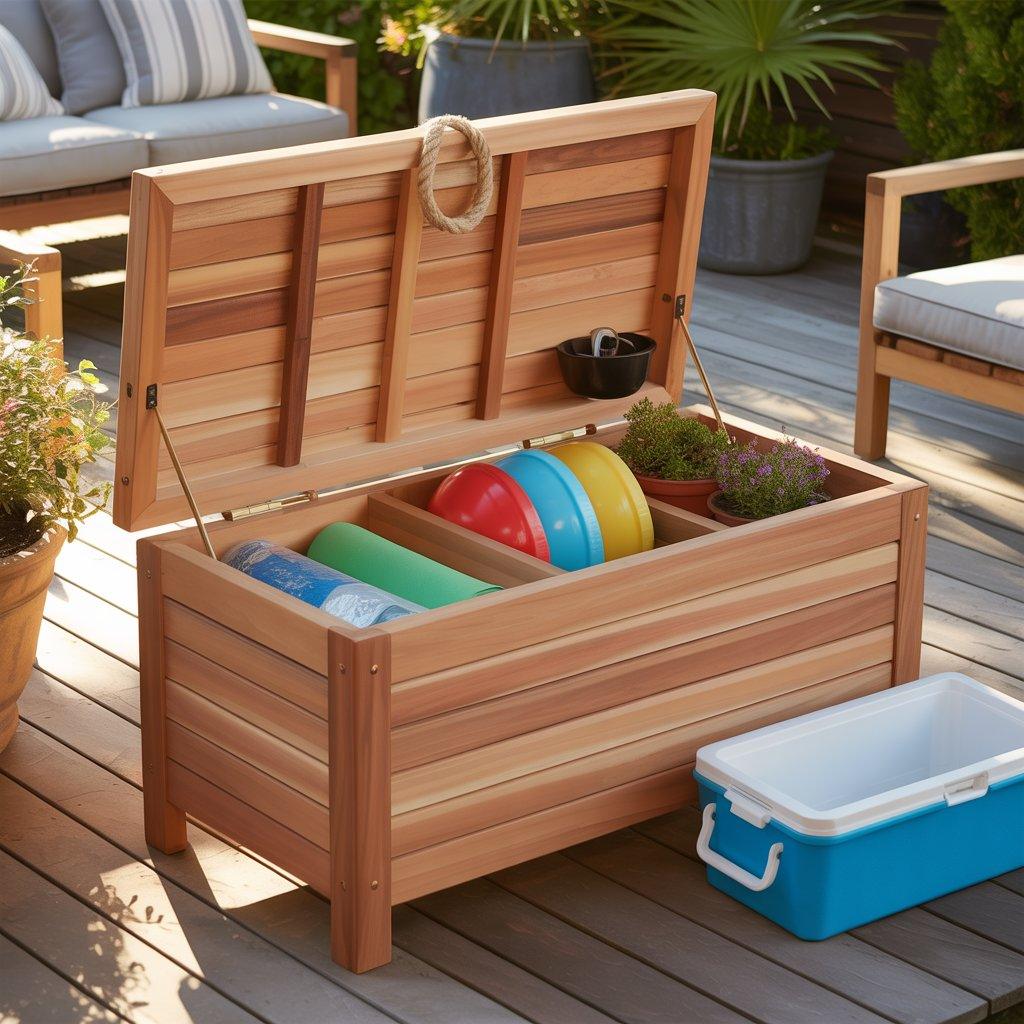
A well-built deck box costs about $50‑80 in materials. Use cedar or pressure-treated pine for weather resistance. The box is basically a large rectangle with a hinged lid. Cut plywood for the bottom, sides, and top. Screw everything together. Attach the lid with two hinges and add a rope or handle to lift it.
You can line the inside with a plastic tub to turn it into a cooler for parties – just add ice and drinks. Without the tub, it holds cushions, pool toys, gardening supplies, or charcoal for the grill. Add wheels to one end so you can tilt and roll it.
Pros: Multi-functional, affordable, fits any space.
Cons: Needs weatherproof finishing to last.
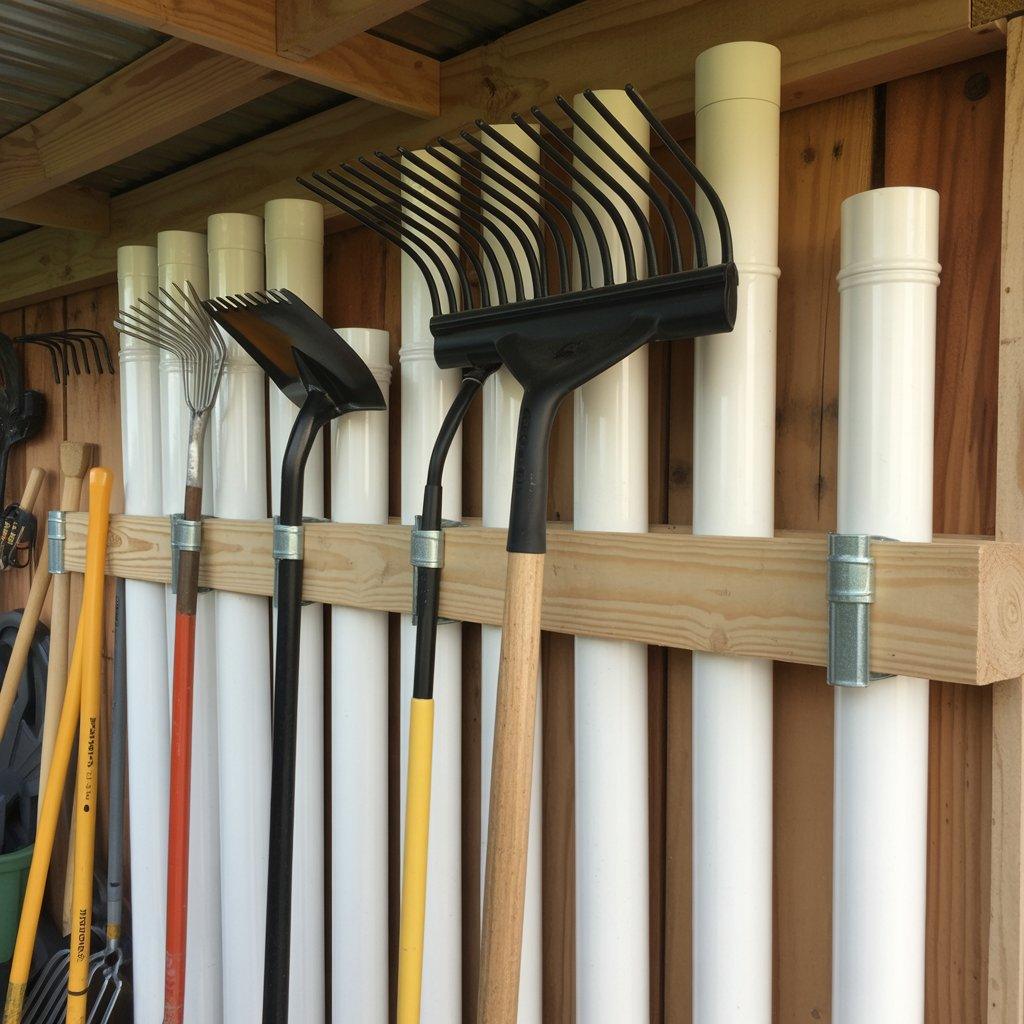
8. DIY PVC Pipe Tool Holders
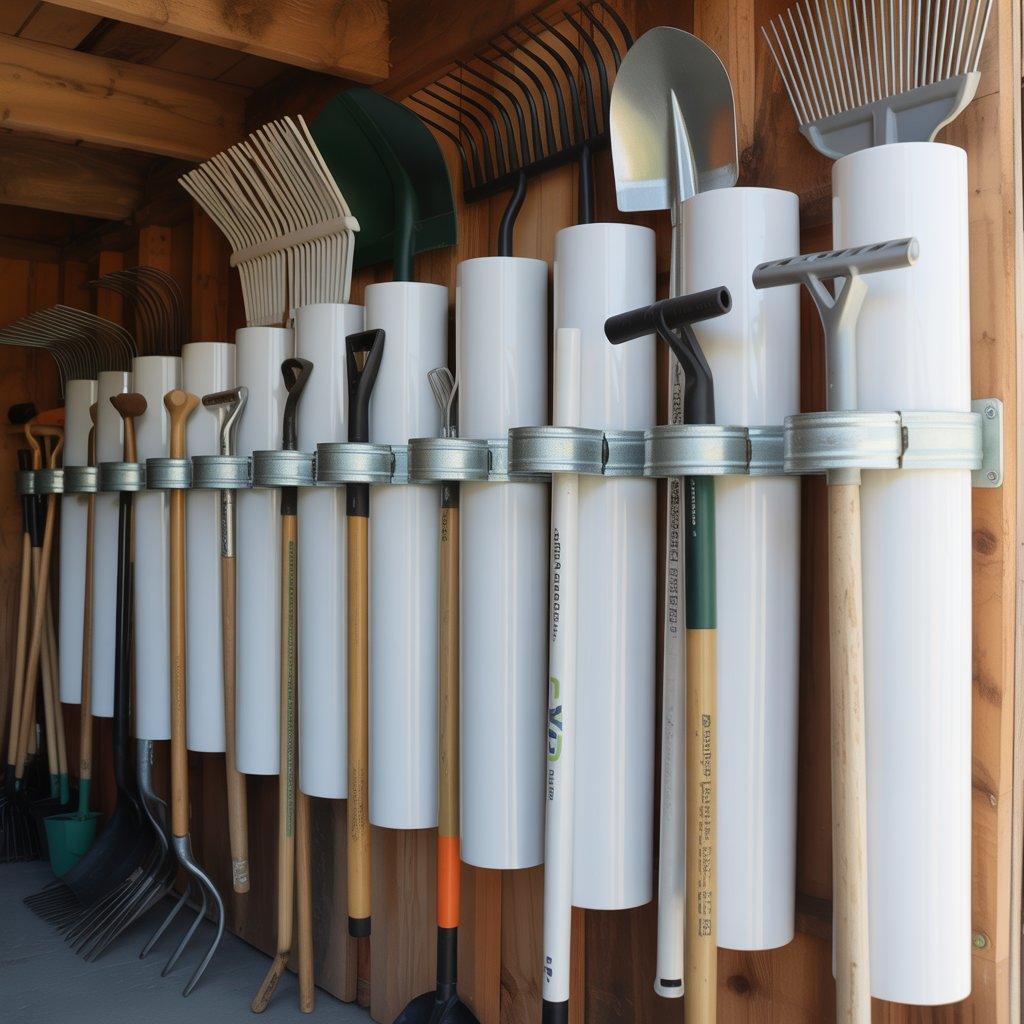
Wall-mounted tubes made from leftover PVC pipe for storing long-handled tools like rakes, shovels, and hoes.
Cut PVC pipe into 12‑ to 18‑inch lengths. Use 1.5‑inch or 2‑inch diameter pipe depending on tool handle thickness. Mount them vertically on a shed wall or fence using pipe straps or drilled holes and screws. Space them about 4 inches apart.
Slide the tool handles into the tubes. The smooth PVC interior prevents snagging. This keeps tools off the floor and easy to grab. You can paint the PVC to match your wall. For extra stability, mount a 2×4 horizontally first, then attach the pipes to that.
Pros: Almost free if you have scrap PVC, keeps tools organized, simple to build.
Cons: Requires a wall or fence to mount on.
9. Cinder Block Shelves
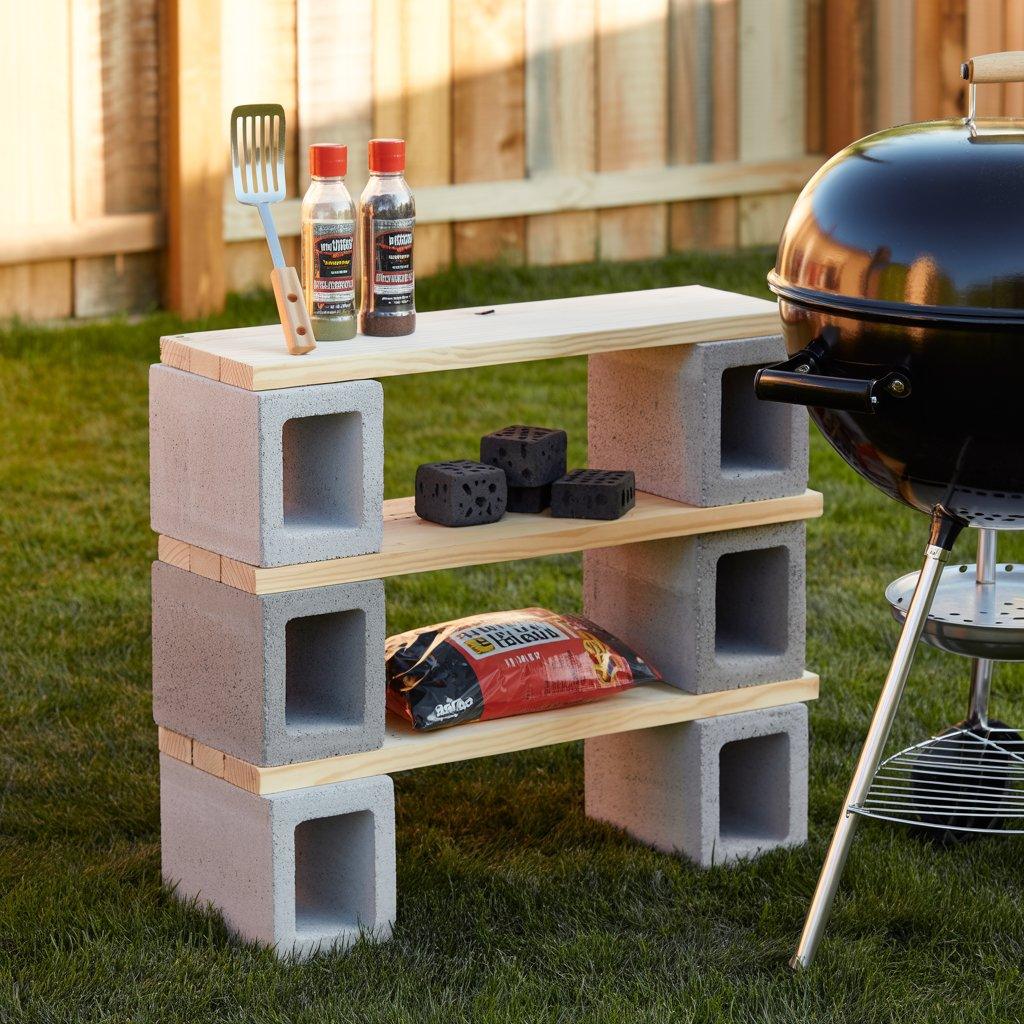
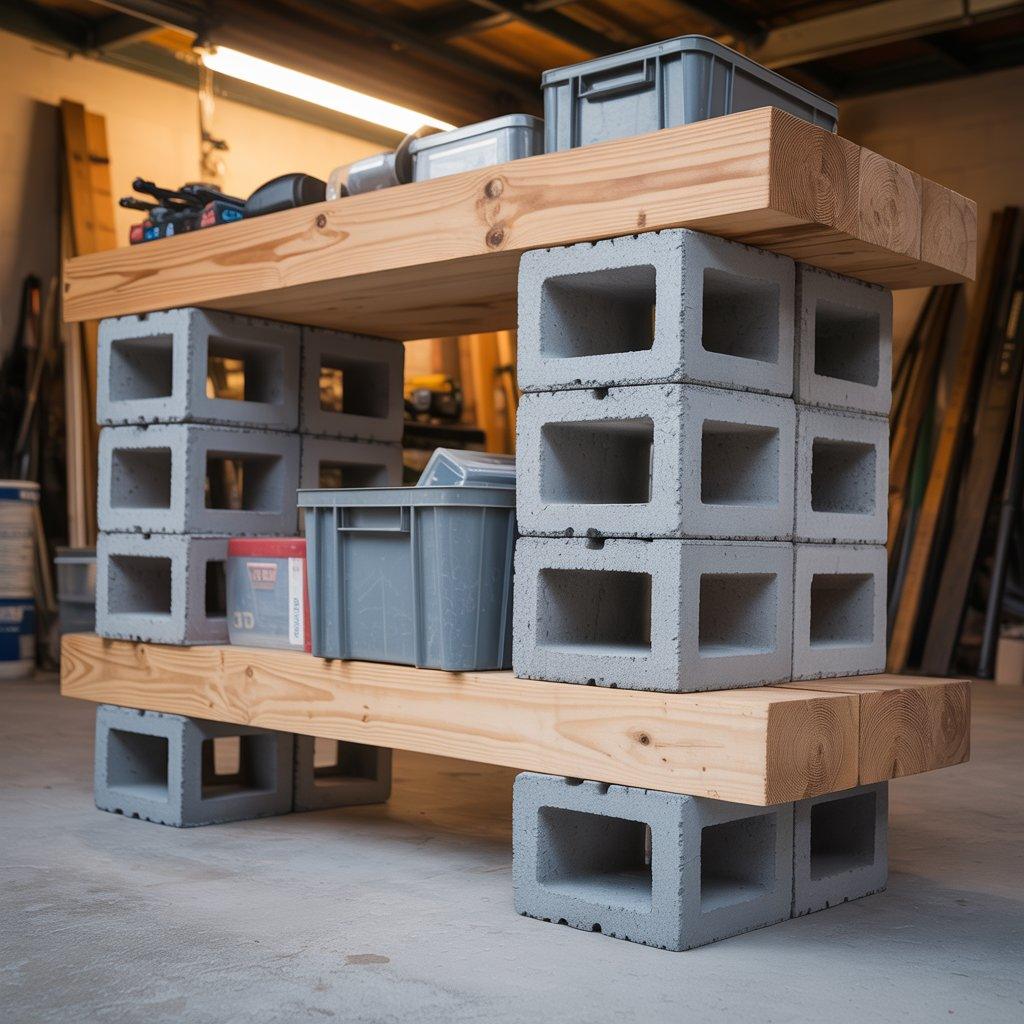
Shelves made by stacking cinder blocks and placing boards on top.
No nails, no screws. Just stack the blocks and lay down a 2×8 or 2×10 board. For a basic shelf, use two stacks of three blocks each. Place a board across them. For taller shelves, add more layers. The cinder blocks cost less than $20 at a hardware store.
You can paint them with exterior paint to match your outdoor colors. Use these shelves near a grill for holding charcoal, seasonings, and grilling tools. They also work in a garage for storing heavy bins. The boards can be removed and replaced if they wear out.
Pros: Extremely cheap, no tools needed, holds heavy items.
Cons: Not very attractive unless painted, takes up floor space.
10. Repurposed Pallet Tool Rack
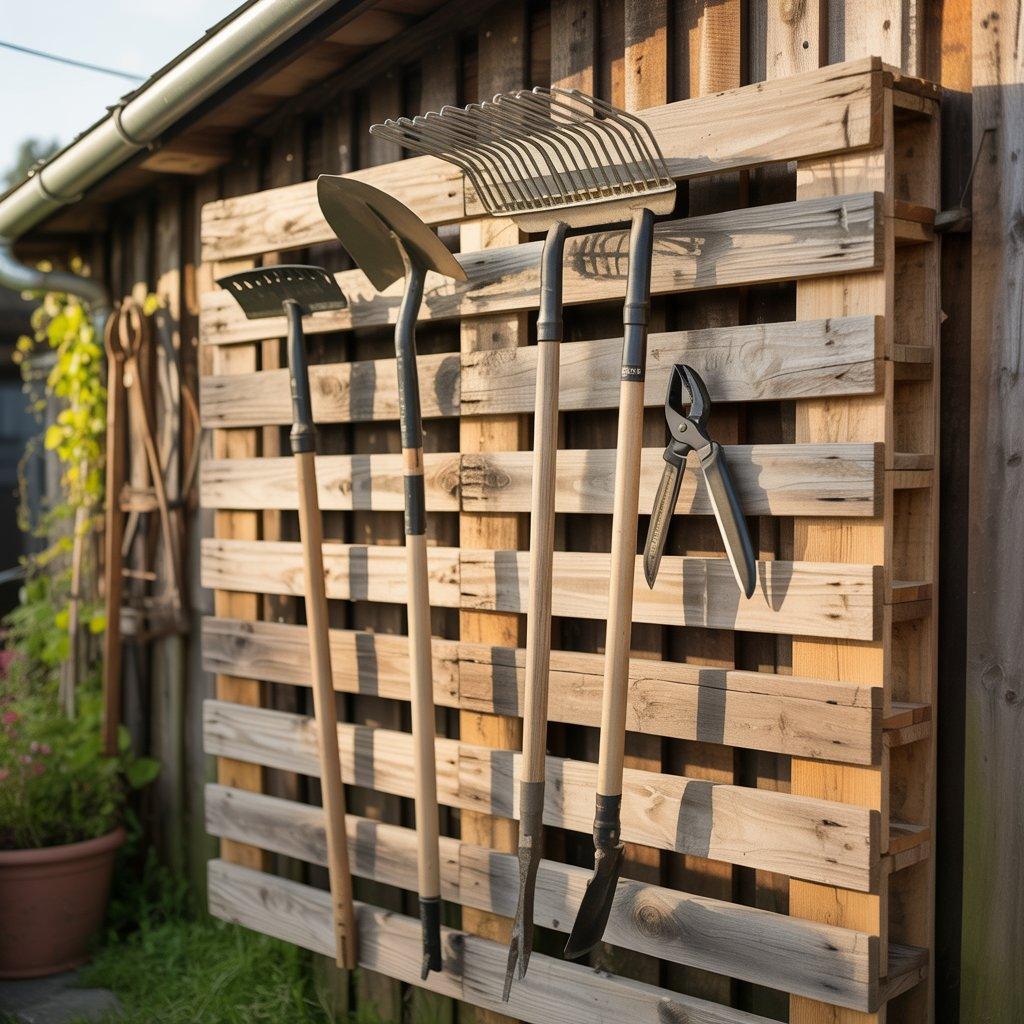
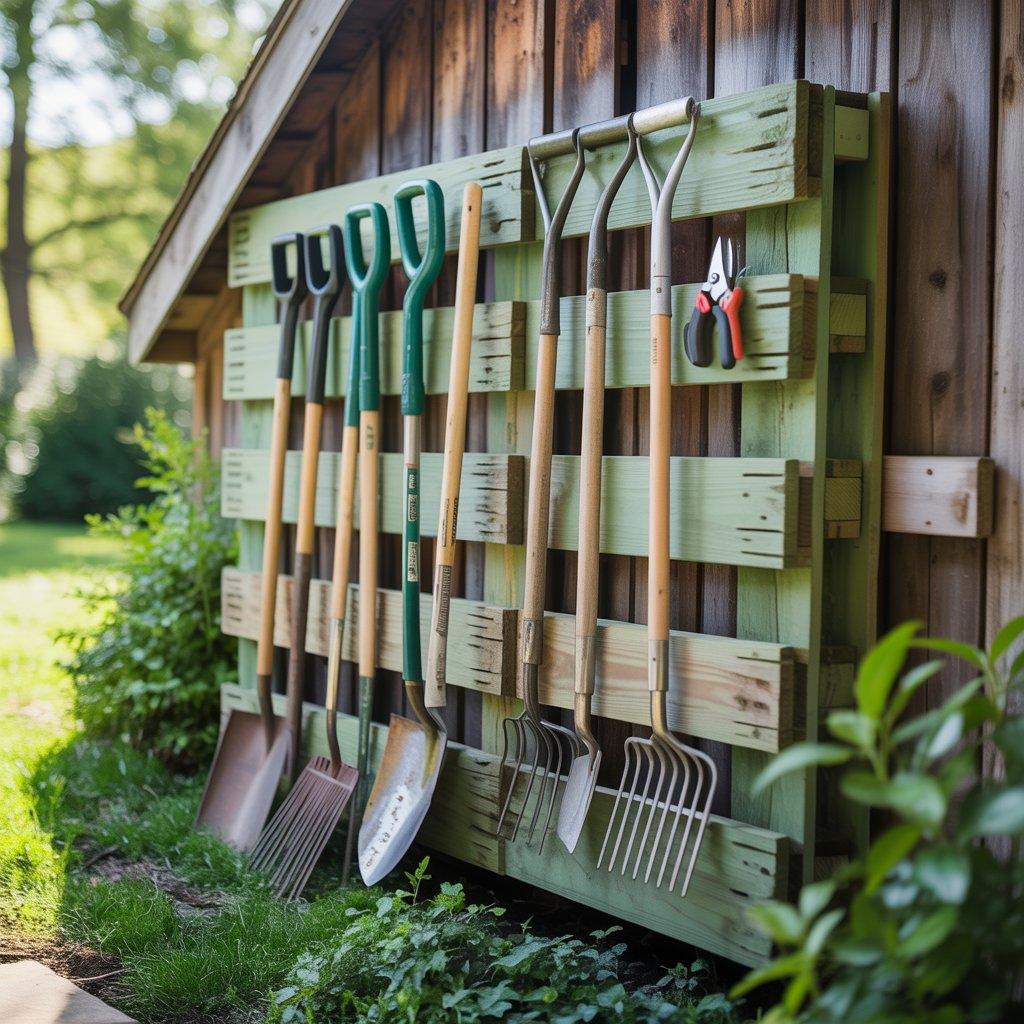
A wooden pallet mounted to a fence or shed wall to hold garden tools.
The slats create perfect slots for rakes, shovels, and hoes. Choose a pallet in good condition with no broken boards. Paint it to match your outdoor décor or leave it rustic. Mount it using heavy-duty screws through the pallet’s top and bottom rails into the wall studs or fence posts.
Slide the tool handles between the slats so the tool heads hang above. This costs nothing if you find a free pallet. You can also attach small hooks to the pallet for hanging smaller items like pruners or gloves.
Pros: Free, keeps tools off the ground, rustic farmhouse look.
Cons: Needs to be mounted securely, pallets can splinter.
11. Over-the-Door Shoe Organizer
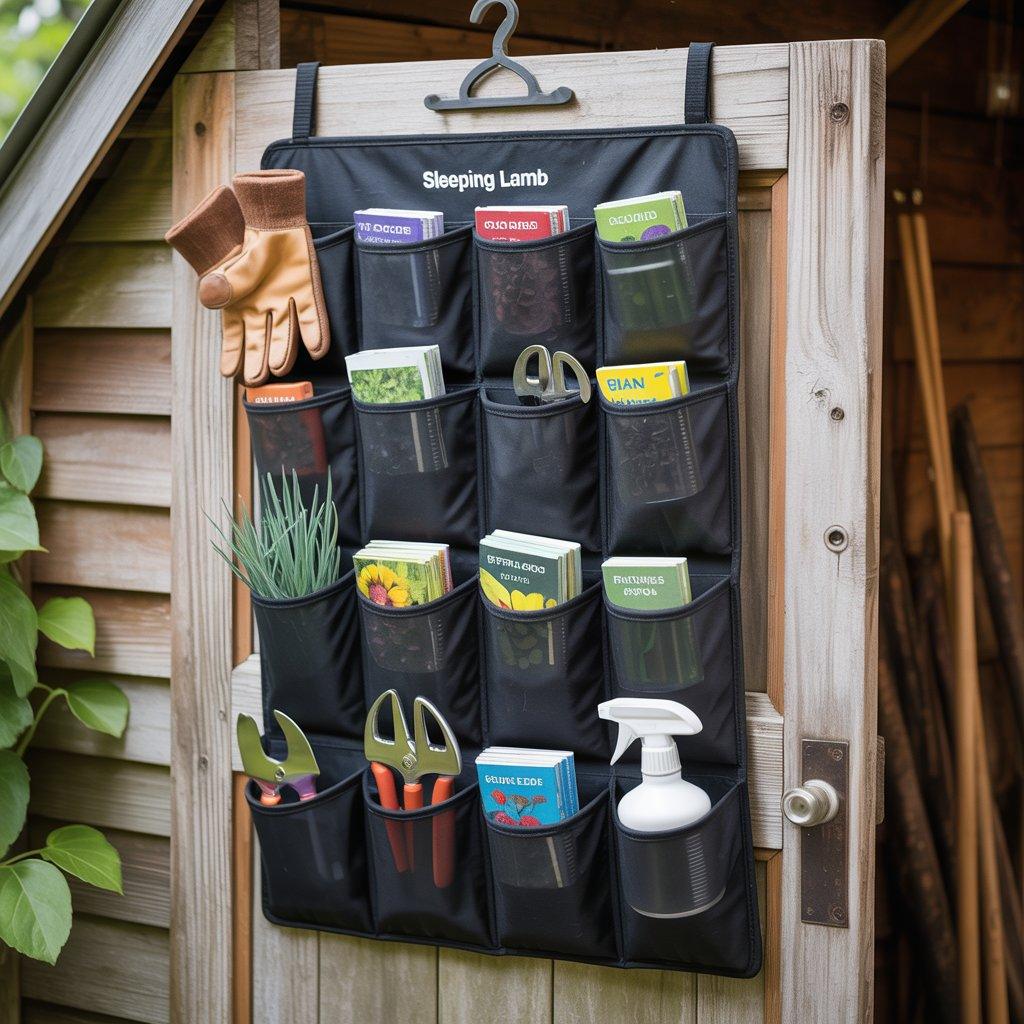
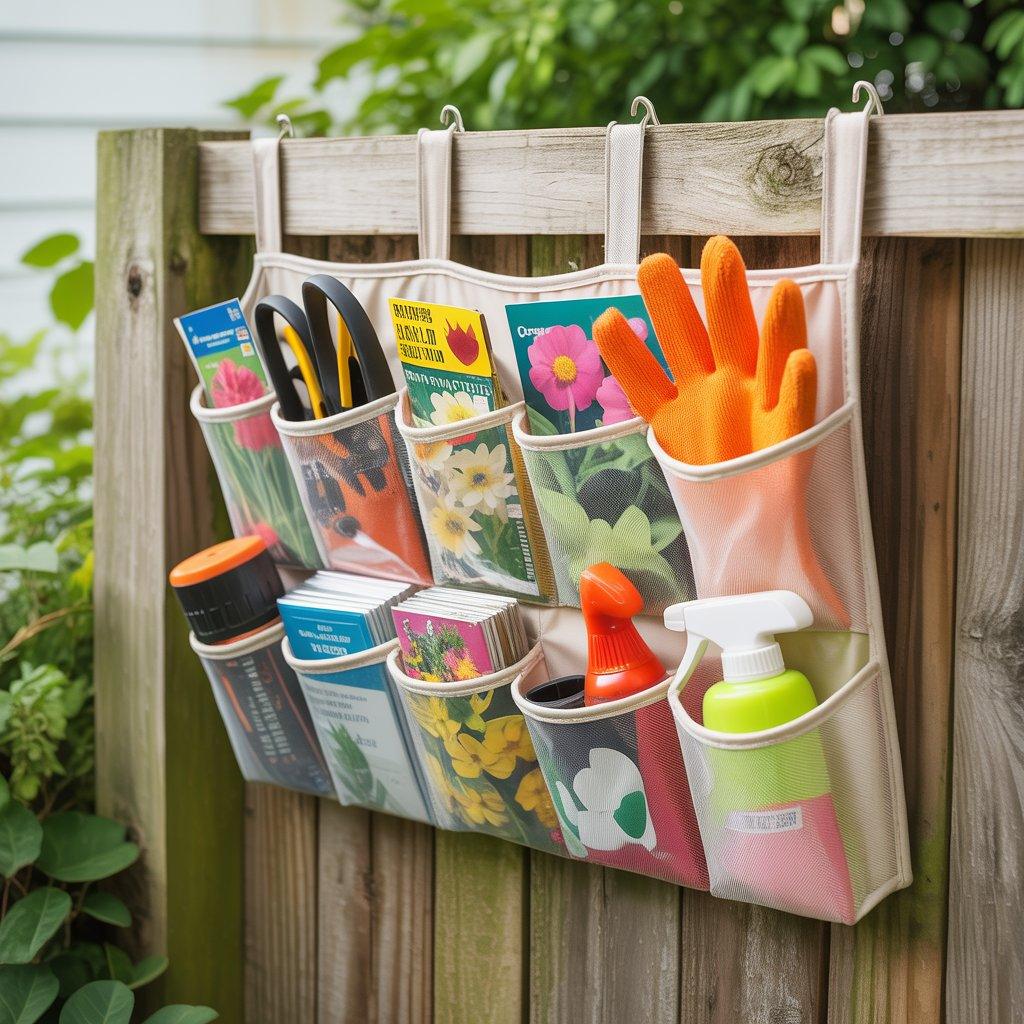
A fabric shoe organizer hung on a fence or shed wall to hold small items.
Each pocket is perfect for gardening gloves, seed packets, hand tools, or spray bottles. The clear pockets let you see everything at once. Hang it using the built-in hooks over a fence top or on a shed door.
For a fence, you may need to add a horizontal board to hang it from. Use a weather-resistant version or keep it under a covered area like a patio overhang. You can also cut the organizer to make it shorter if you don’t need all the pockets.
Pros: Very inexpensive ($10‑15), easy to install, family-friendly.
Cons: Not fully waterproof, fabric can fade in sun.
Check price on Amazon.com – over door shoe organizer
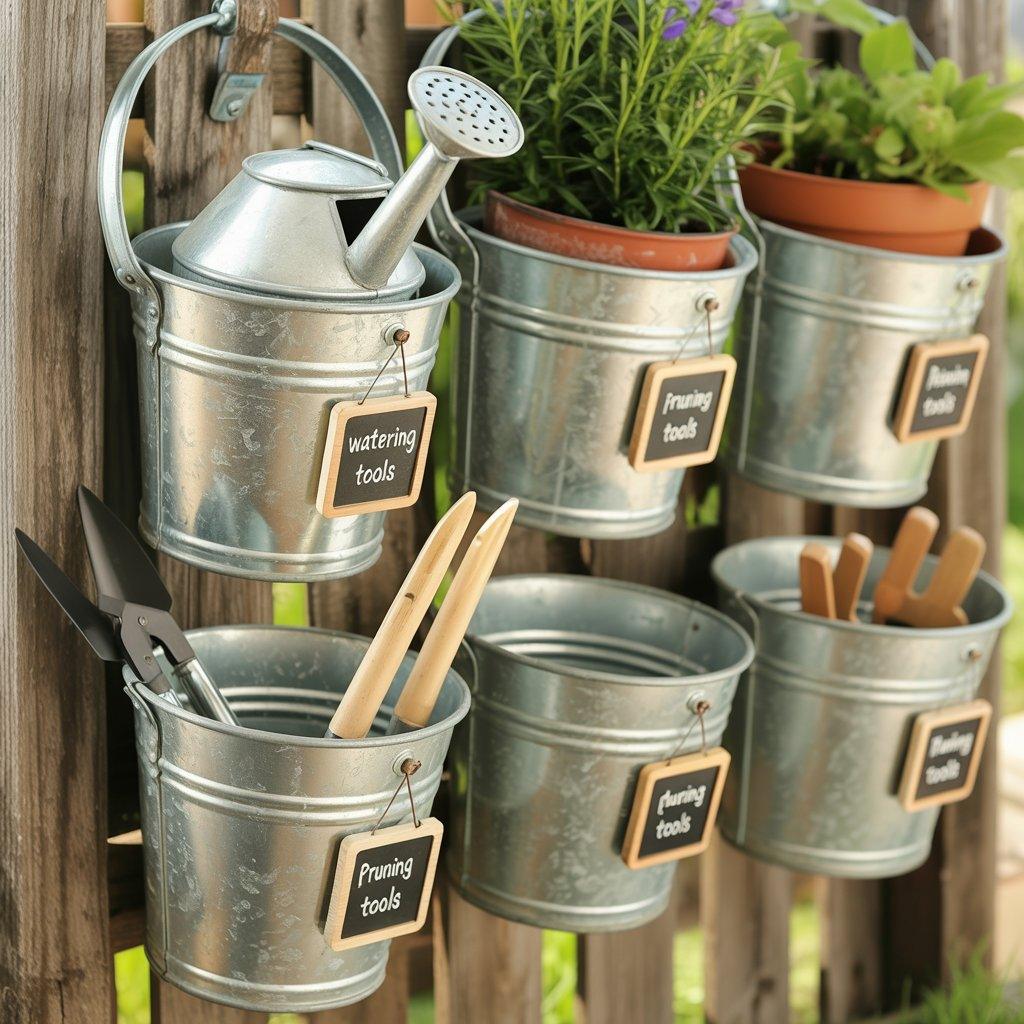
12. Galvanized Bucket Wall
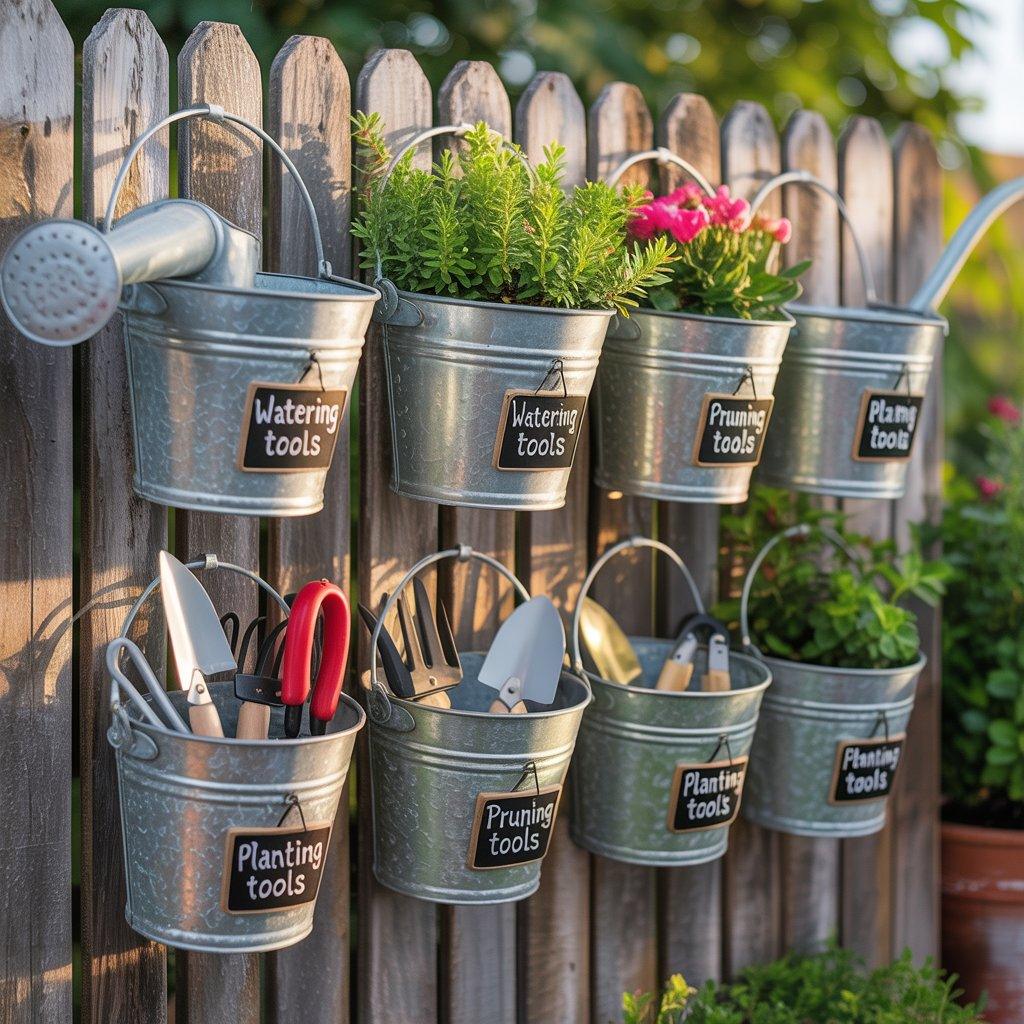
Several metal buckets mounted to a fence or wall for storing smaller items.
Large buckets (3‑5 gallons) hold watering cans and potted plants. Small buckets (1‑2 quarts) hold pruners, trowels, and plant markers. Drill two holes near the back rim of each bucket.
Use screws with washers to attach them to a wall or fence. The metal develops a nice patina over time. Label each bucket with chalk paint or a metal tag. Group them by use – watering tools, pruning tools, planting tools. You can also use galvanized tubs or even old tin cans.
Pros: Attractive farmhouse look, durable metal, easy to organize.
Cons: Buckets cost $5‑10 each, need to be drilled for mounting.
Check price on Amazon.com – Galvanized Bucket Wall
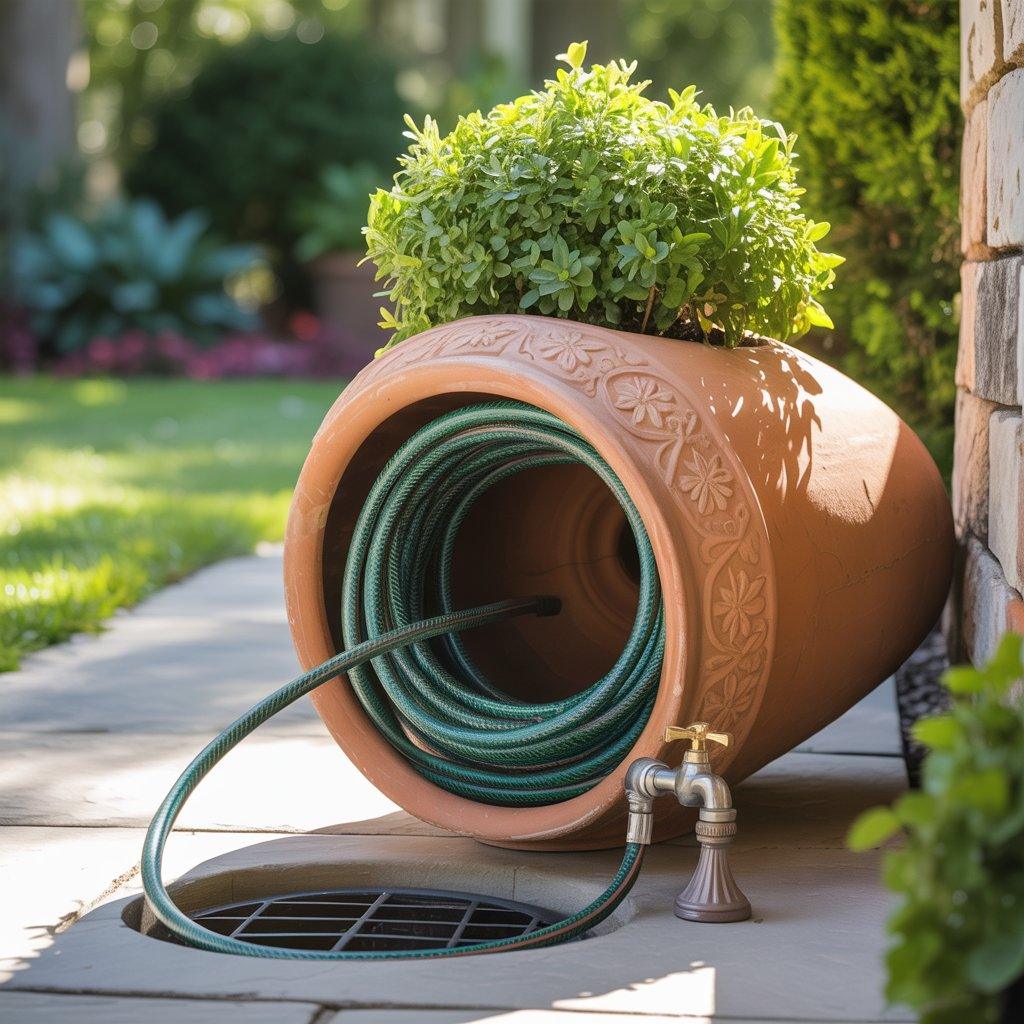
13. Hidden Hose Storage Pot
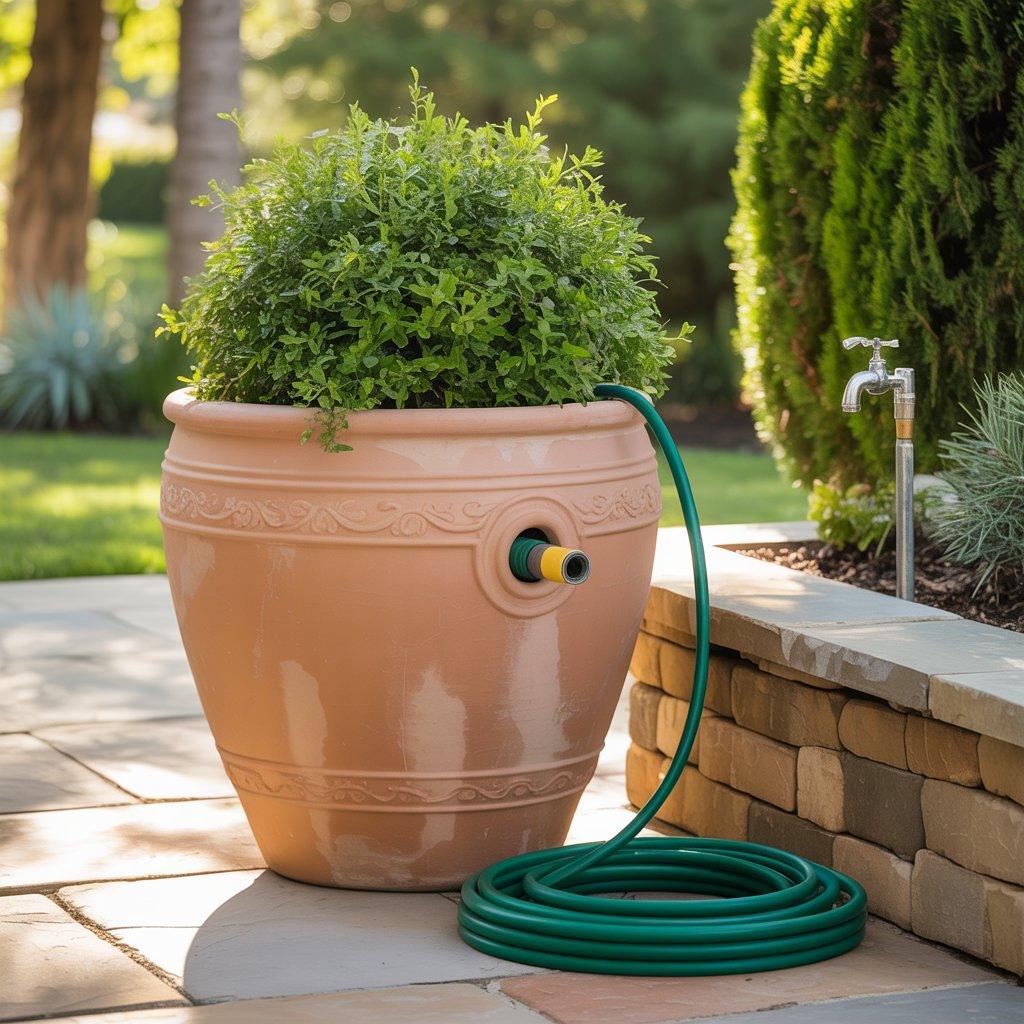
A large decorative pot that hides your garden hose
Choose a pot at least 18 inches tall and wide. Drill a 1‑inch hole near the bottom on one side for the hose end to come out. Coil the hose inside the pot. Put a potted plant on top to hide the opening. Use a lightweight plastic pot if you need to move it.
For heavy clay pots, place it permanently near the spigot. The pot protects the hose from sun damage and looks much nicer than a bare hose coiled on the ground.
Pros: Hides an ugly hose, adds beauty to the garden, no special tools needed.
Cons: Pot needs to be large enough for the whole hose, hose may kink.
Check price on Amazon.com – Hidden Hose Storage Pot
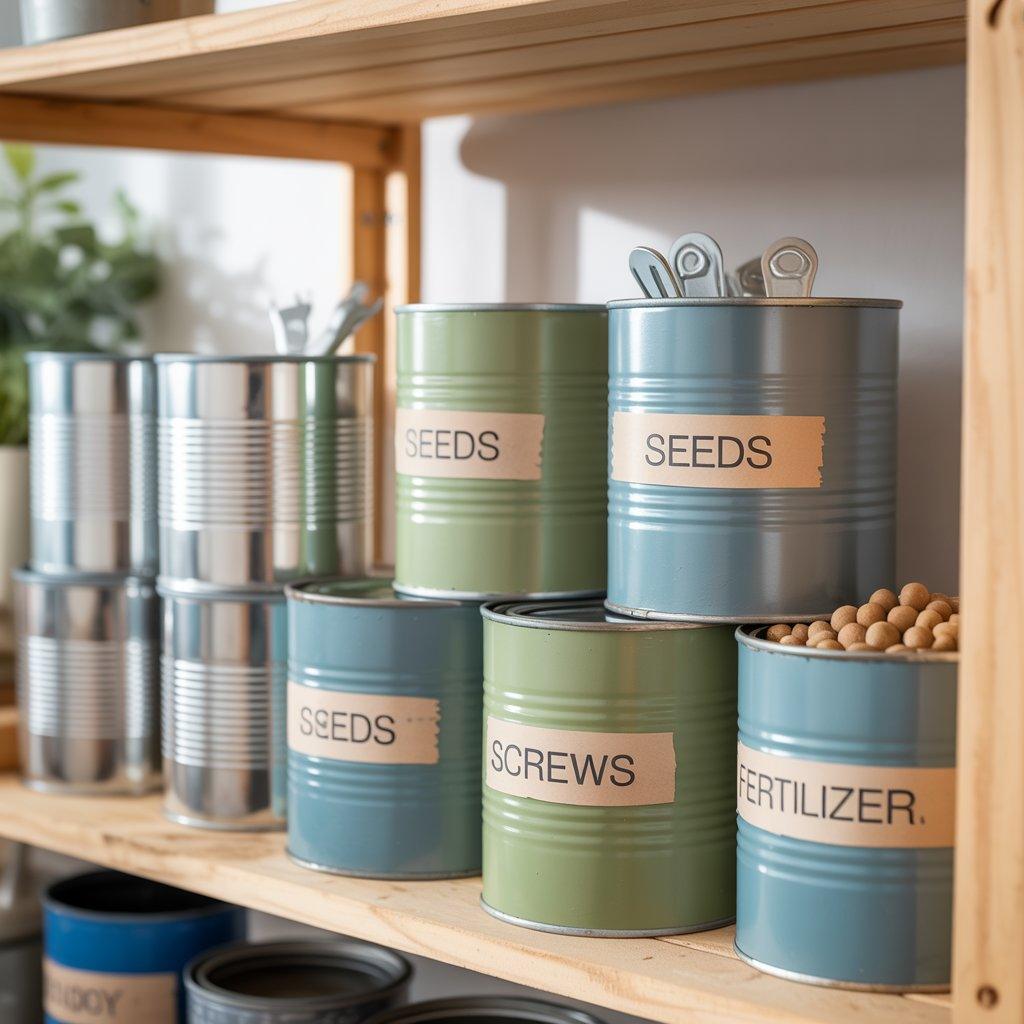
14. Paint Can or Coffee Can Organizers
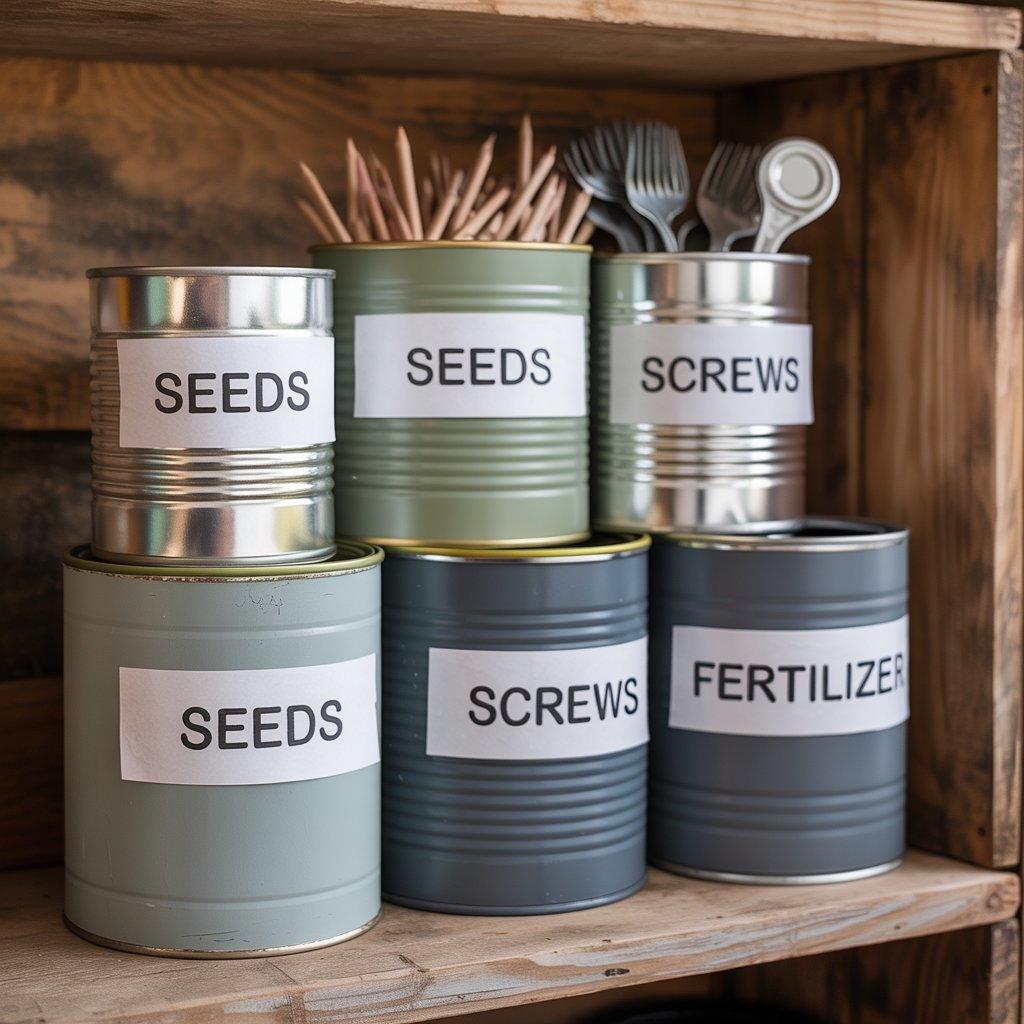
Empty paint cans or coffee cans used to organize small items on shelves.
Clean them out thoroughly and remove labels. For paint cans, use a can opener to remove the lid completely so it’s open. For coffee cans, peel off the paper label, Group items like seeds, screws, or fertilizer pellets.
Label each can with a marker or a piece of tape. You can also paint the outside to match your decor. Stack them or line them up on a shelf. For outdoor use, spray the cans with clear rust protector if they are metal.
Pros: Free, keeps small items from getting lost.
Cons: Metal cans rust outdoors, best for garages or covered sheds.
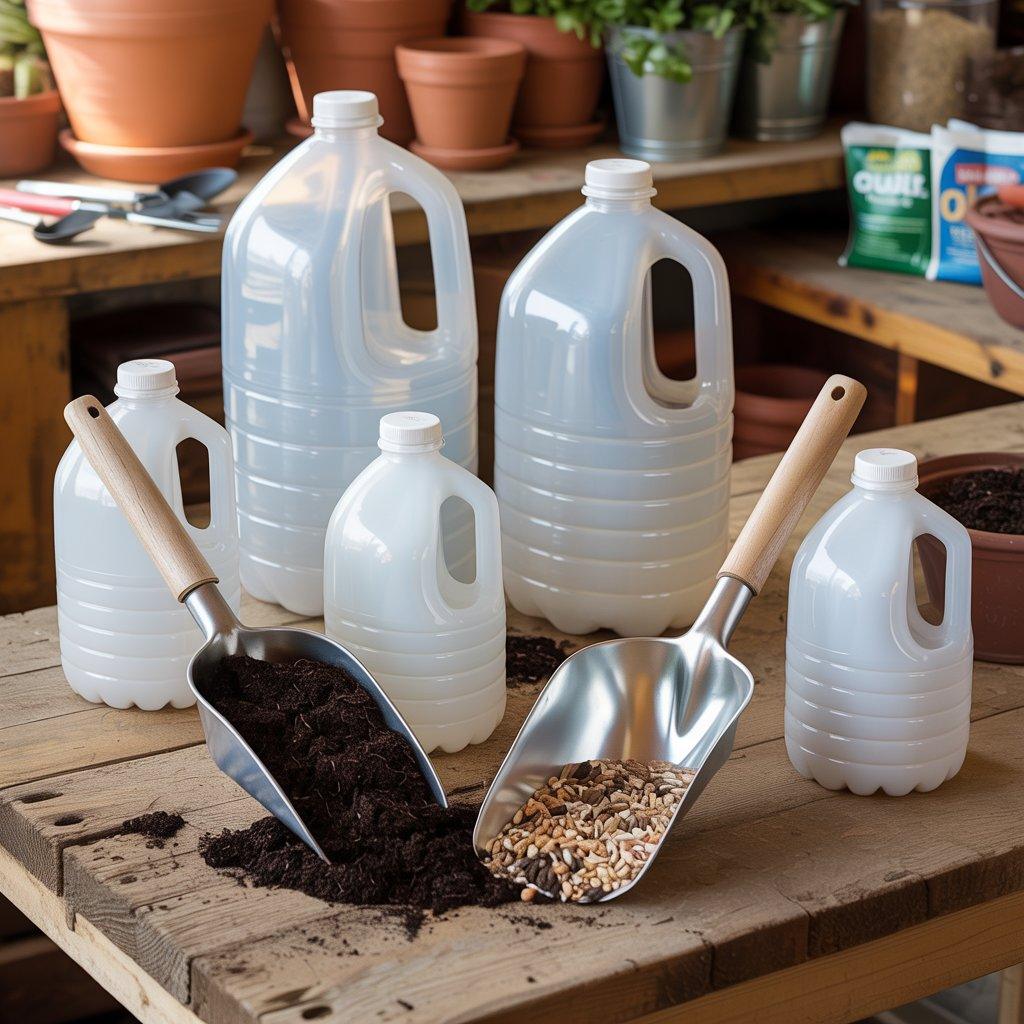
15. Milk Jug Scoops
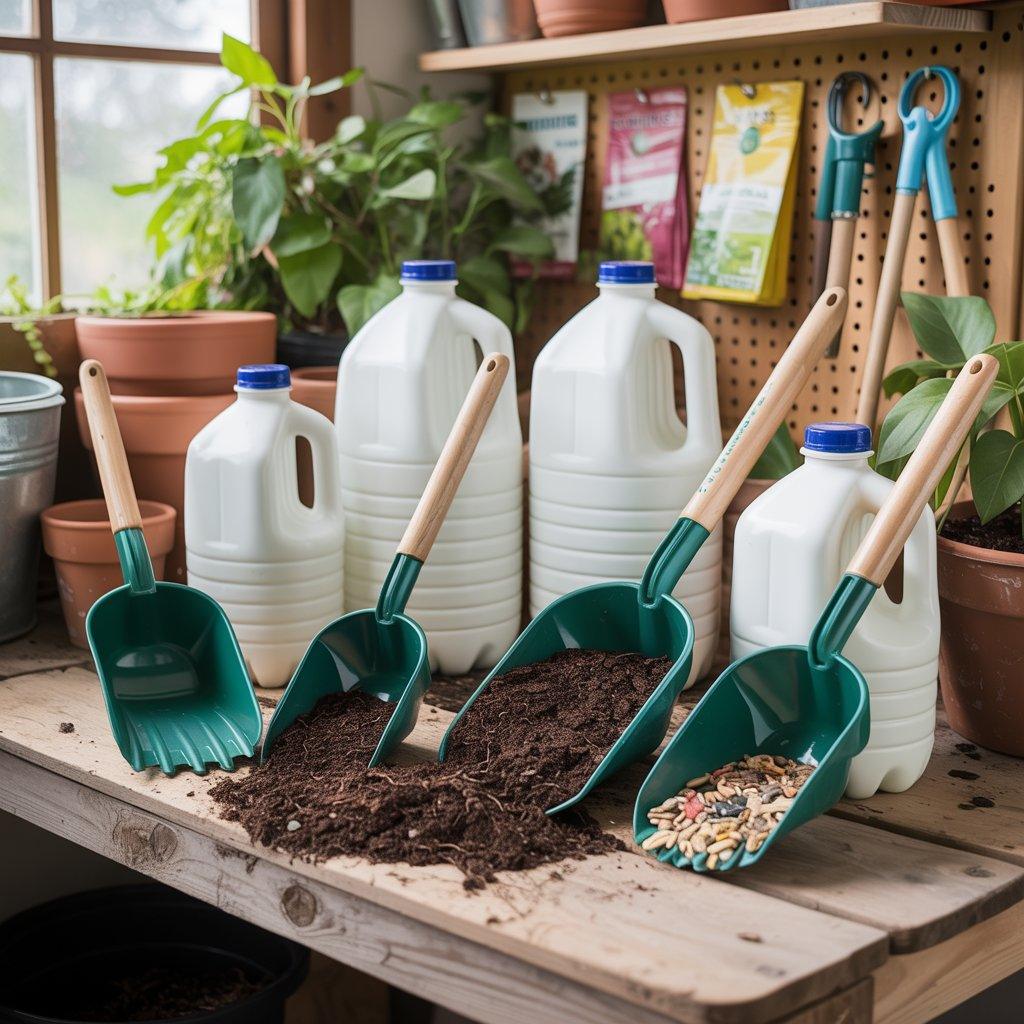
Empty plastic milk jugs cut diagonally to make scoops for potting soil, fertilizer, or birdseed.
Rinse the jug well. Cut diagonally from just below the handle down to the opposite bottom corner. Leave the handle intact for a good grip. Smooth any sharp edges with sandpaper.
Make multiple sizes using different jugs (gallon, half-gallon, quart). Use them to scoop soil into pots or to measure out birdseed. When not in use, hang them by the handle on a hook.
Pros: Free, easy to make, uses plastic from recycling.
Cons: Not for heavy-duty use, plastic can crack over time.
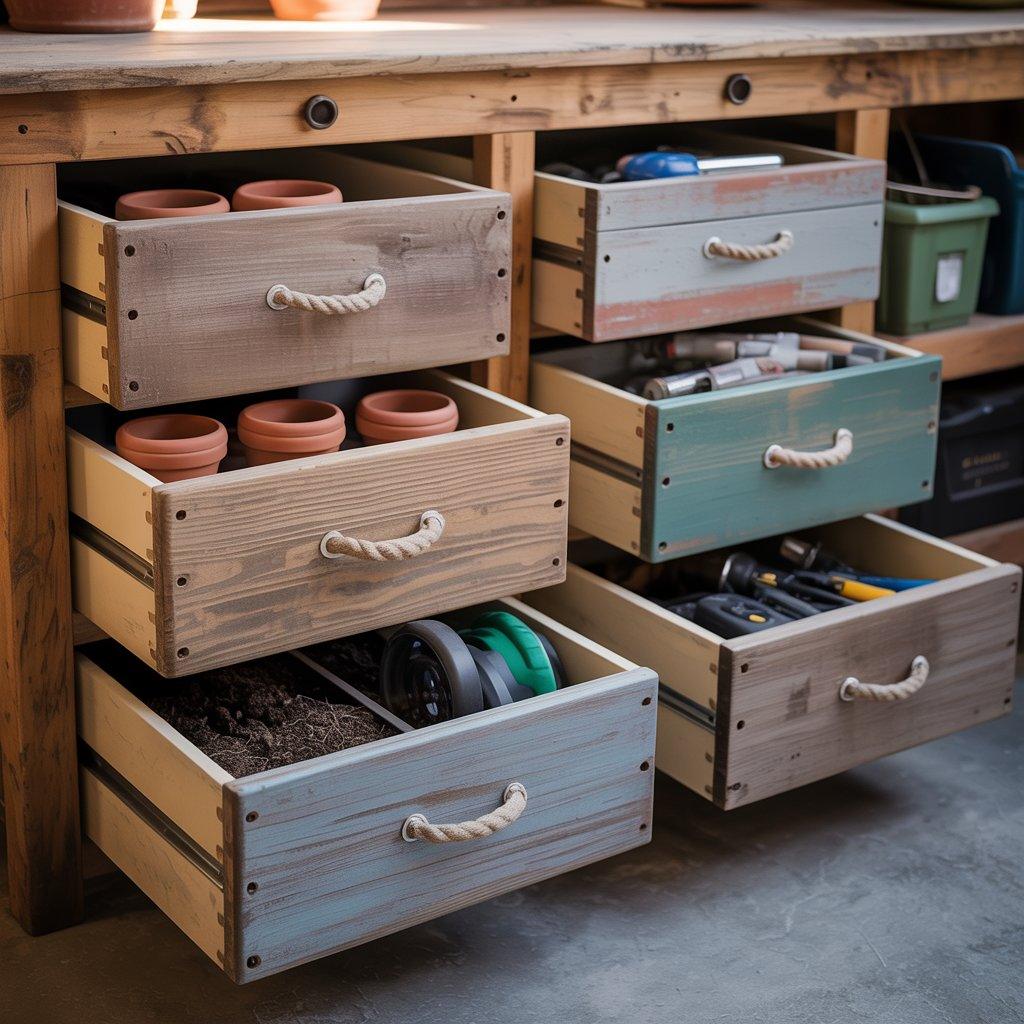
16. Dresser Drawer Storage Bins
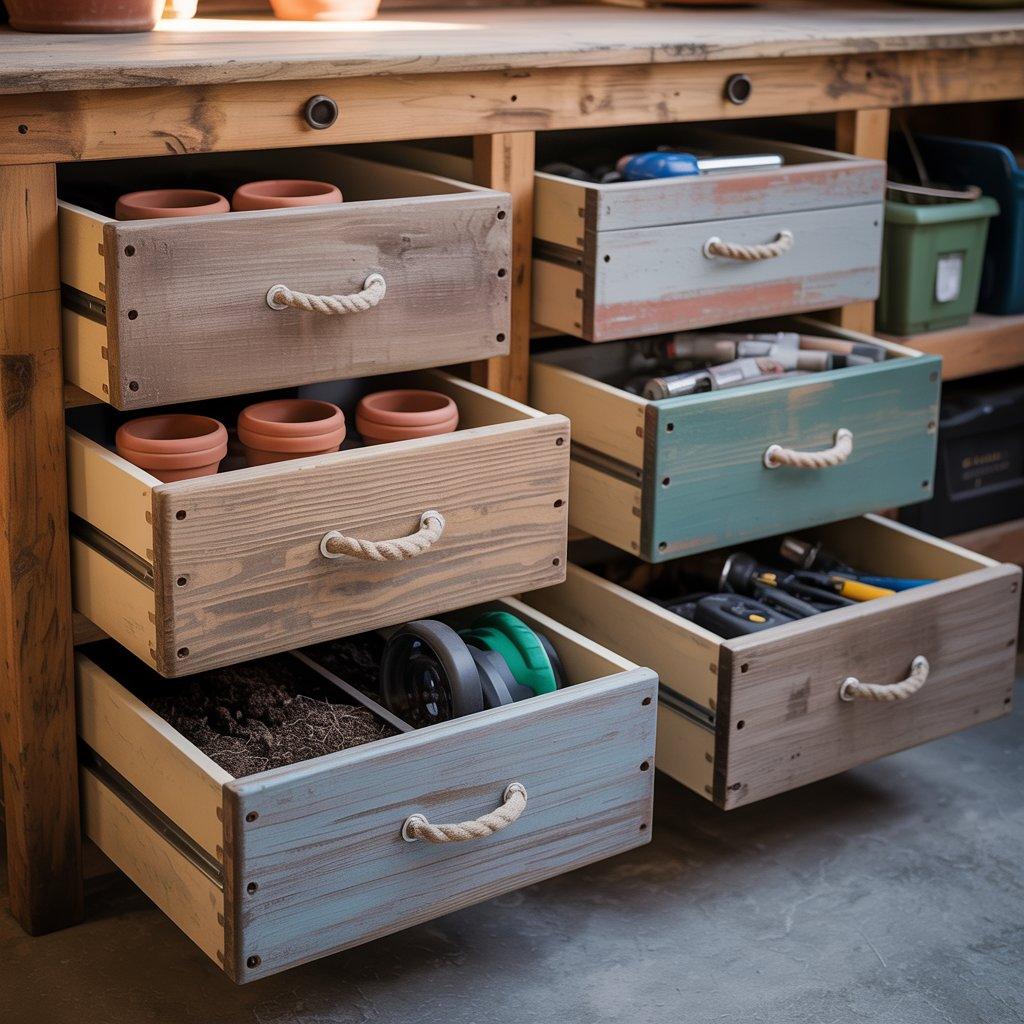
Salvaged dresser drawers used as sliding bins under a workbench or shelves.
Found an old dresser on the curb? Grab the drawers. Remove any hardware like knobs or handles. Add new rope handles by drilling holes in the front and threading rope through. Tie knots inside to secure.
The drawers slide easily on a concrete floor or wooden surface. They hold heavy items like bags of soil, pots, or power tools. You can build a simple frame to hold them if you don’t have a bench.
Pros: Free or very cheap, sturdy, slides easily.
Cons: Need space underneath to slide them in.
Check price on Amazon.com – Dresser Drawer Storage Bins
17. Fence-Mounted Pegboard
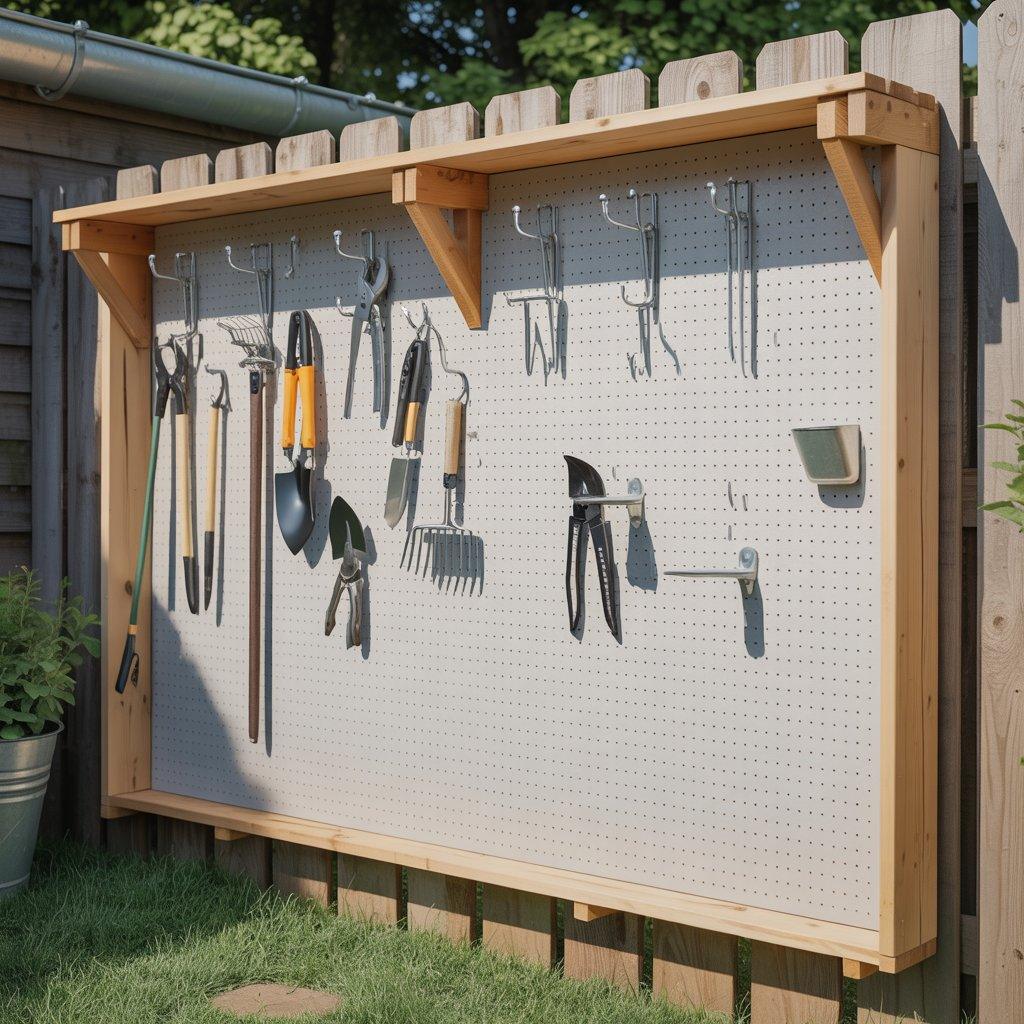
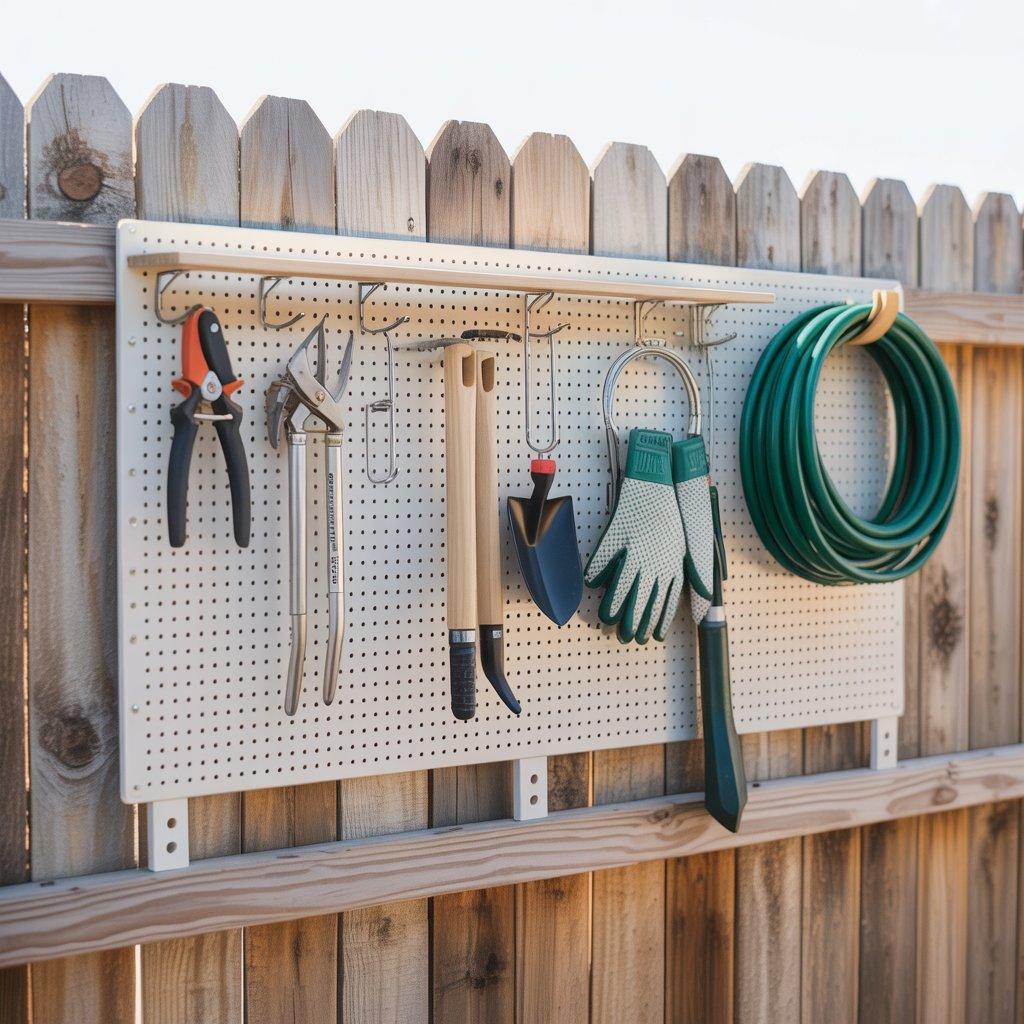
A sheet of pegboard mounted to a fence or shed wall for versatile tool storage.
Use 1/4‑inch or 1/8‑inch thick pegboard. Cut it to the size you need with a jigsaw. Use S‑hooks to hang tools of all sizes. Paint it with exterior paint to match your outdoor space and protect it from moisture.
Install a 2×4 frame behind it (standoffs) so there’s airflow and water doesn’t get trapped. Screw through the pegboard into the frame, then mount the frame to the fence or wall. You can also buy outdoor-rated plastic pegboard.
Pros: Customizable layout holds many tools, easy to rearrange.
Cons: Needs protection from rain, pegboard can warp.
Check price on Amazon.com – peg board
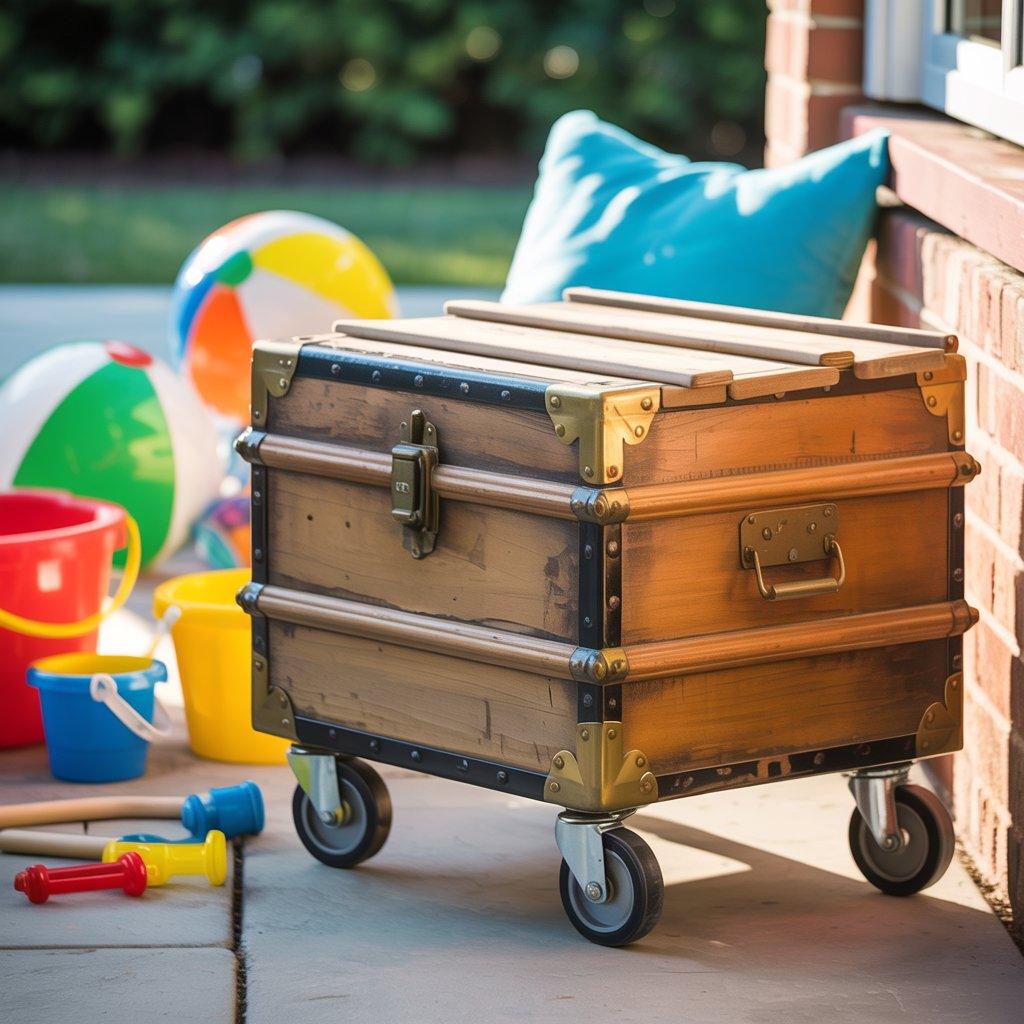
18. Rolling Toy Trunk
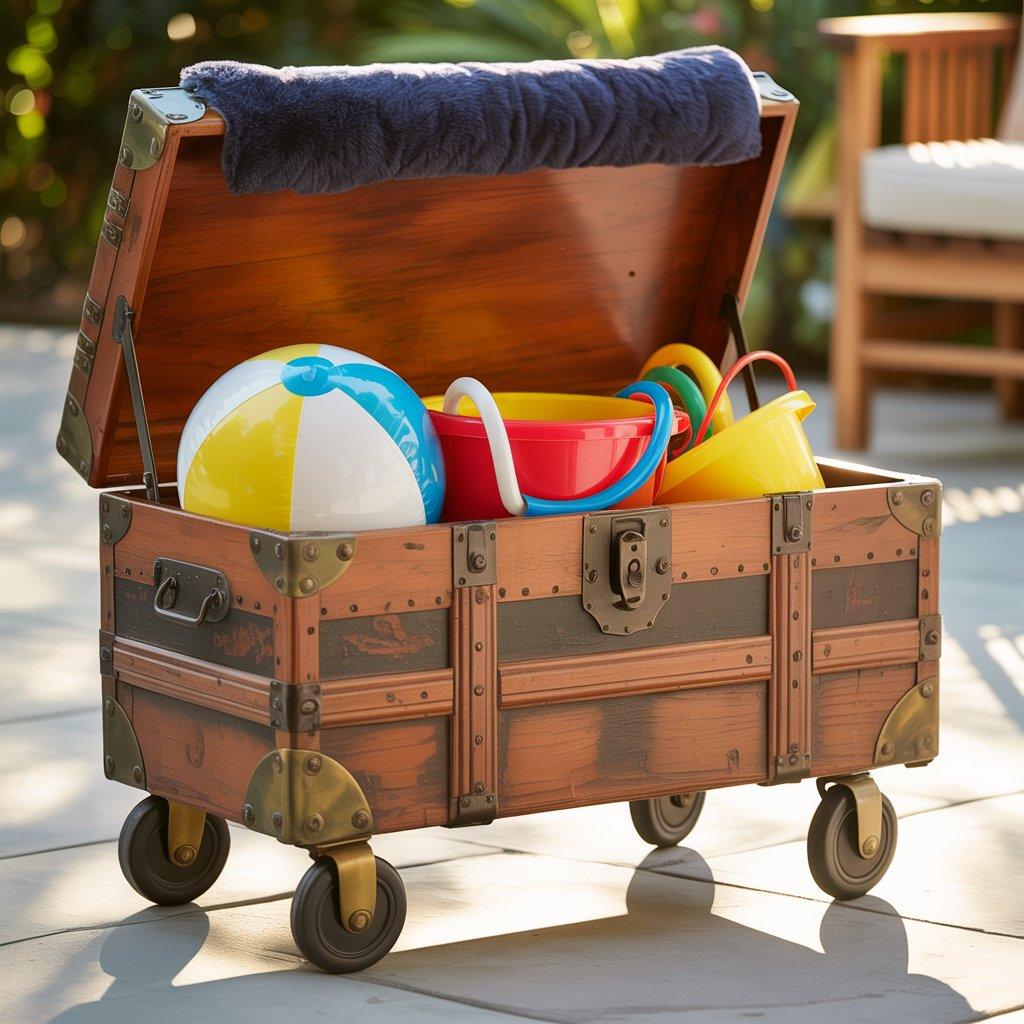
An old trunk or wooden chest with wheels added to the bottom.
Find a sturdy trunk at a garage sale or thrift store. Attach heavy-duty casters (2‑3 inches) to the bottom corners using screws. Make sure the casters lock so it doesn’t roll away. Seal the trunk with waterproof coating or line the inside with a plastic tarp.
Teach kids to toss their outdoor toys inside at cleanup time. The trunk can roll from the patio to the garage easily. Add a cushion to the top to make extra seating.
Pros: Mobile, repurposes old furniture, kids can use it themselves.
Cons: Trunk may be heavy, casters add cost ($15‑20).
19. Ladder Shelf
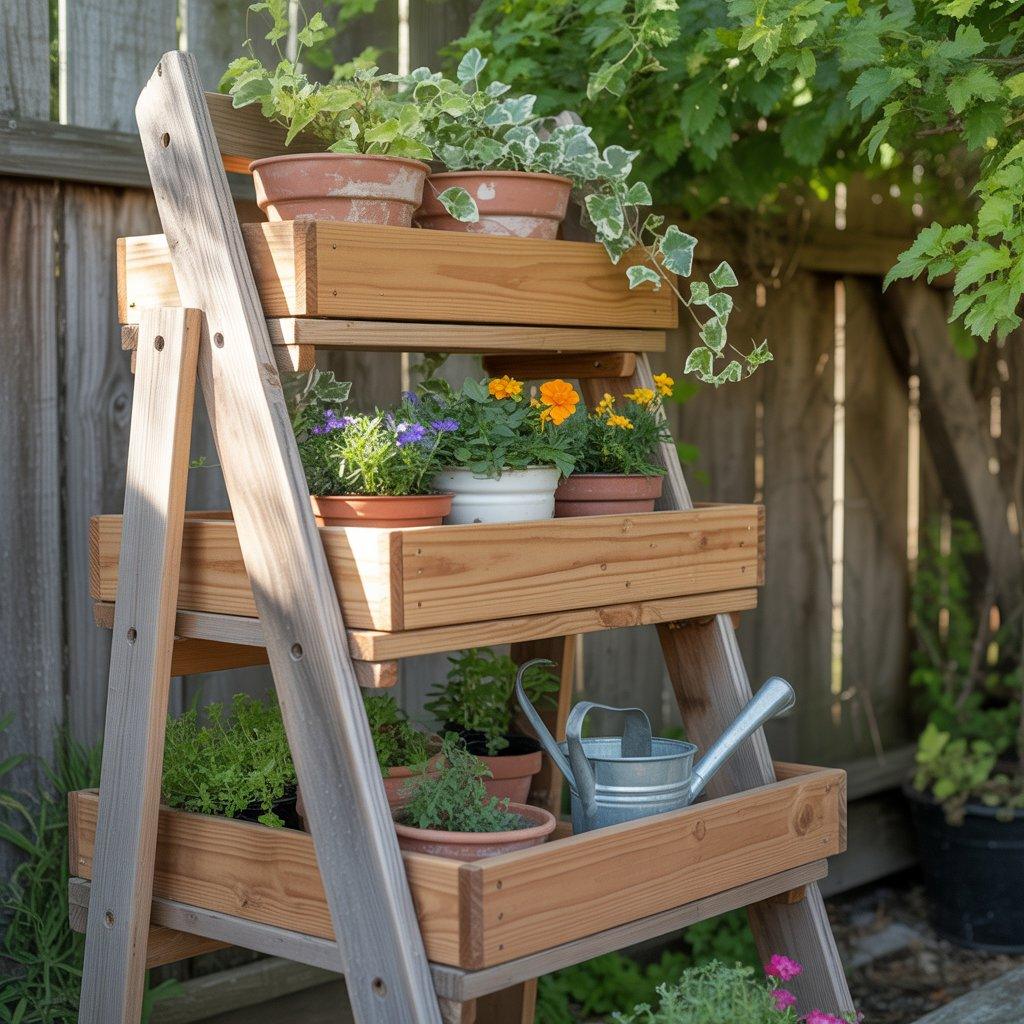
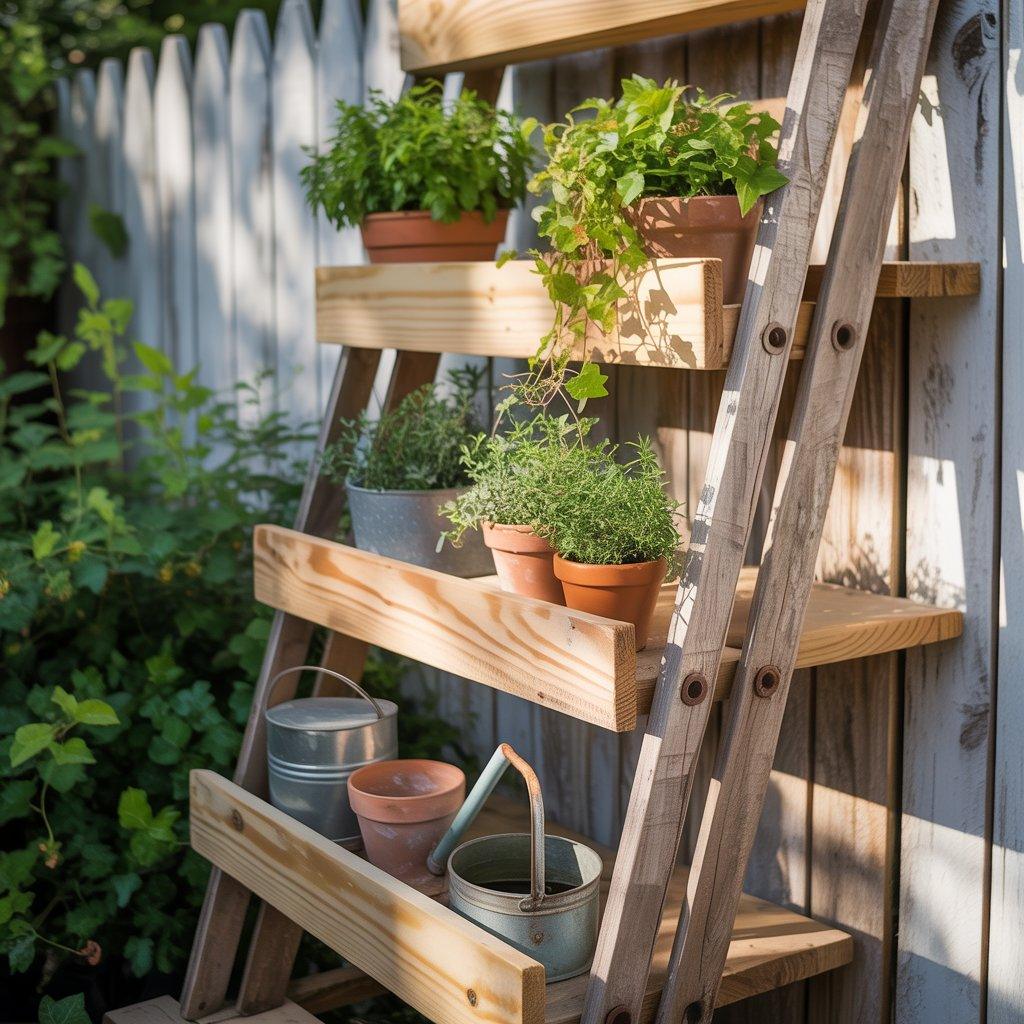
An old wooden ladder turned into a leaning shelf against a wall or fence.
Lean the ladder at a safe angle (about 15‑20 degrees from vertical). Place boards across the rungs to create shelves. Use 1×6 or 1×8 boards cut to the width of the ladder.
They will rest on the rungs without fasteners, but you can screw them down for safety. Use it for potted plants, small garden tools, or outdoor decorations. For a safer setup, attach the ladder to the wall with brackets. An extension ladder works best because it’s longer.
Pros: Free if you have an old ladder, looks rustic, easy to make.
Cons: Limited weight capacity, needs to be secured so it doesn’t tip.
Check price on Amazon.com – Ladder Shelf
20. Shovel Holster (PVC or 2×4)
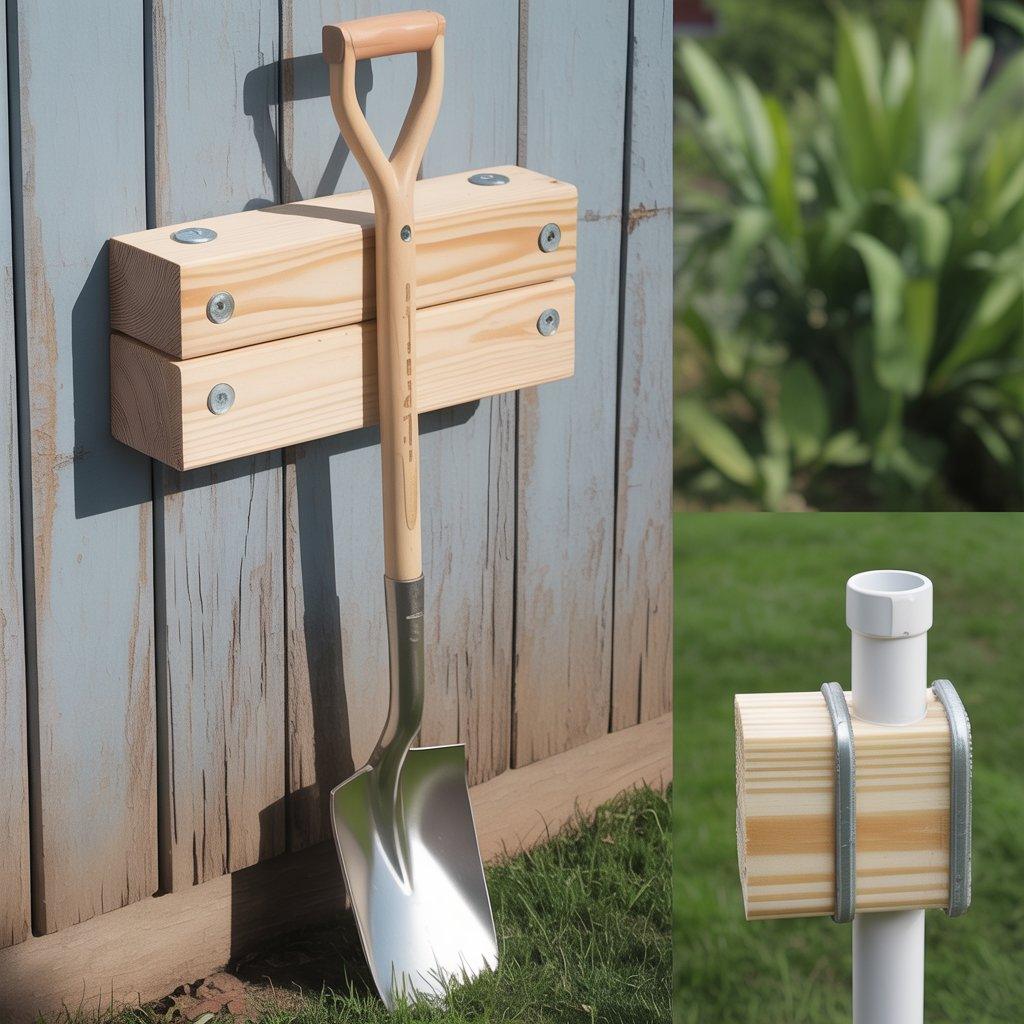
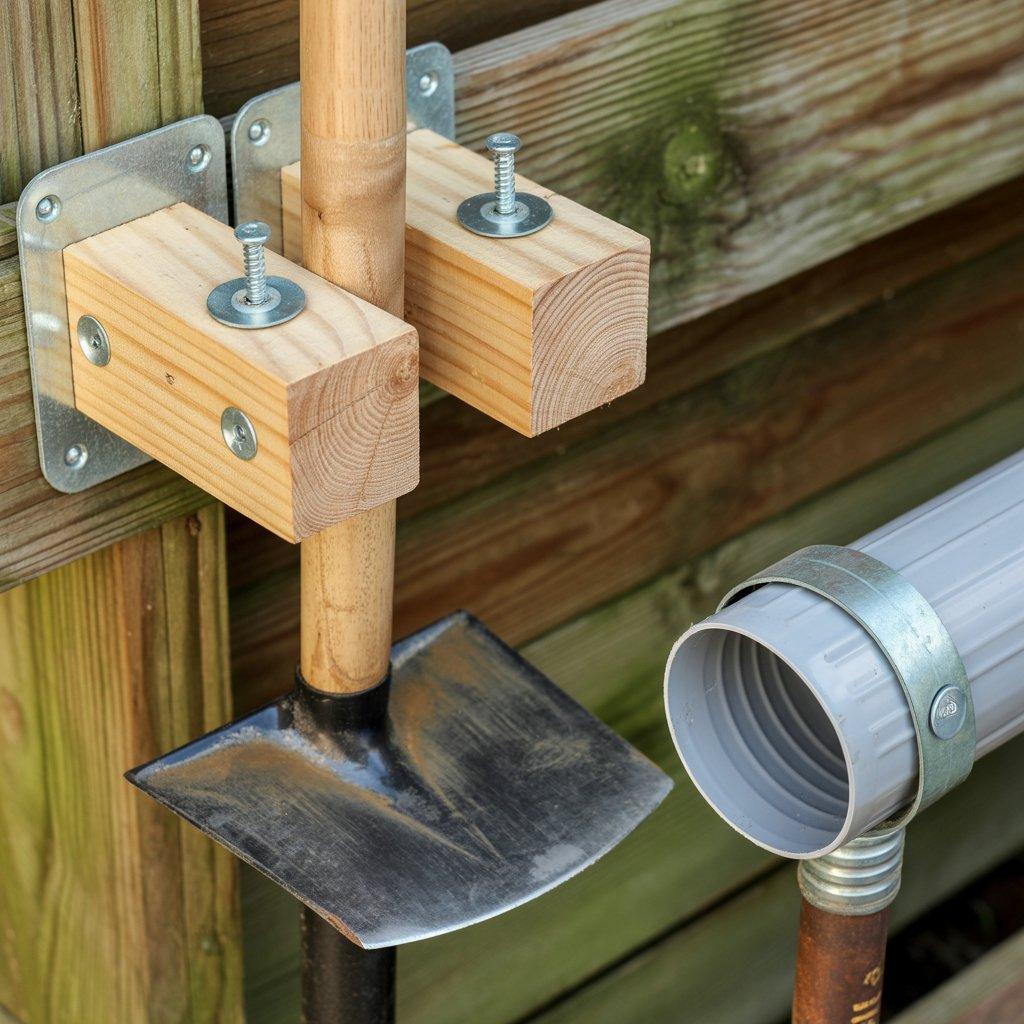
A simple holster made from two pieces of 2×4 screwed to a wall, spaced apart to hold the shovel handle.
Cut two 2×4 blocks about 4‑6 inches long. Mount them vertically on a shed wall, spaced about 2 inches apart. Slide the shovel handle between the blocks. The blade rests on the ground.
For a PVC version, cut a 6‑inch section of 2‑inch PVC pipe. Mount it to the wall with pipe straps. Slide the handle into the pipe. Either method keeps shovels upright and organized.
Pros: Cheap, keeps shovels upright and organized, uses scrap wood or pipe.
Cons: Only works for long-handled tools.
Check price on Amazon.com – shovel holster
21. Magnetic Strip for Small Metal Tools
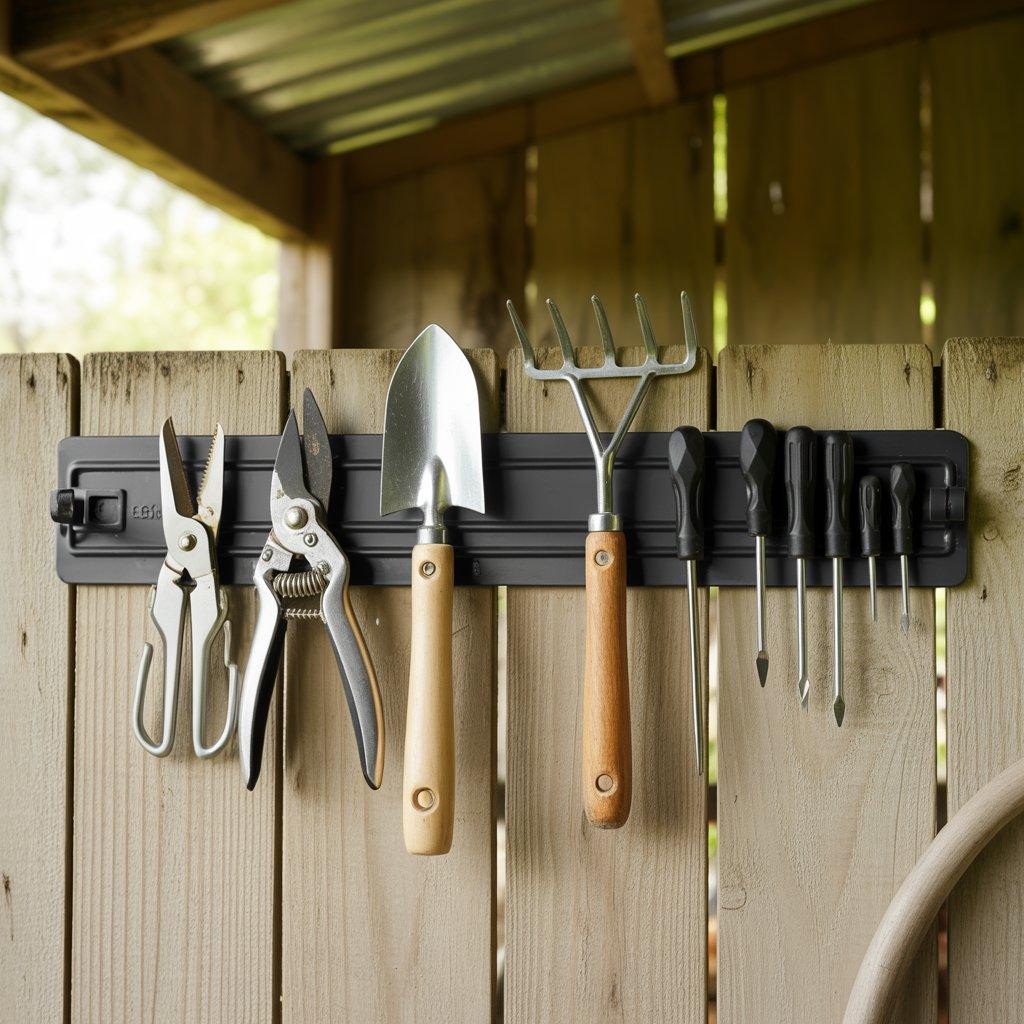
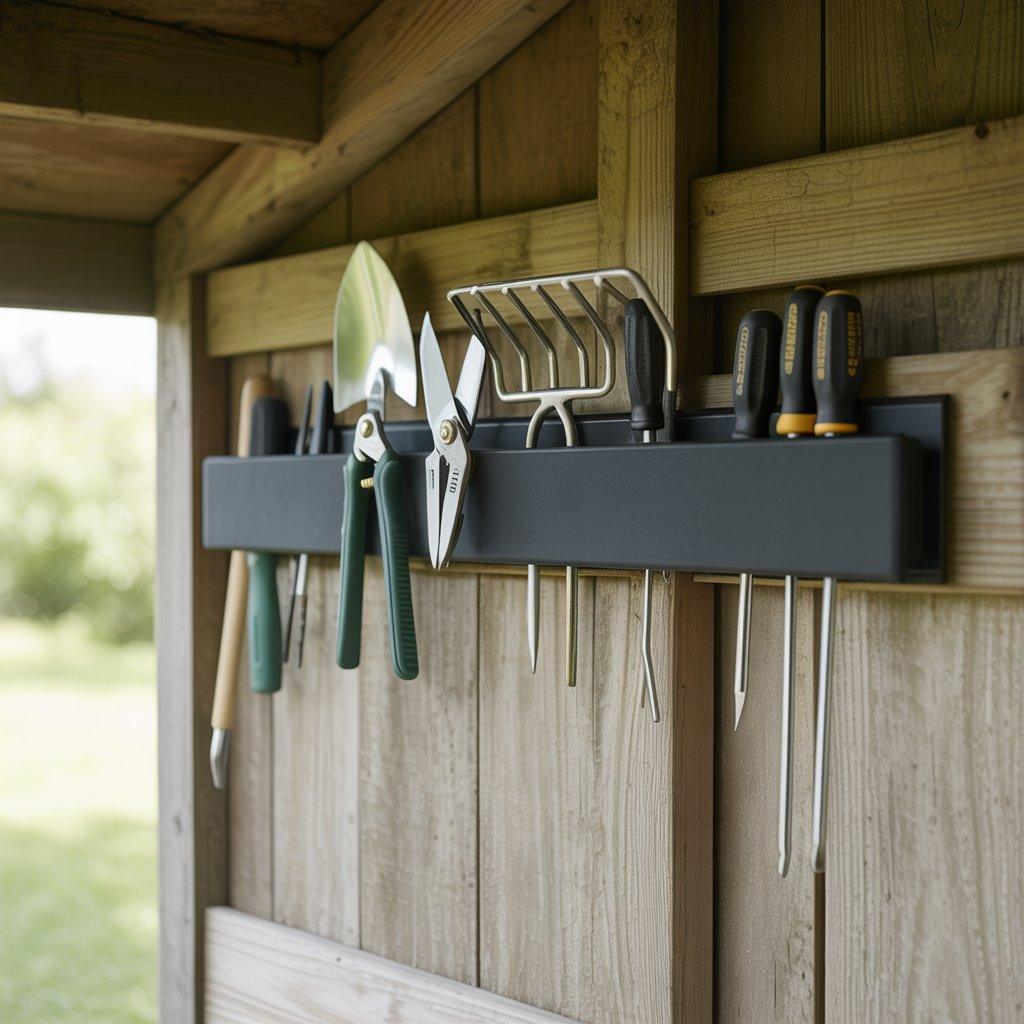
A magnetic tool strip (like the ones used in kitchens for knives) mounted on a shed wall.
Buy a 12‑ or 18‑inch magnetic strip (around $10‑15). Mount it with screws. It holds metal tools like pruners, trowels, small hand rakes, or screwdrivers.
The magnet is strong enough to hold even when the strip is vertical. You can mount multiple strips in a row. This is similar to using magnetic strips for hand tools in a garage. Keep it under a covered area so the magnets don’t rust.
Pros: Super easy access, small footprint, inexpensive.
Cons: Only holds metal tools, magnets can weaken over time.
Check price on Amazon.com – magnetic strips for tools
22. Old Shower Caddy
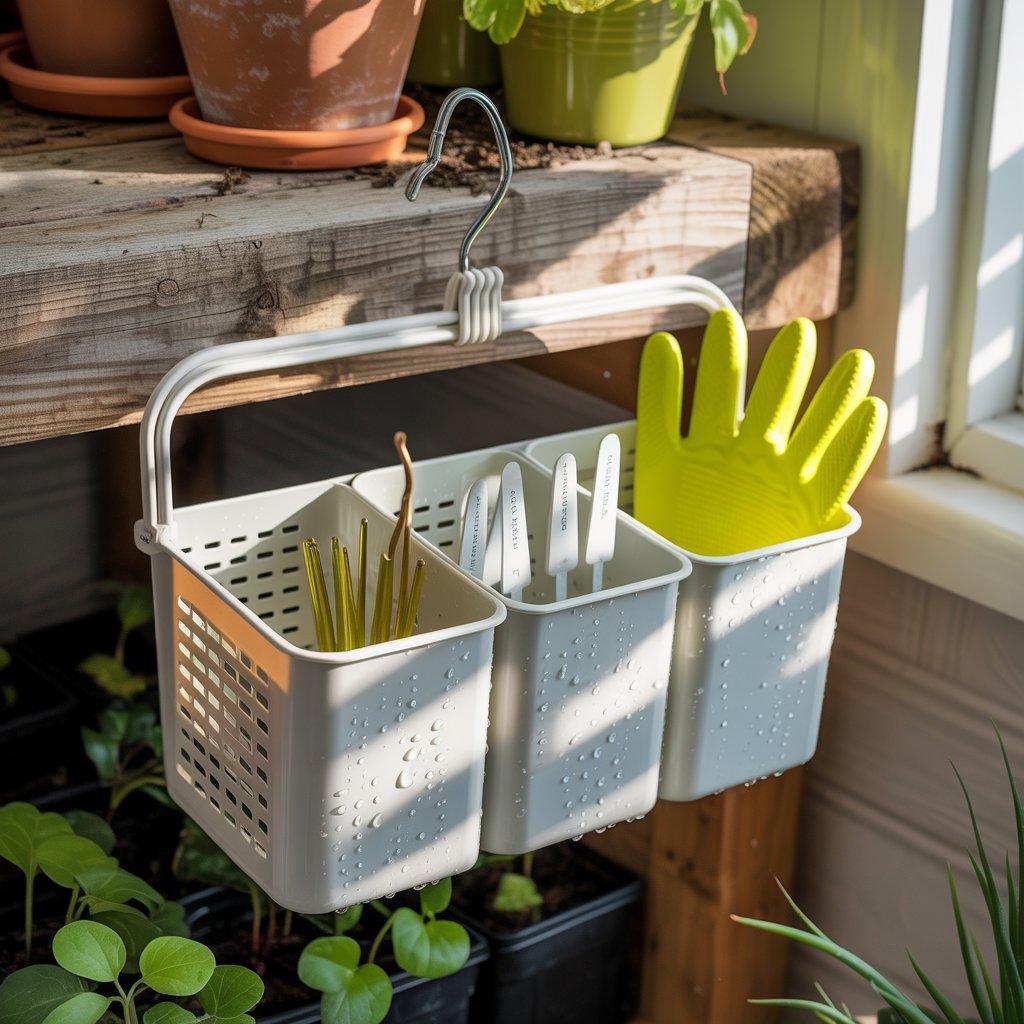
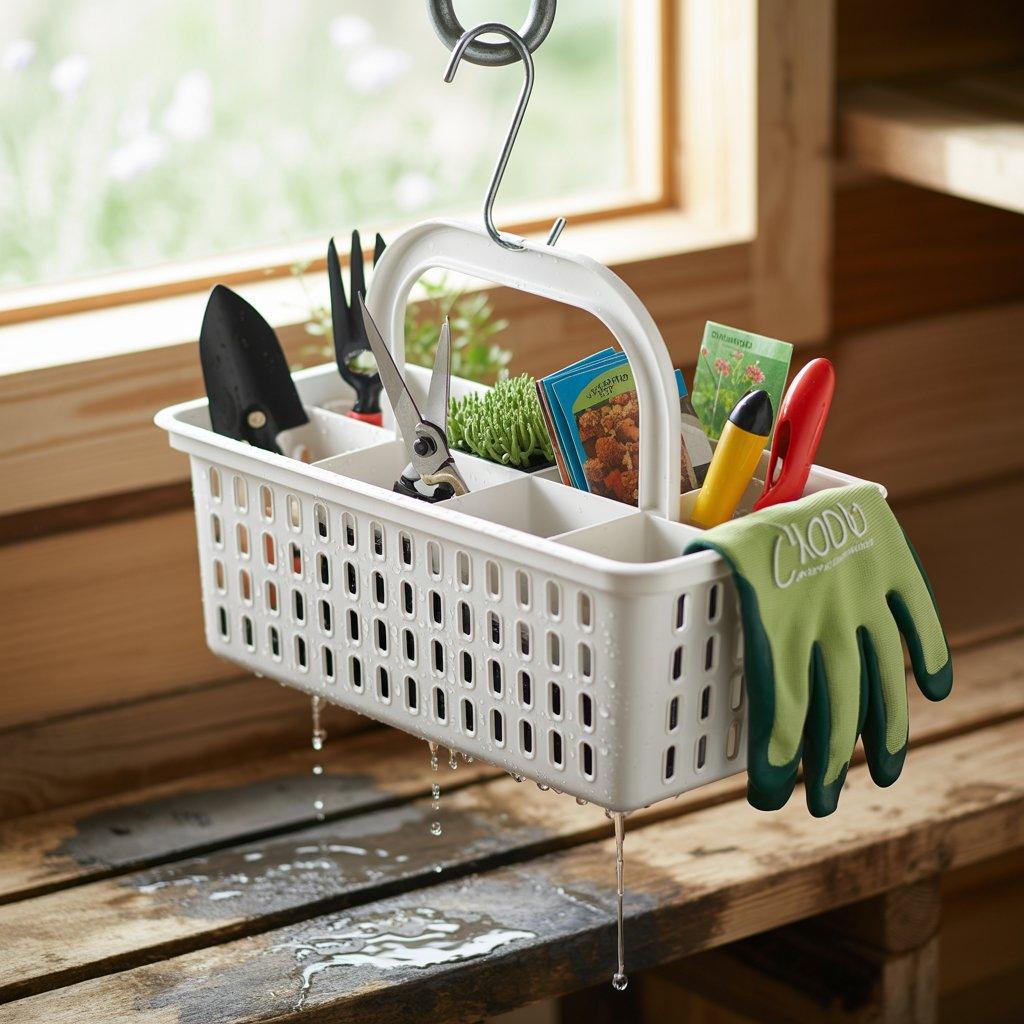
A plastic shower caddy hung on a hook near your potting bench.
The compartments hold small tools, gloves, and plant markers. Drainage holes let water escape if tools are damp. Hang it from a hook or nail. Use a caddy that has a handle or a hook built in.
You can also use a mesh shower caddy the mesh allows more airflow to dry tools faster. These are often available at thrift stores for a dollar or two.
Pros: Free if repurposed, convenient, keeps items together.
Cons: Plastic can crack in cold weather.
Check price on Amazon.com – Old Shower Caddy
23. Clothespin Bag for Gloves
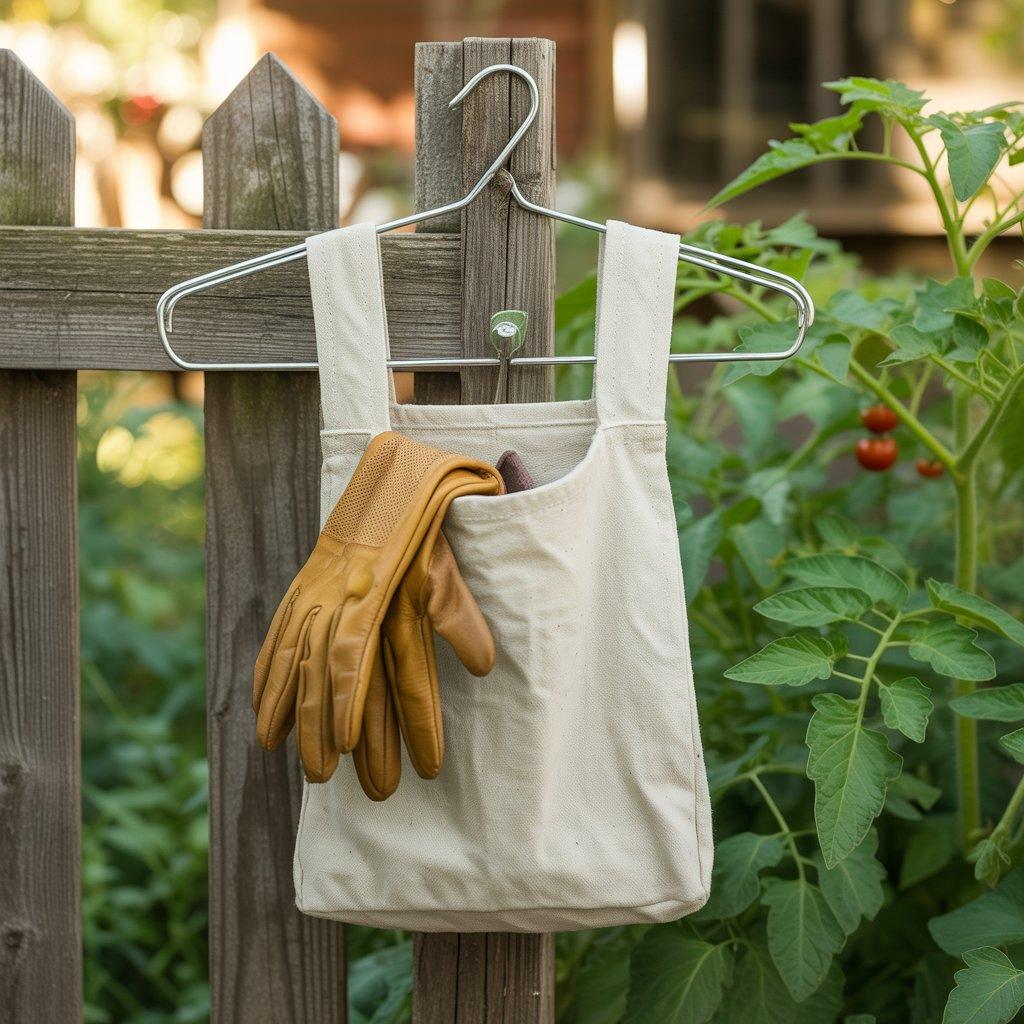
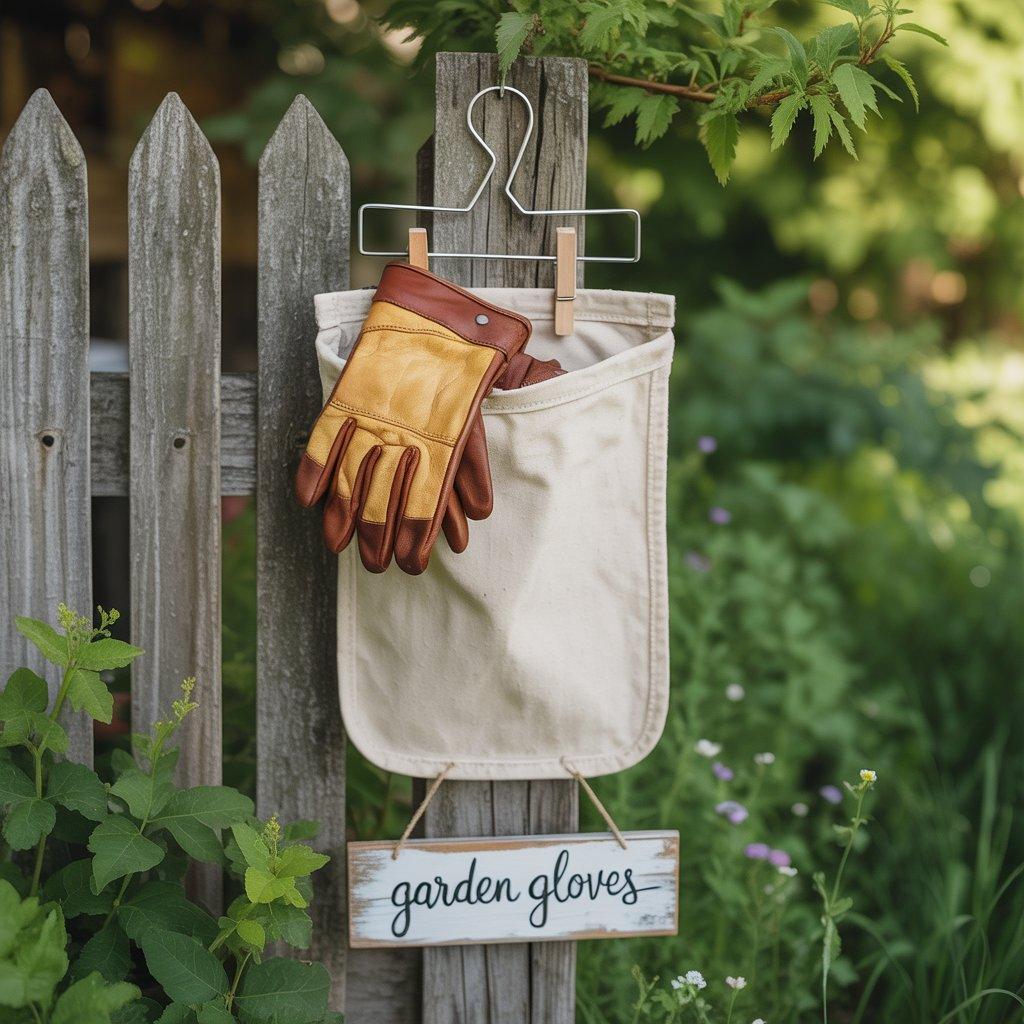
A simple canvas bag or clothespin bag hung on a fence post for holding gardening gloves.
Buy a canvas clothespin bag (around $5‑8) or make one from scrap fabric. Hang it from a hook or nail near your garden entrance. Slip gloves into the bag when you’re done.
The open top makes it easy to grab a pair quickly. Choose a bag with a wire or plastic hanger built in. For wet gloves, leave them outside the bag to dry first.
Pros: Costs almost nothing, keeps gloves handy.
Cons: Not weatherproof (bring inside during rain).
Check price on Amazon.com – clothespin bag
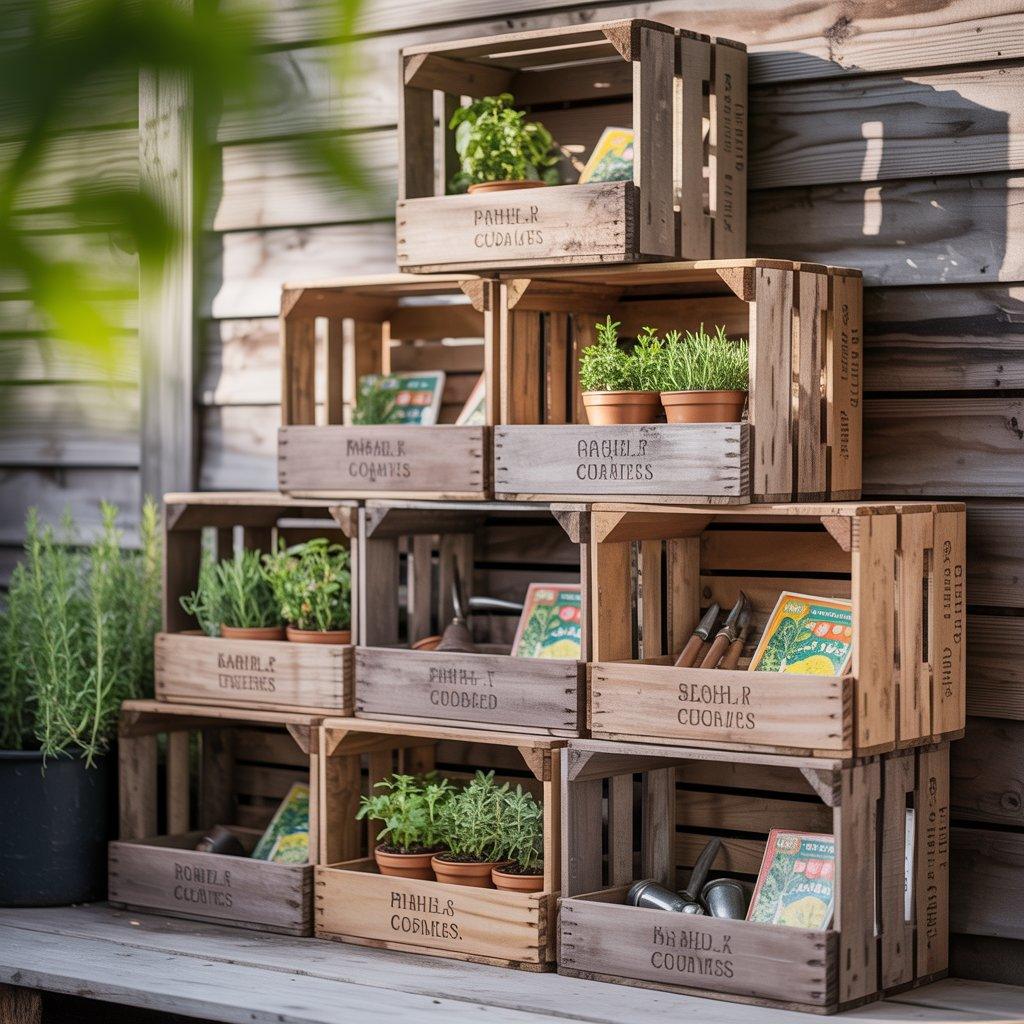
24. Wine Crate Shelves
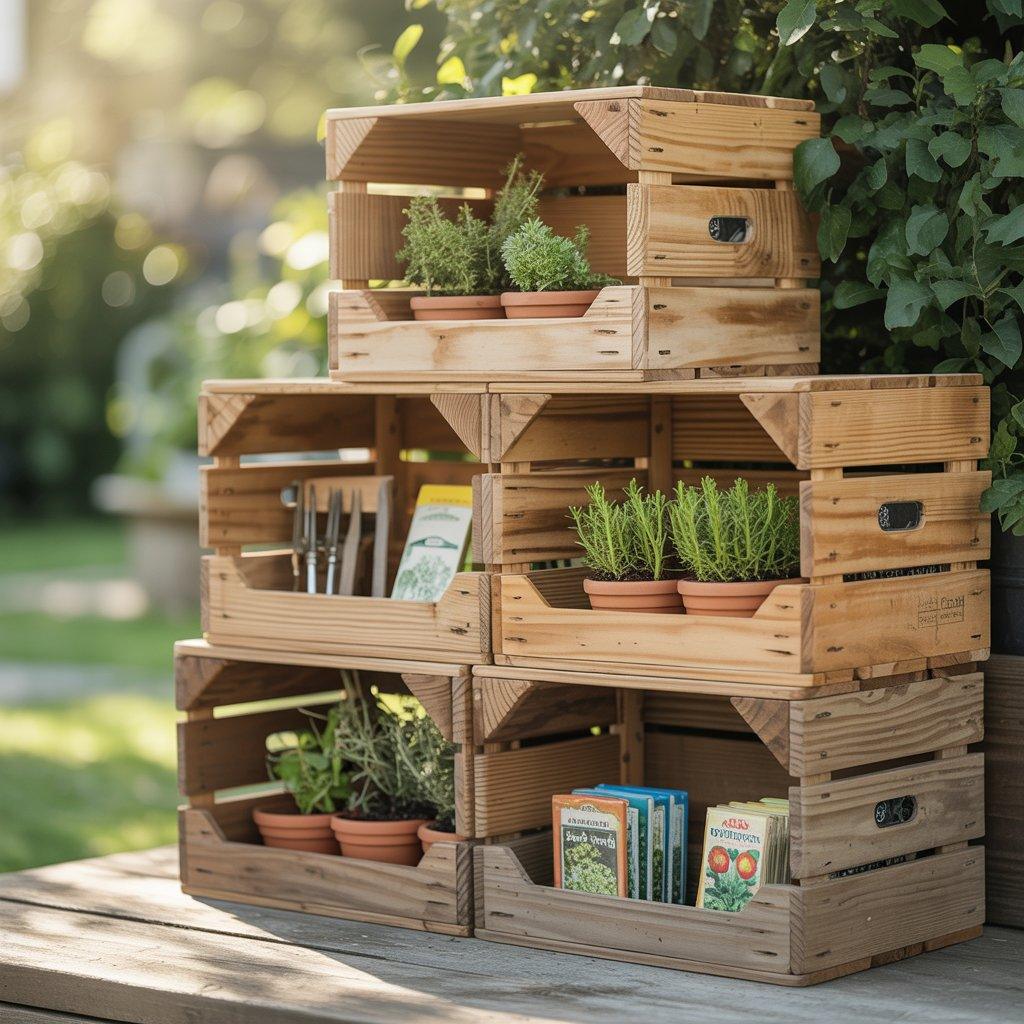
Wooden wine crates stacked and nailed together to create cubby storage.
Get crates for free from liquor stores or wine shops. They are usually thin wood but surprisingly sturdy. Stack them in a pyramid or column. Nail or screw them together through the sides.
The open fronts create cubbies perfect for holding small pots, seed packets, or garden decorations. You can also mount crates on a wall horizontally. Paint or stain them to match your outdoor decor.
Pros: Free materials, rustic look, modular design.
Cons: Crates can be thin and not very strong.
Check price on Amazon.com – Wine Crate Shelves
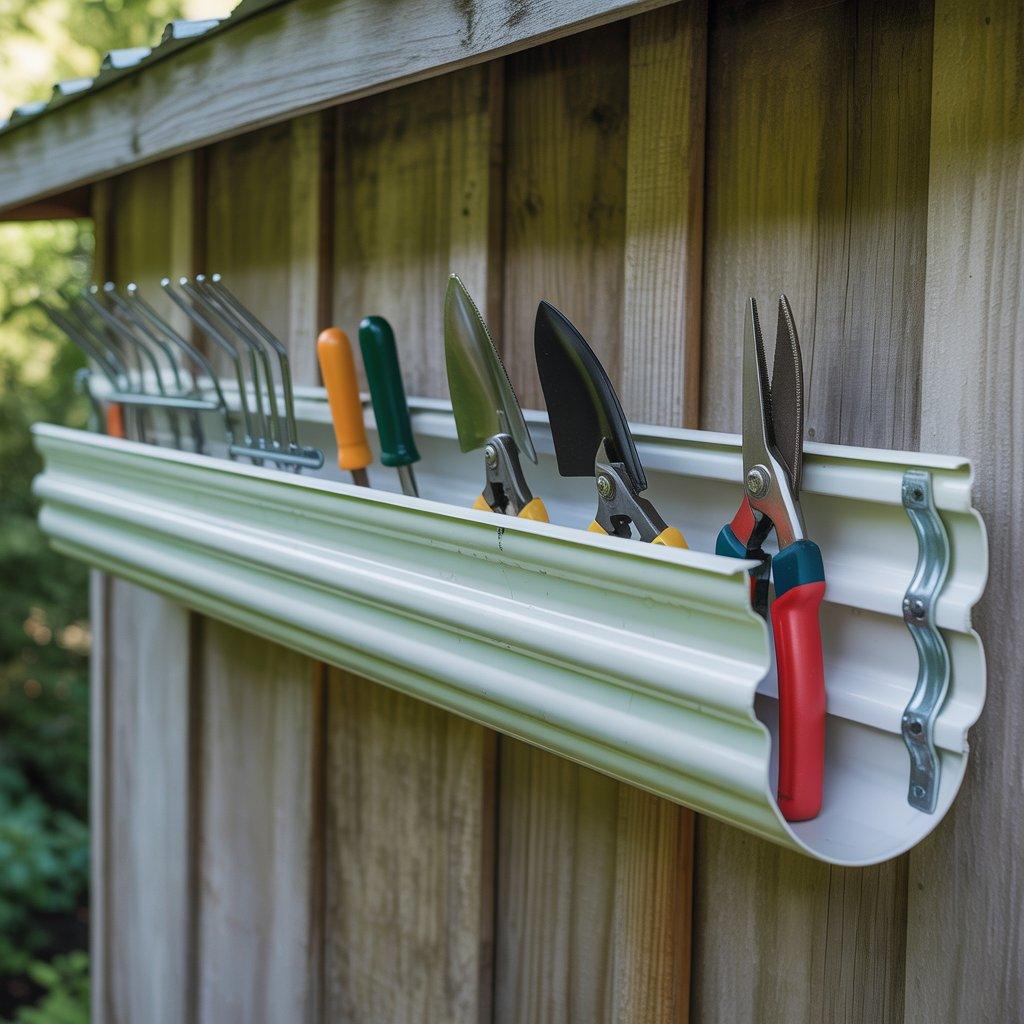
25. Gutter Garden Tool Holder
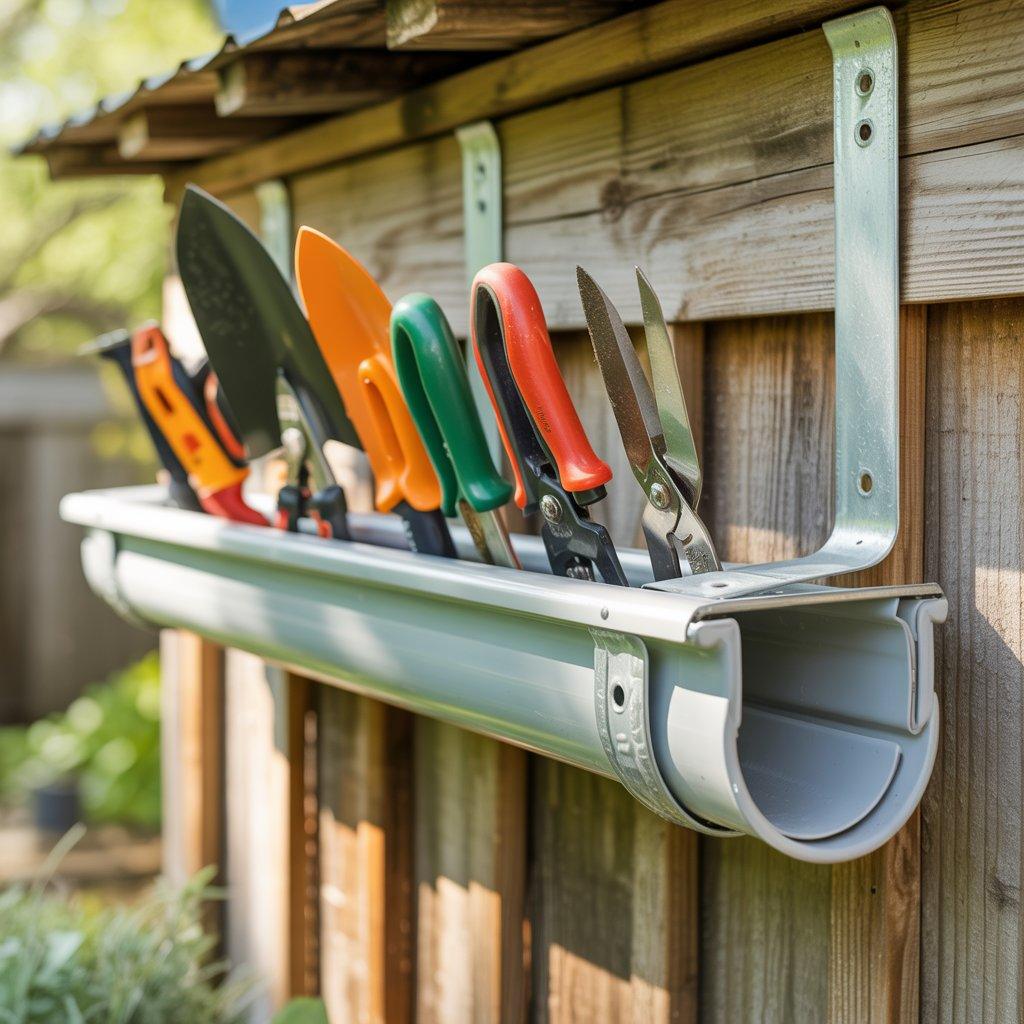
A short section of rain gutter mounted horizontally on a shed wall.
Cut a 2‑ to 3‑foot section of vinyl rain gutter. Add end caps to both ends. Mount it to the wall with gutter brackets or simple L‑brackets. Slide hand trowels, pruners, and snips into the gutter they stay organized and visible by their handles.
For a slanted look, mount one side higher than the other so tools slide to one end. Use a scrap piece of gutter leftover from a home project.
Pros: Uses leftover gutter material, keeps tools separated, easy to clean.
Cons: Tools may rust if left in damp conditions.
Check price on Amazon.com – Gutter Garden Tool Holder
Quick Reference – Pros and Cons Summary
| Approach | Pros | Cons |
| Large Ready-Made Shed | Huge capacity, durable, includes floor | Expensive, heavy, needs base |
| Storage Cabinet | Affordable, easy assembly, lockable | Best for covered areas only |
| DIY Pallet Shed | Very cheap, eco‑friendly | Time‑consuming, quality varies |
| DIY Storage Bench | Attractive, dual‑purpose | Requires basic woodworking |
| Cinder Block Shelves | Extremely cheap, no tools | Not very attractive |
| Pallet Tool Rack | Free, simple | Needs sturdy wall or fence |
| PVC Tool Holders | Cheap, keeps tools neat | Needs wall space |
| Pegboard | Customizable, easy to rearrange | Can warp in wet areas |
| Magnetic Strip | Instant access, small footprint | Only metal tools |
Mistakes to Avoid with Outdoor Storage
Skipping the foundation, Sheds need a level, solid base. A gravel pad or concrete slab is best. Without it, doors won’t close right and panels can crack.
Using untreated wood outdoors, Plain pine rots in a year or two. Use pressure treated lumber, cedar, or a good exterior sealant.
Forgetting about ventilation, Enclosed storage gets humid and moldy. Make sure your shed has vents. Leave airflow behind pegboards.
Storing chemicals next to tools, Keep pool chemicals, fertilizer, and paint in separate containers. Spills can ruin your tools.
Overloading shelves, Check weight limits. Plastic shelves often hold 40‑50 lbs per shelf. Metal ones hold more.
Blocking access to utility items, Don’t put a storage bench in front of your outdoor electrical panel or water spigot.
Frequently Asked Questions
Q1: What is the best material for outdoor storage shelves?
Pressure‑treated lumber, cedar, or cinder blocks, Plastic and metal can also work but may need rust protection or UV resistance.
Q2: Do I need a permit for a storage shed?
It depends on your local zoning laws. Many places allow sheds under 100‑200 square feet without a permit, but always check first.
Q3: How do I keep pests out of my outdoor storage?
Seal gaps with steel wool and expanding foam. Store food and seed in sealed metal or plastic containers. Use snap traps for mice.
Q4: Can I leave a Sterilite cabinet outside all winter?
It’s best for covered or sheltered areas. Direct rain and freeze‑thaw cycles can damage the plastic over time.
Q5: How long does a pallet shed last?
With proper treatment and a good foundation, a pallet shed can last 5‑10 years. Untreated pallets may rot much sooner.
Design and Styling Ideas
Paint cinder blocks in bright colors for a playful look near a pool or playground.
Use matching paint on pallet racks to blend with your fence or house exterior.
Add a cushion to a DIY storage bench so it becomes comfortable seating.
Grow climbing plants on a trellis in front of a shed to soften its appearance.
Label everything – use chalkboard paint or simple tags so everyone knows where items belong.
Group by activity – put all grilling supplies in one spot, all gardening tools in another.
Use matching containers – transfer soil and seed from colorful bags into plain galvanized buckets for a cleaner look.
Conclusion
You don’t need a huge budget or professional skills to get your backyard organized. Start with one idea from this guide that fits your space and ability.
If you need serious storage for large equipment, go with a Lifetime shed. If you want something quick and cheap, build a pallet rack or cinder block shelves. If you’re somewhere in between, the Sterilite cabinet is a solid choice.
Pick your project, gather your materials, and enjoy a backyard that’s actually usable instead of one that feels like a storage unit.
Reated Post: