
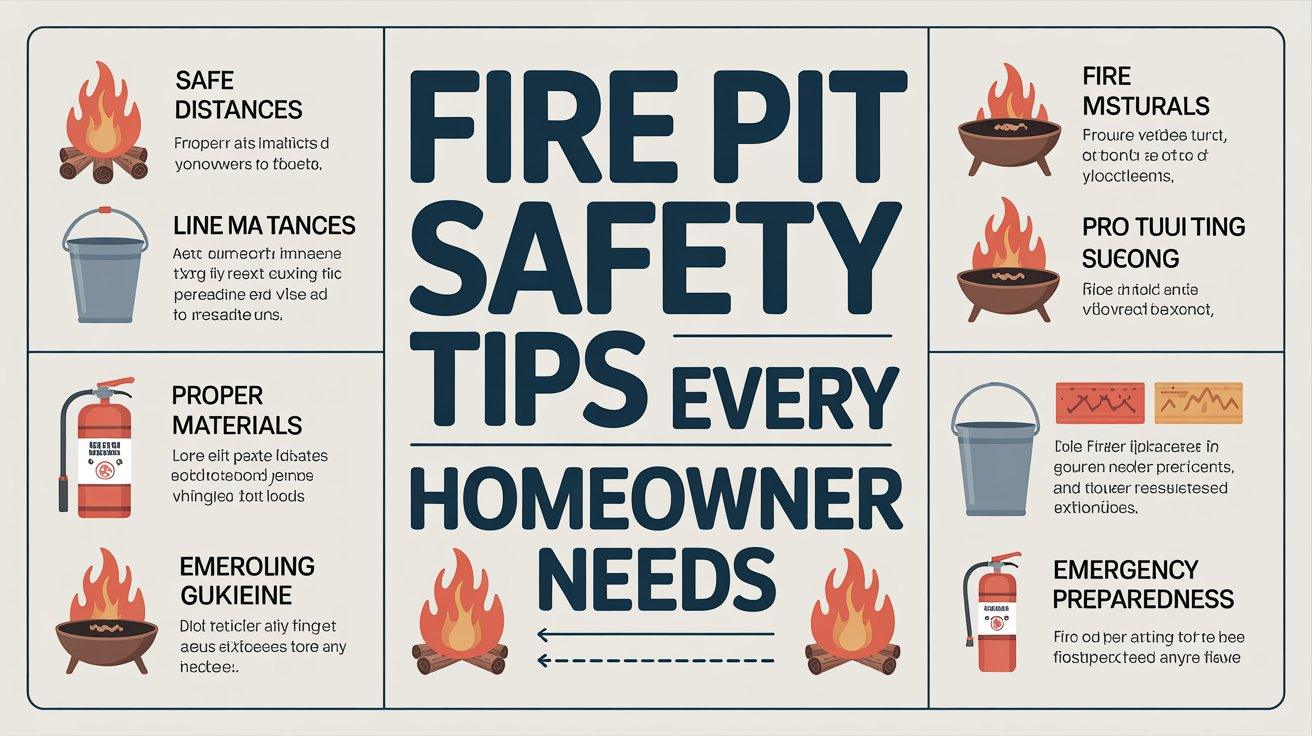
A fire pit is a great addition to any backyard. It gives you warm nights, toasted marshmallows, and a place to gather with family. But fire is still fire. It can spread fast if you’re not careful.
Every year, fire pits cause burns, property damage, and even house fires. The good news is most of these accidents are easy to prevent. You just need to know a few basic rules.
This guide will walk you through simple, practical fire pit safety tips that every homeowner should follow. No scary stuff. Just real advice you can use tonight.
1. Pick the Right Spot for Your Fire Pit
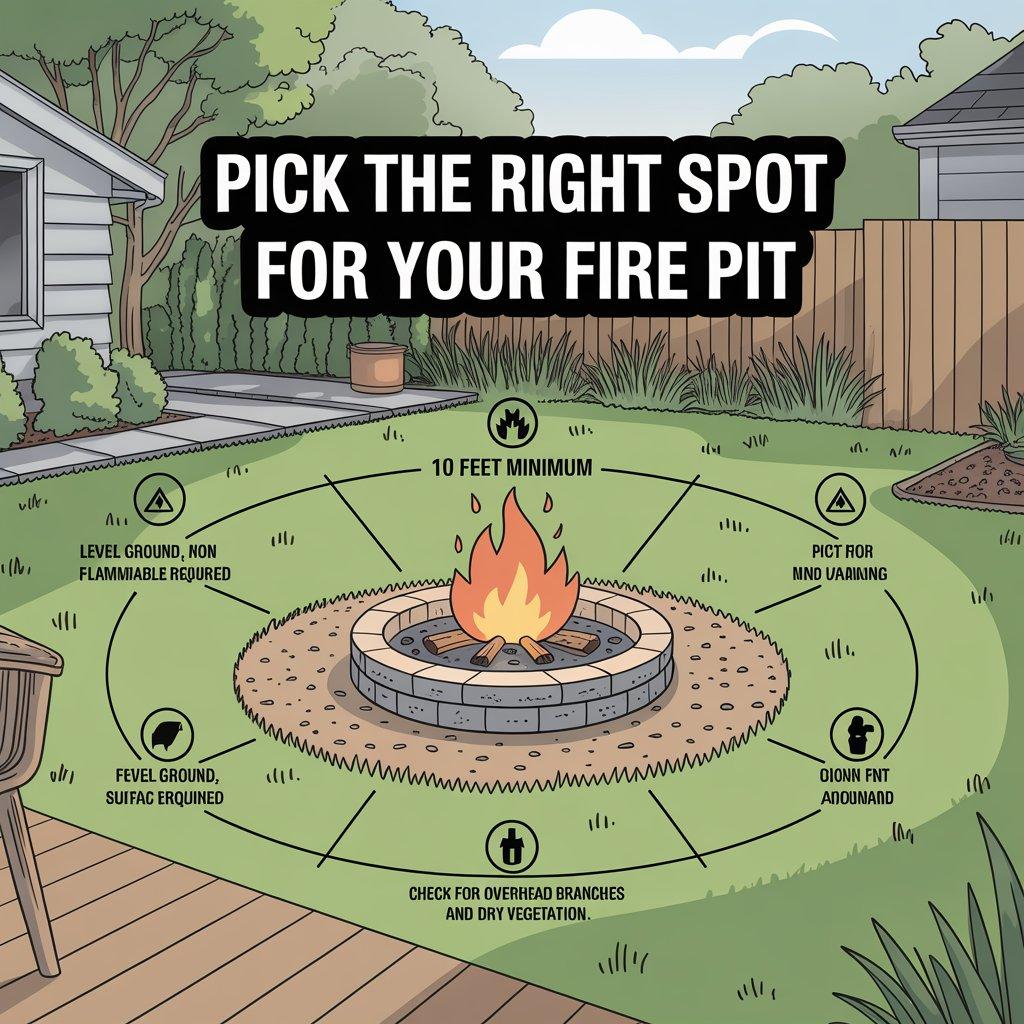
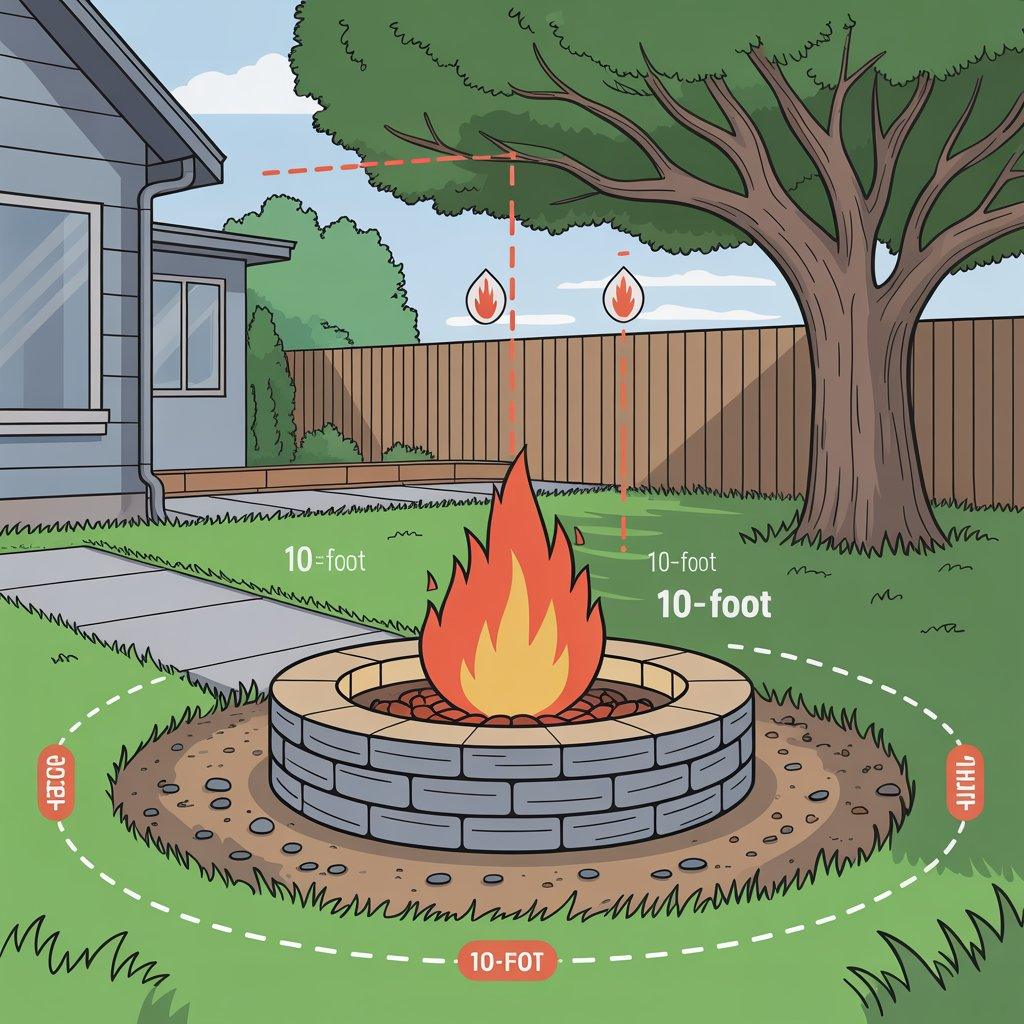
Where you put your fire pit matters more than you think. You need at least 10 feet of clearance from your house, garage, shed, or any other structure. The same goes for trees, bushes, and wooden fences.
Embers can float up and land on something dry, and that’s how a small fire becomes a big problem. Also, avoid placing your fire pit under low-hanging branches or near dry grass. The ground should be level and made of something non-flammable like gravel, brick, or dirt.
Never put a fire pit directly on a wood deck unless the deck is protected by a fireproof pad. Take a walk around your yard before you light anything. Look up and around. If something looks too close, it probably is.
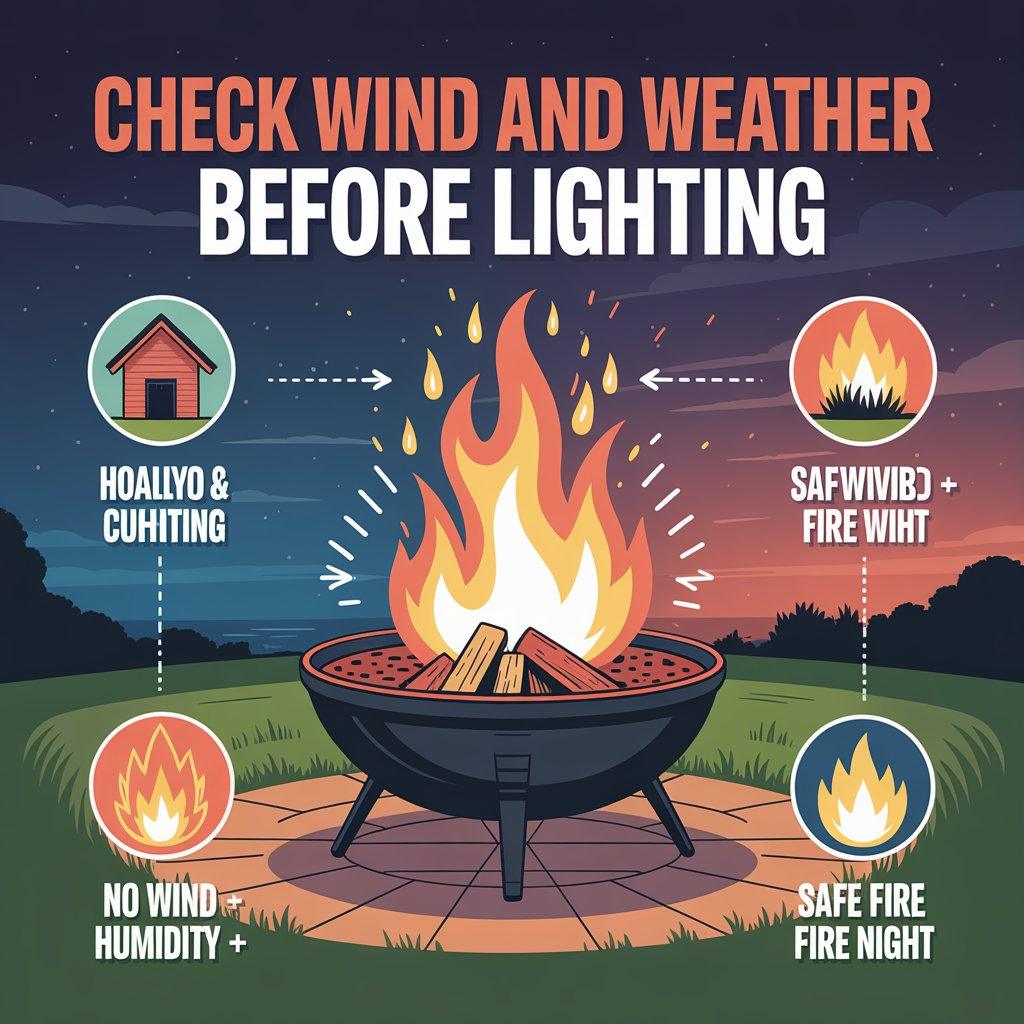
2. Check Wind and Weather Before Lighting
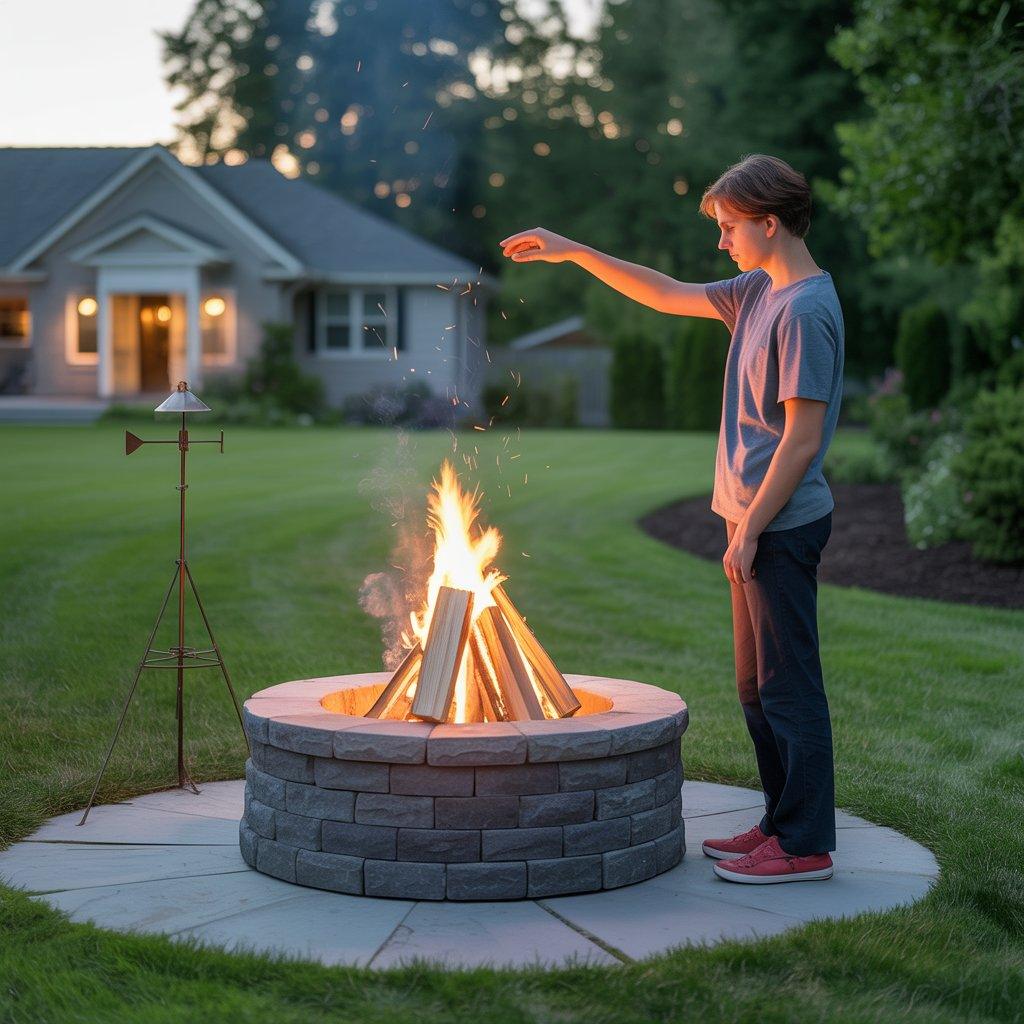
Wind is one of the biggest dangers when using a fire pit. Even a light breeze can blow sparks onto your clothes, your furniture, or your house. Before you light the first match, check the wind direction.
If it’s blowing toward your home or a neighbor’s yard, wait for another night. Also, don’t use a fire pit on very dry, hot days when the grass is brown and crunchy. That’s when outdoor fires start and spread fast. Some towns even ban fire pits during drought conditions.
It’s smart to check your local fire department’s website for any burn bans. A calm night with no wind and a little humidity is the safest time to enjoy your fire pit.
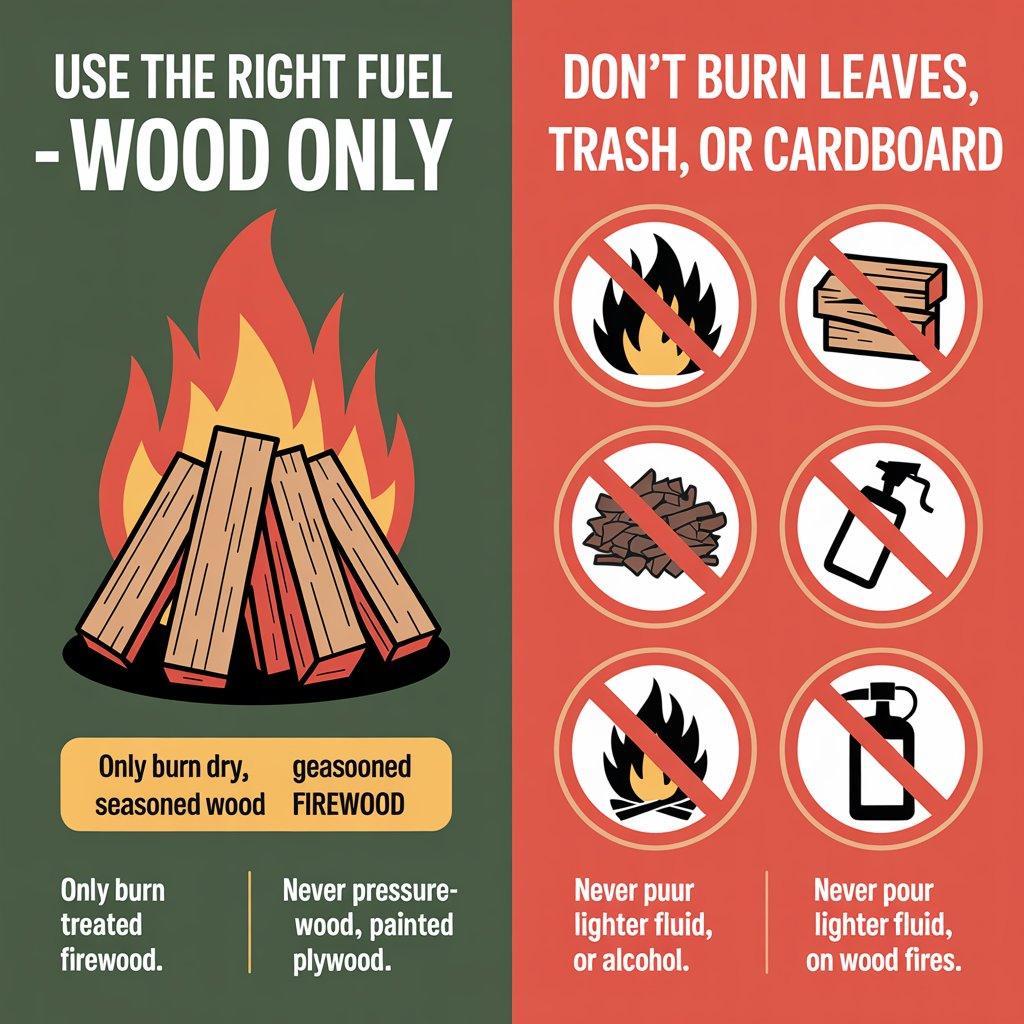
3. Use the Right Fuel – Wood Only
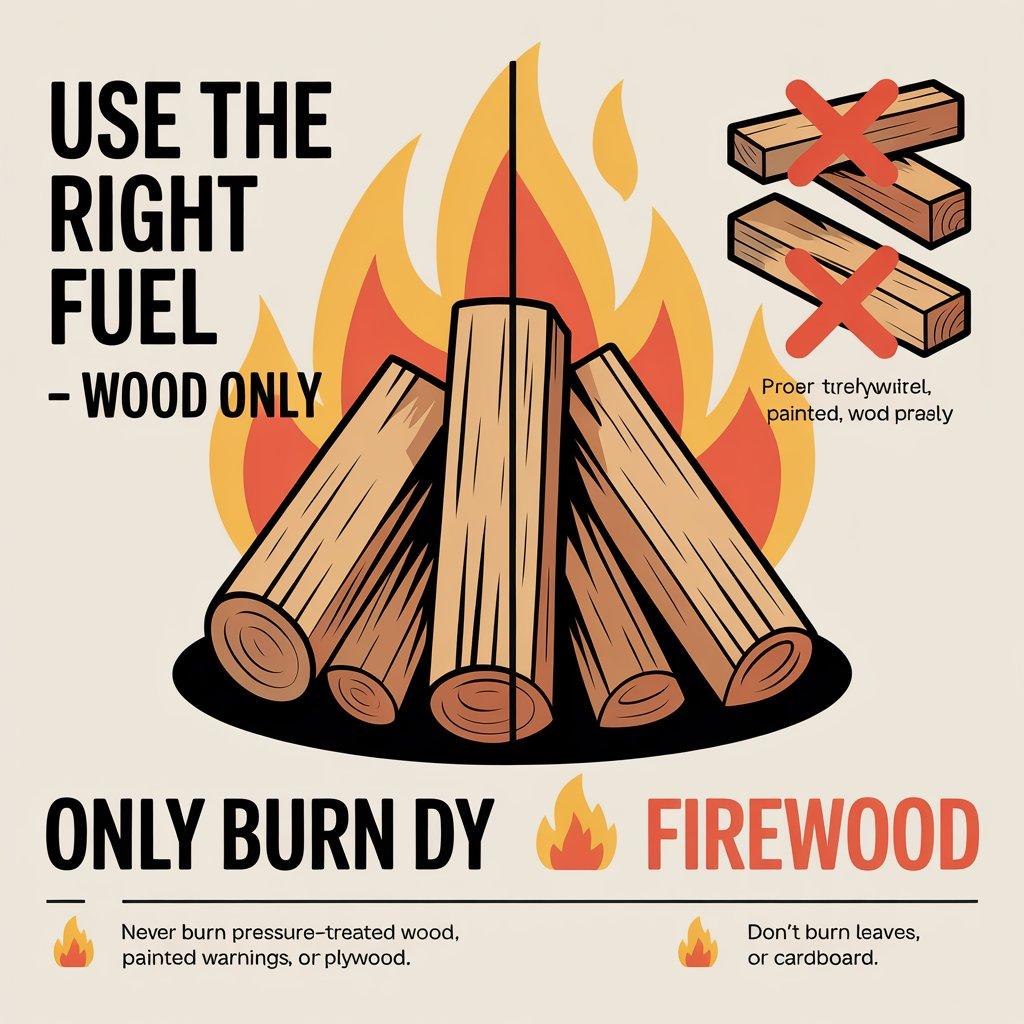
Only burn dry, seasoned firewood in your fire pit. That means wood that has been dried for at least six months. It burns cleaner and produces less smoke. Never burn pressure-treated wood, painted wood, or plywood.
Those materials release toxic chemicals into the air that you and your family will breathe. Also, don’t burn leaves, trash, or cardboard. Those items send sparks flying everywhere and can cause a sudden flare-up. If you have a gas fire pit, follow the manufacturer’s instructions for fuel.
Never pour gasoline, lighter fluid, or alcohol on a wood fire to get it going faster. That’s a fast way to get burned. Good fuel equals a safe, steady fire.
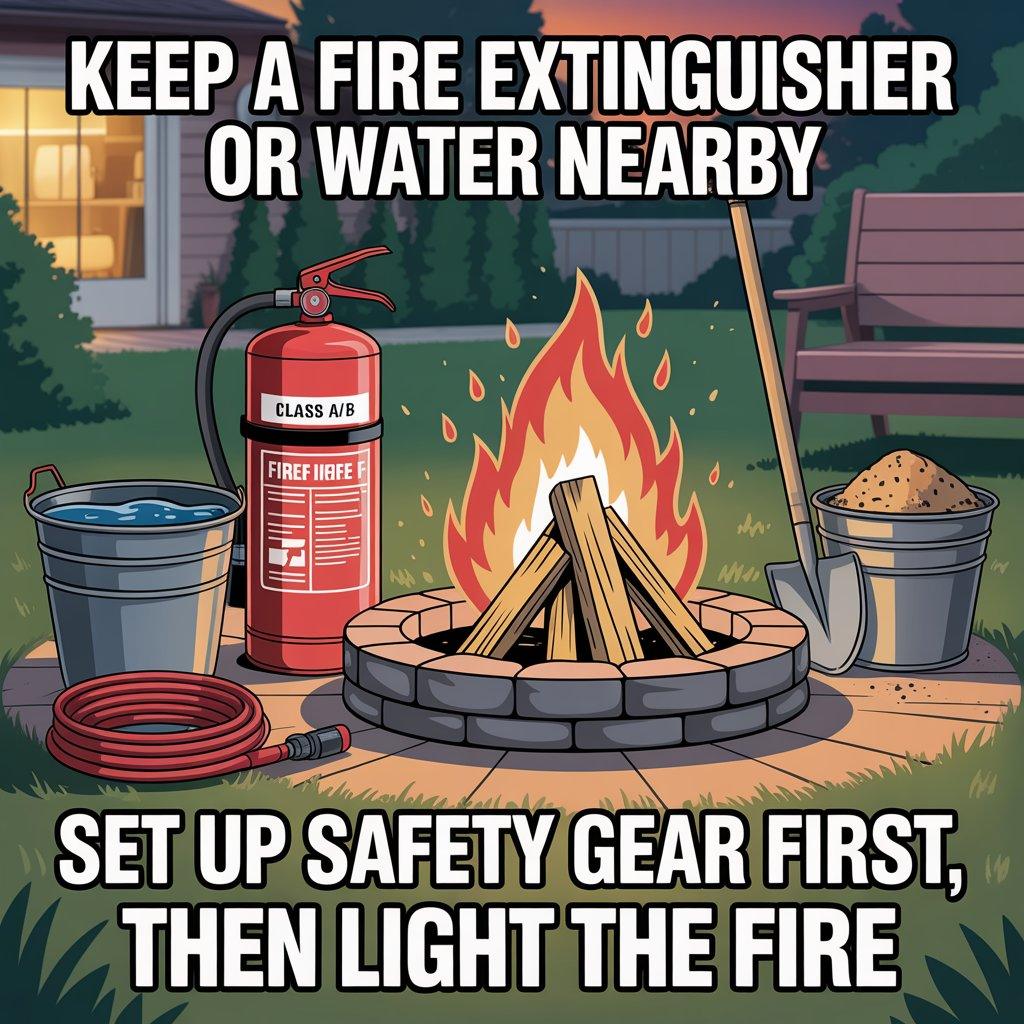
4. Keep a Fire Extinguisher or Water Nearby
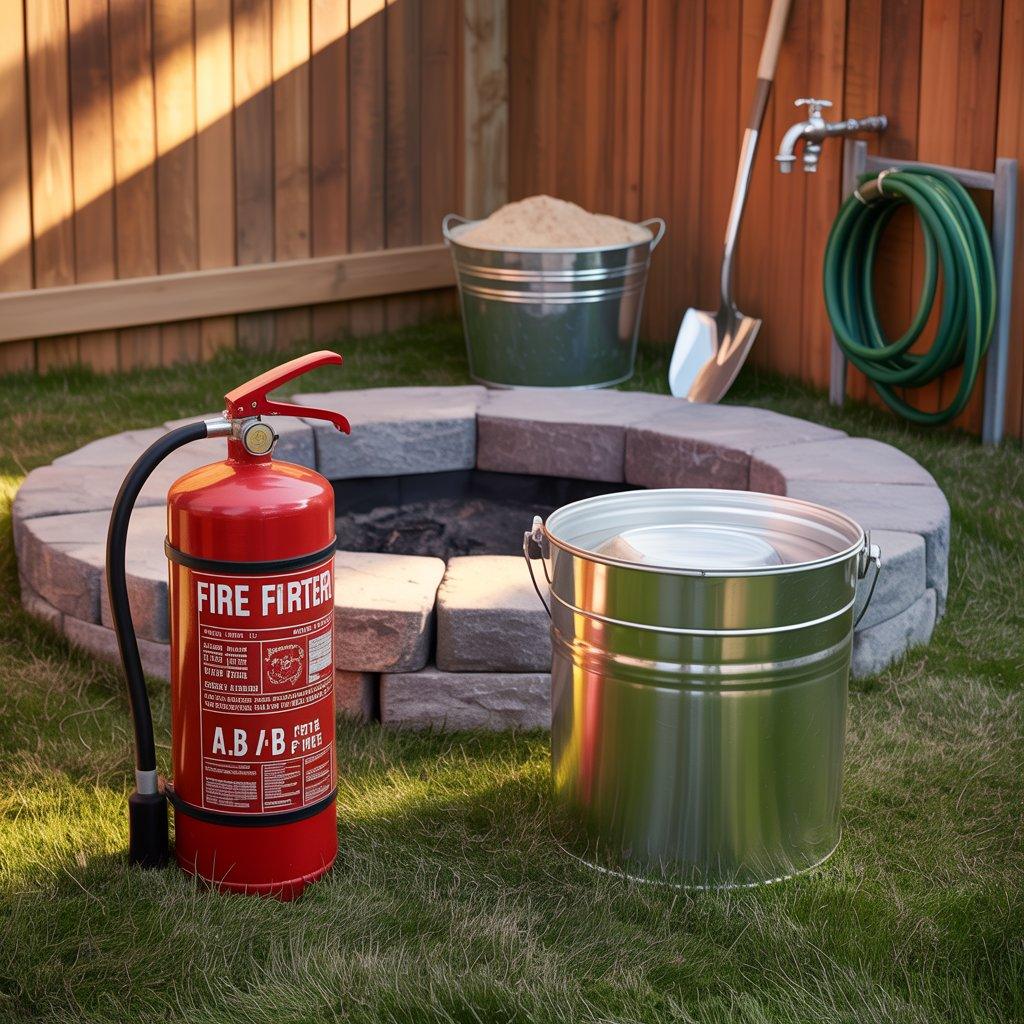
Before you even light the fire, have something ready to put it out. A fire extinguisher is the best option. Look for one rated for Class A and B fires. Keep it within 10 feet of the fire pit.
No fire extinguisher? A five-gallon bucket of water works too. So does a garden hose that’s already hooked up and turned on. A metal shovel and a bucket of sand can also smother the flames. The point is: don’t wait until something goes wrong to go looking for water.
Fires double in size every minute. By the time you run inside to fill a bucket, it could be too late. Set up your safety gear first. Then light the fire.
5. Watch Kids and Pets at All Times
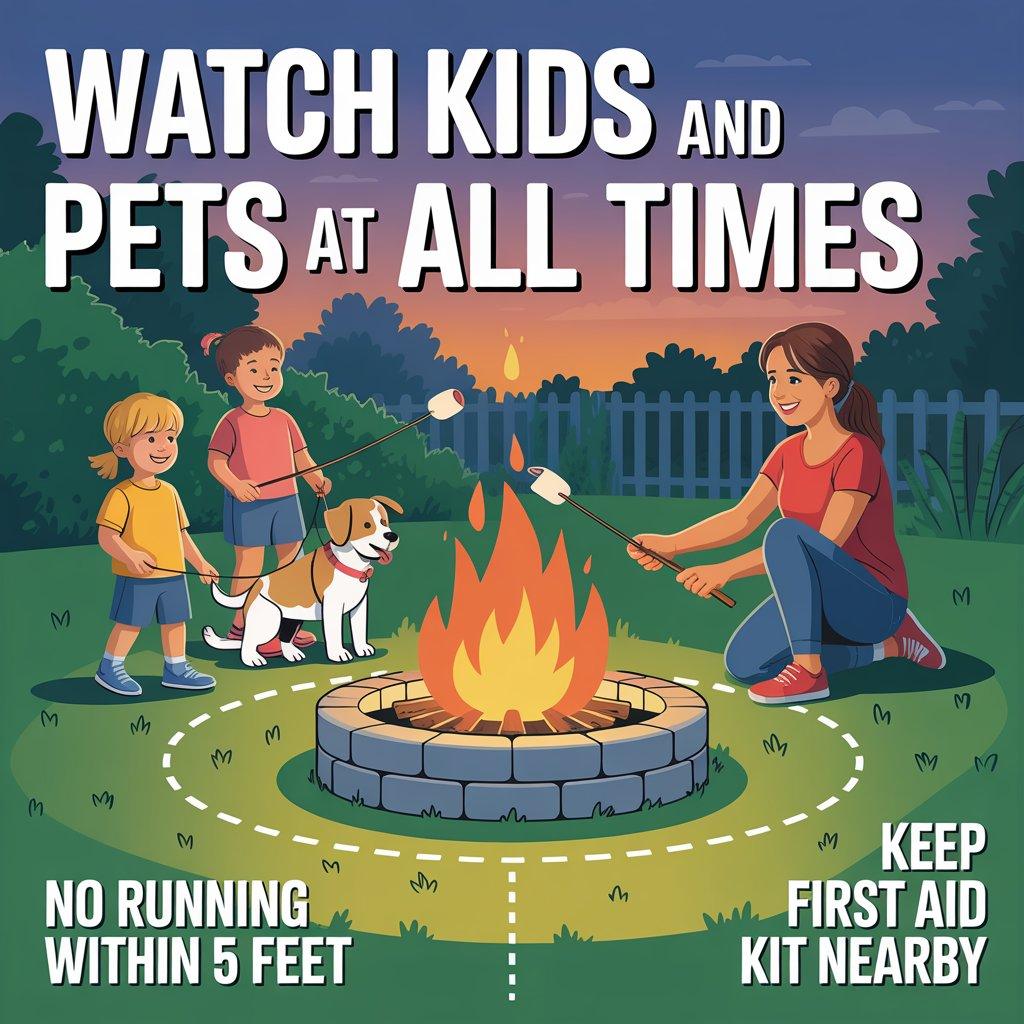
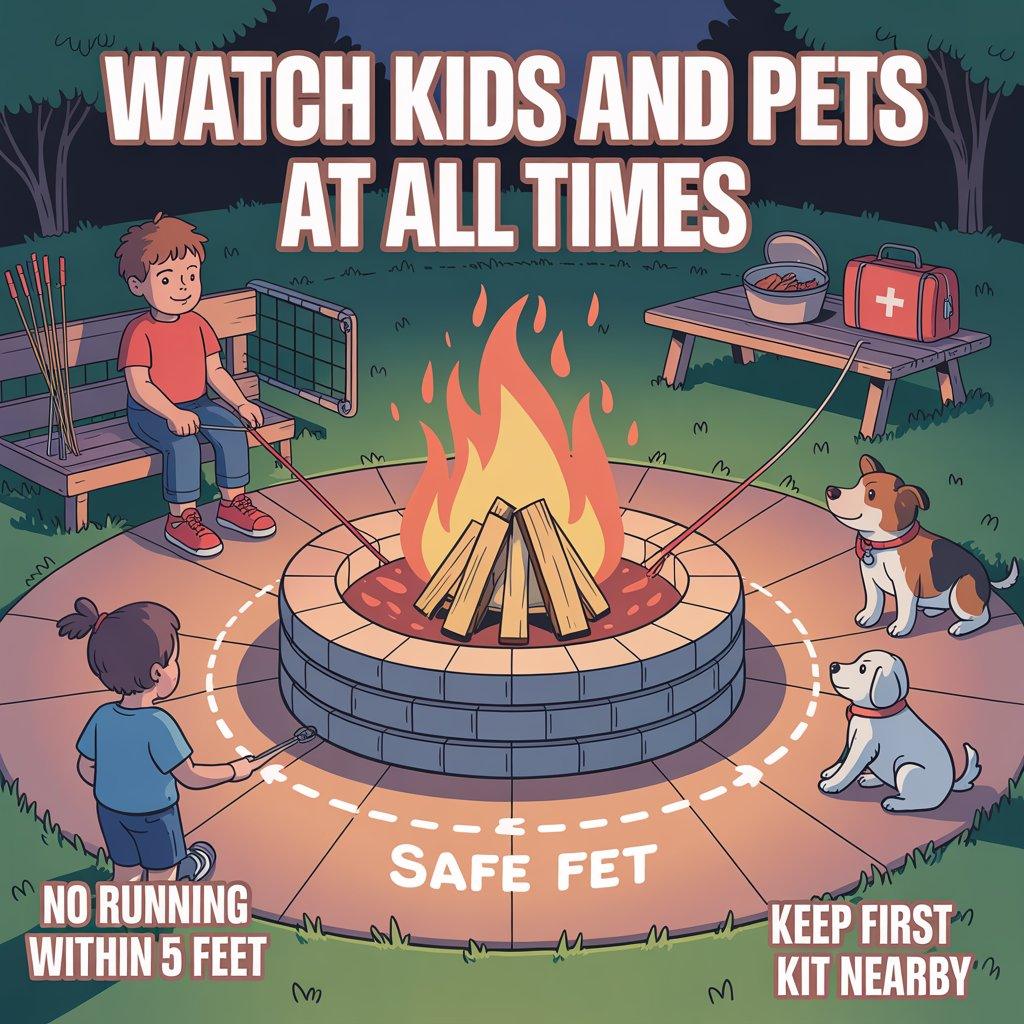
A fire pit is not a playground. Kids and pets don’t always understand how hot the metal and flames really are. Set a clear rule: no running within five feet of the fire pit. Show kids where the “safe zone” is.
For very young children, consider putting up a small safety fence around the pit. Dogs should be on a leash or kept inside if they tend to get excited. Also, be careful with sparklers or roasting sticks near the fire.
A hot marshmallow can drip and cause a burn. Keep a first aid kit nearby for minor burns. Run cool water over any burn for 10 minutes and cover it with a clean cloth. Deep burns need a doctor.
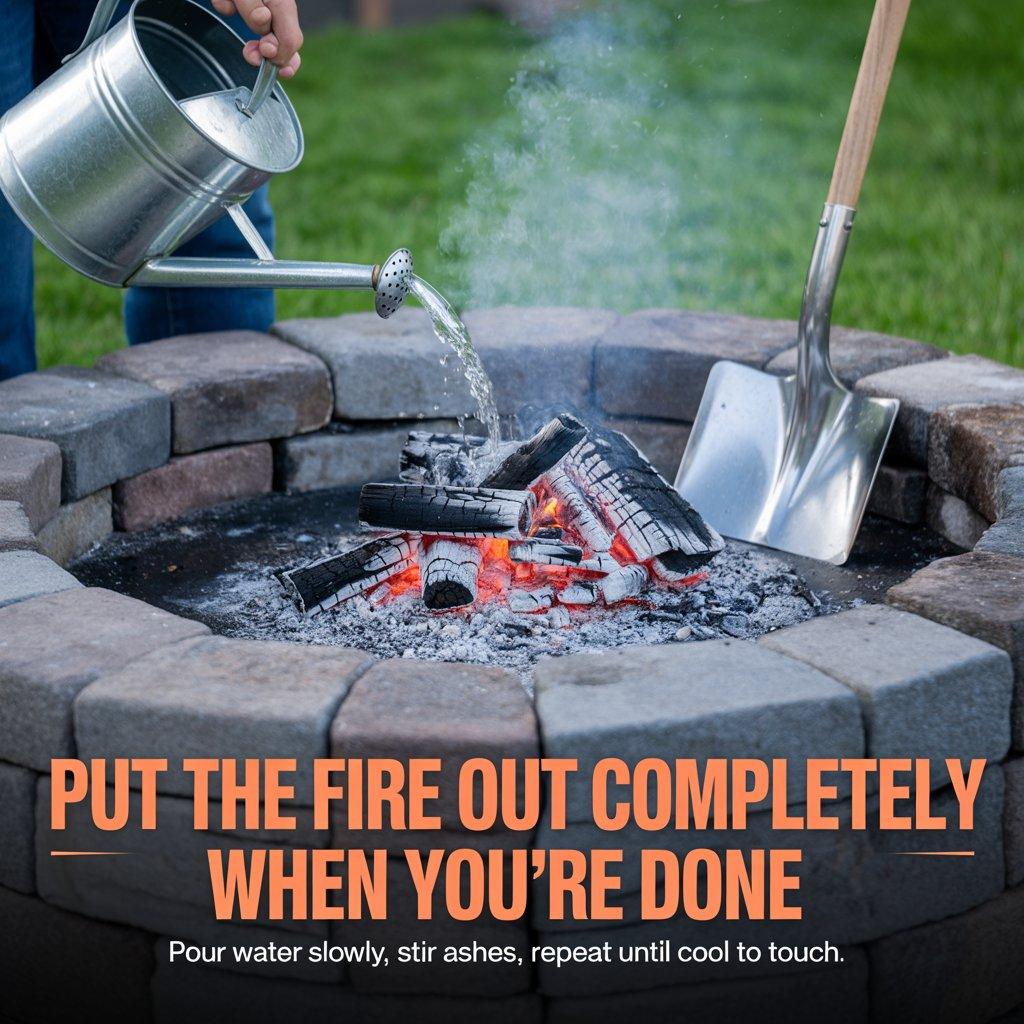
6. Put the Fire Out Completely When You’re Done
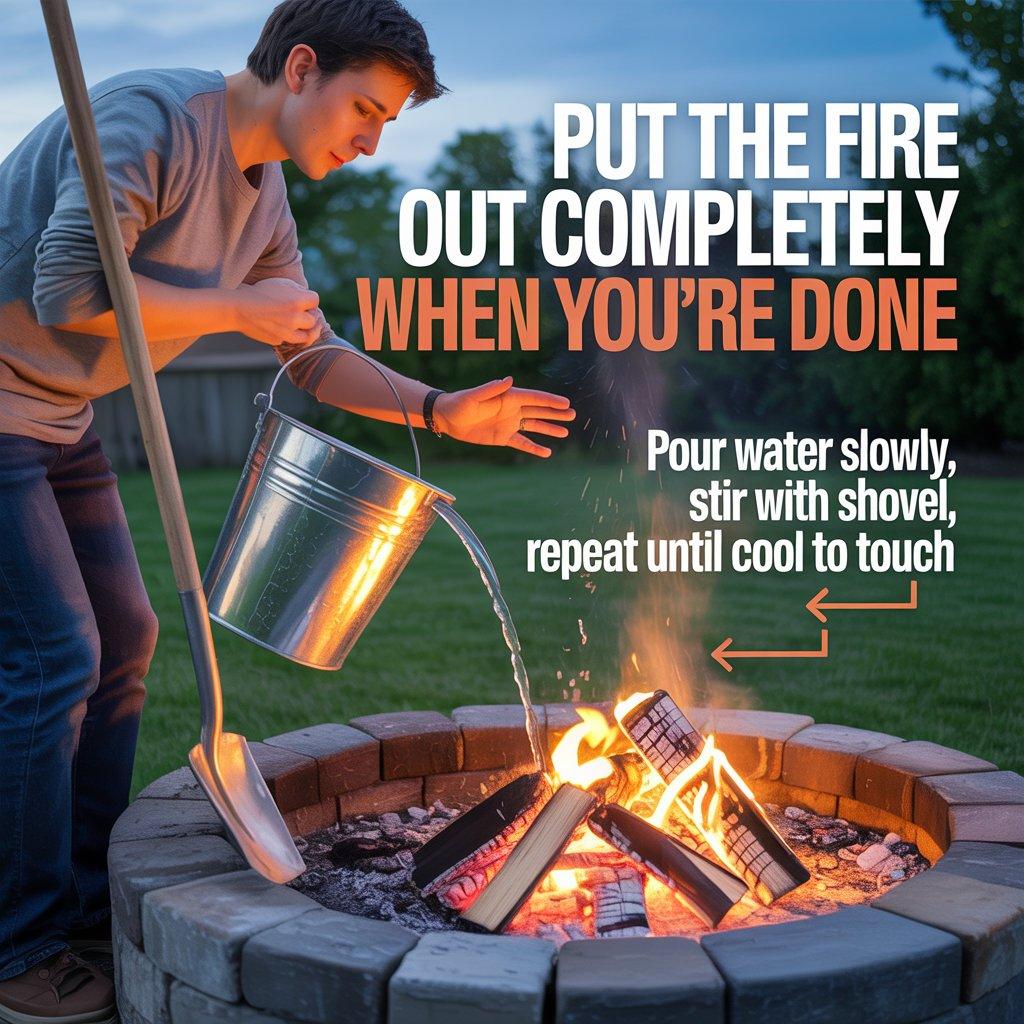
This is the most important rule. Never leave a fire pit burning when you go inside, even for “just a minute.” To put out a wood fire, stop adding wood and let it burn down to ash. Then pour water slowly over the ashes. Stir them with a shovel.
Pour more water. Stir again. Keep doing this until the ashes are cool to the touch. If you can’t hold your hand an inch above the ashes, it’s still too hot. For gas fire pits, turn off the gas valve and disconnect the tank if possible.
Many people think a fire is out because they don’t see flames. But embers can stay hot for hours and reignite. Be sure before you walk away.
Common Mistakes to Avoid
- Placing the fire pit too close to the house – This is the #1 mistake. Keep 10+ feet of space.
- Leaving the fire unattended – Even for two minutes. A gust of wind can change everything.
- Wearing loose clothing or baggy sleeves – They can catch fire if you lean too close.
- Using the wrong lighter fluid – Only use fluids made for charcoal or wood. Never use gasoline.
- Sitting on the edge of the pit – Metal and stone get extremely hot. Use chairs or blankets on the ground.
- Forgetting to check for burn bans – Some counties have rules. Check before you light.
FAQs
Q: How far should a fire pit be from my house?
A: At least 10 feet. Some experts say 15 feet is better if your house has wood siding or vinyl. Check your local codes – some areas require 25 feet.
Q: Can I use a fire pit on a wooden deck?
A: Only if you put a fireproof pad underneath. These are made of fiberglass or metal and cost about 50to50to100. Even then, keep it away from railings and furniture.
Q: What kind of fire pit is safest for families with kids?
A: A propane or natural gas fire pit with a lid and a control valve. You can turn it off instantly. There are no sparks or flying embers. Just keep kids away from the hot metal ring.
Q: Is it safe to roast marshmallows over a fire pit?
A: Yes, but use long roasting sticks (at least 30 inches). Show kids how to hold the stick so the marshmallow is over the fire, not their hand. Watch for dripping hot sugar – it sticks to skin and burns badly.
Q: Do I need a permit for a backyard fire pit?
A: It depends where you live. Many towns allow small recreational fires without a permit. But some require one. Call your local fire department or check their website to be sure.
Simple Design and Styling Ideas for Safer Fire Pits
A safe fire pit can still look good. Here are a few ideas that also help with safety.
- Surround it with a ring of stone or brick – This creates a clear border and keeps the heat away from dry grass.
- Add a spark screen – A metal mesh lid fits over the pit and stops embers from flying out. Cheap and effective.
- Build a gravel or paver base – A 6-foot circle of gravel or pavers gives you a level, non-flammable surface to sit on.
- Install low seating – Use stone blocks or short benches. Low seating means people aren’t leaning over the fire.
- Keep a metal bucket nearby – Use it for ashes, trash, or even as an extra water bucket. It doubles as decor.
Conclusion
Fire pits are fun. They bring people together. But they also come with real responsibility. You don’t need to be scared of using one. You just need to be smart. Pick a safe spot. Check the wind. Keep water nearby. Watch your kids and pets. And always put the fire out completely before you go inside. Follow these fire pit safety tips, and you’ll enjoy many good nights in your backyard without any trouble. Stay safe out there.
Related Post: