Many outdoor sets look great at first when it new, then fade, crack, rust, or loosen after a season of sun, rain, wind, and heat. If you want outdoor furniture that lasts for years, style alone won’t save you from costly mistakes.
The right choice depends on your climate, the materials, how the frame is built, and how you use the space every day. This guide will help you choose pieces that stay strong, safe, and attractive, so you can buy once and enjoy them for the long haul.
First, it helps to know which materials hold up best in real outdoor conditions.
Start with Your Weather, Space, and Daily Use

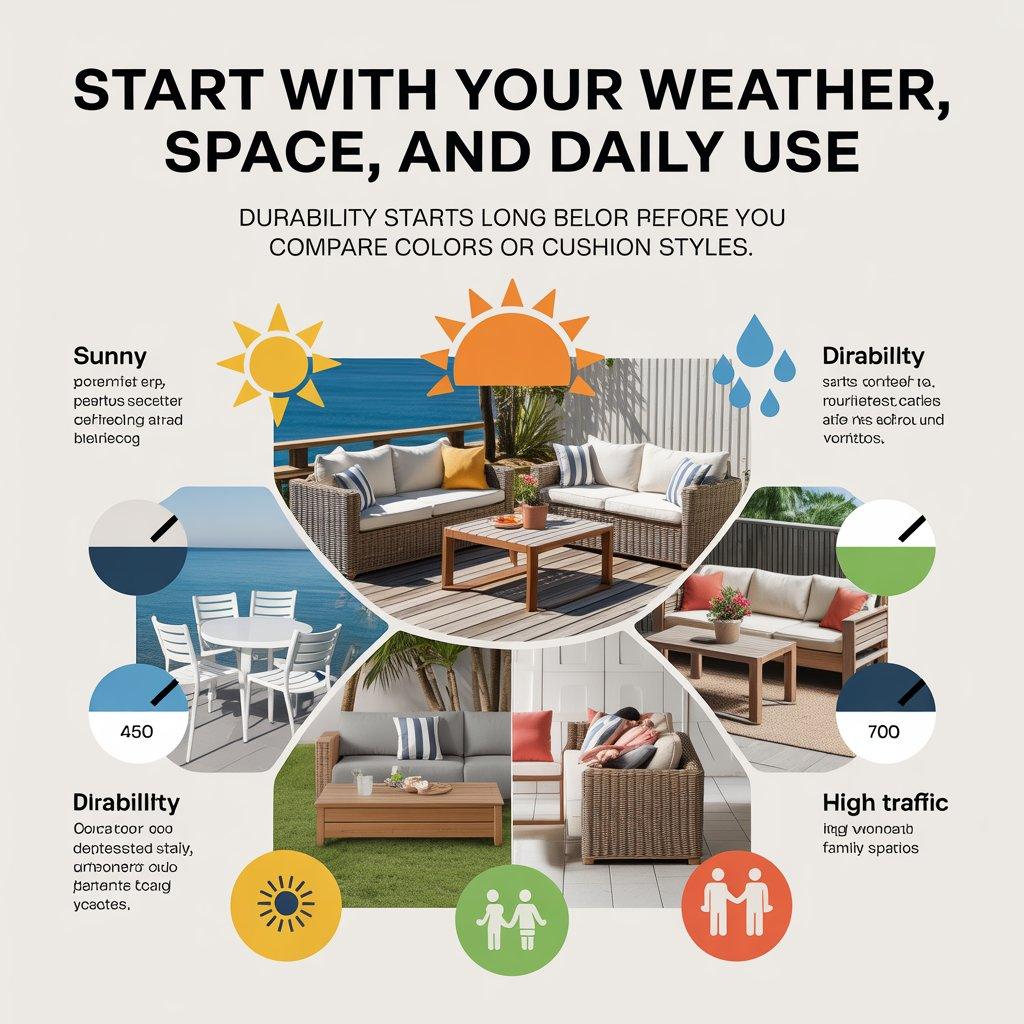
Durability starts long before you compare colors or cushion styles. It starts with where the furniture will live, how much weather it takes on, and how often you use the space.
A set that lasts for years in one yard can fail fast in another. Sun, rain, salt air, tight layouts, and daily wear all push furniture in different ways, so the best buying choice depends on your setup, not just the showroom tag.
Match outdoor furniture materials to your climate
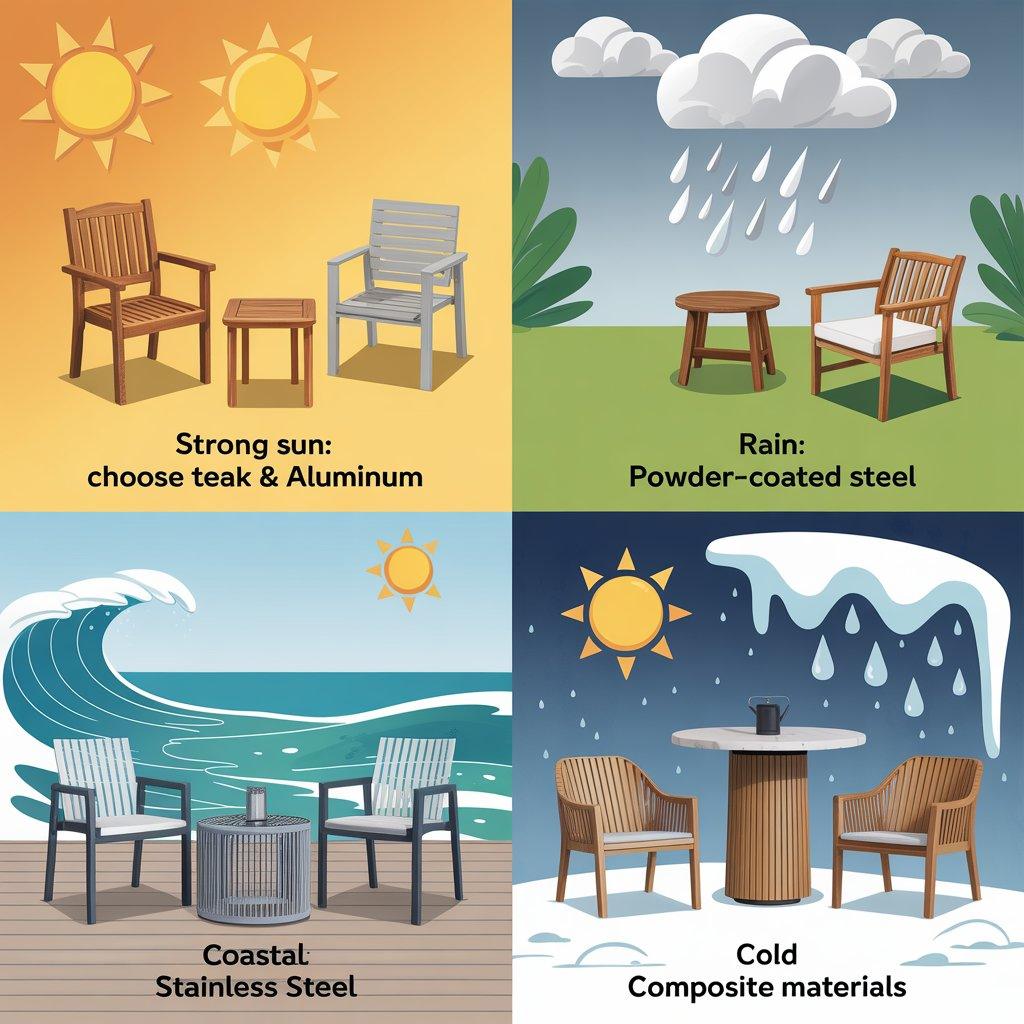
Your local weather should narrow your options right away. If you get strong sun for most of the year, cheap plastic can dry out, fade, and crack. Fabrics can bleach, weaken, and lose their color long before the frame gives out.
Rain creates a different problem. When furniture stays damp, weak steel can rust and low-grade wood can swell, split, or rot. Cushions also wear out faster if they never get a chance to dry well.
Coastal homes need even more care. Salt in the air sticks to metal surfaces and speeds up corrosion, especially on lower-quality steel or thin finishes. Even hardware, bolts, and hidden joints can break down sooner near the water.
Cold climates add another layer. Freeze-thaw cycles put stress on frames, finishes, and joinery. Water gets into small cracks, then expands when it freezes, which can turn a minor flaw into a bent frame or peeling finish after one winter.
This is why the best long-lasting outdoor furniture is different from place to place. A material that performs well in dry heat may struggle in a wet, salty, or icy setting.
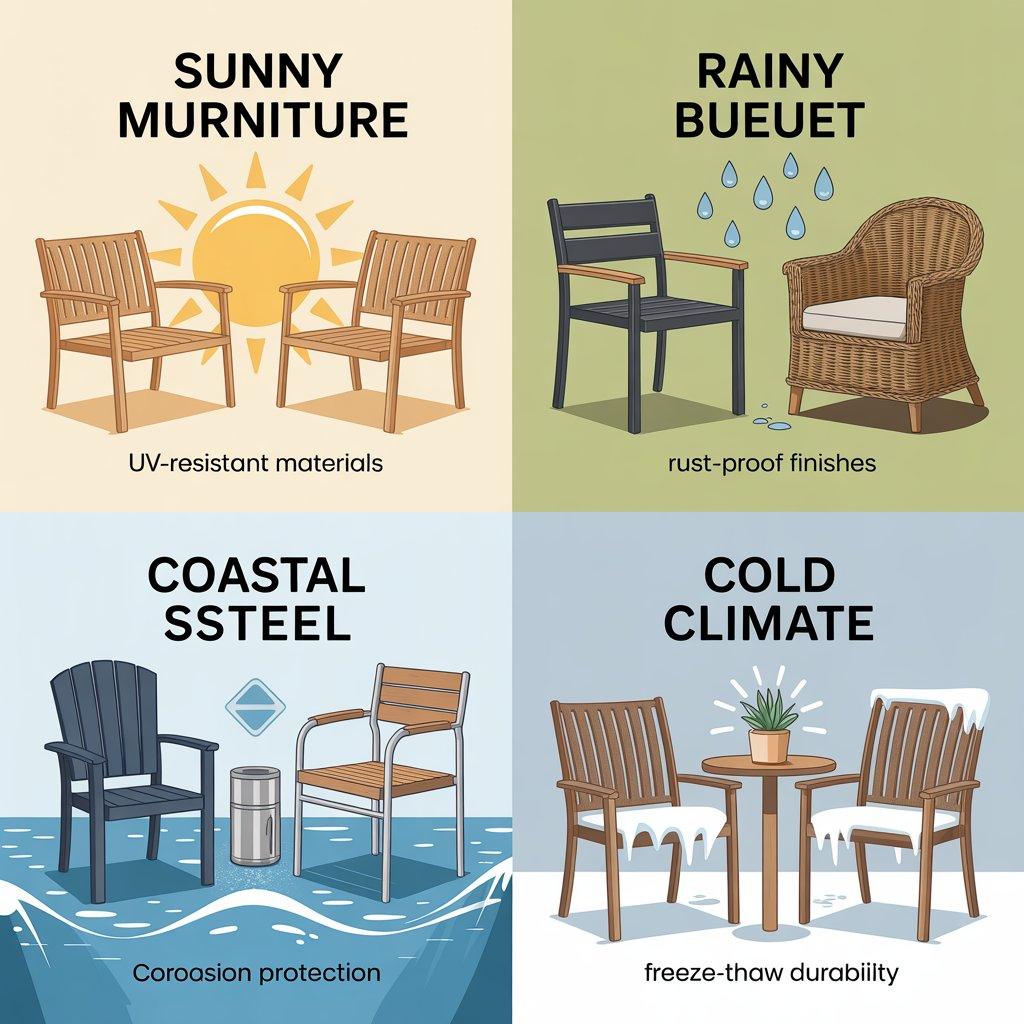
Use this quick guide to match materials to your conditions:
| Weather condition | What often goes wrong | Better material choices |
| Full sun | Fading fabric, brittle plastic, hot surfaces | Powder-coated aluminum, teak, UV-resistant fabric, high-density resin |
| Heavy rain or humidity | Rust, rot, mildew, swollen wood | Aluminum, teak, all-weather wicker over aluminum, quick-dry cushions |
| Coastal air | Corrosion on metal parts and finishes | Marine-grade polymer, teak, high-quality aluminum, stainless hardware |
| Freeze-thaw winters | Cracked finishes, stressed joints, frame damage | Teak, aluminum, thick resin, well-built steel with strong coating |
The takeaway is simple: buy for your forecast, not just your style. If you live in a hot, exposed area, put UV resistance high on your list. If your yard stays wet, focus on rust-proof frames and woods that handle moisture well. If you’re near the coast, pay attention to every metal part, including screws and brackets.
A beautiful set that fights your climate every day won’t stay beautiful for long.
Measure your patio, deck, or yard before you shop
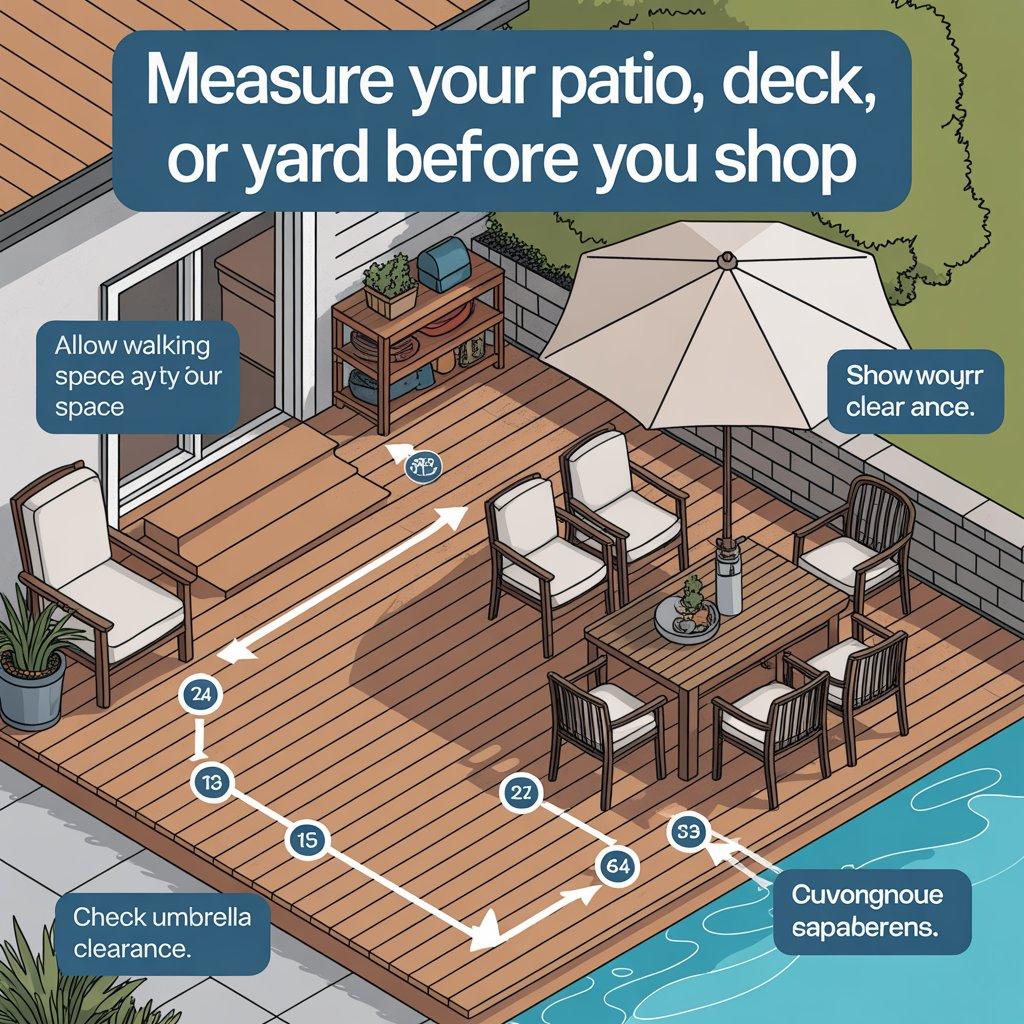
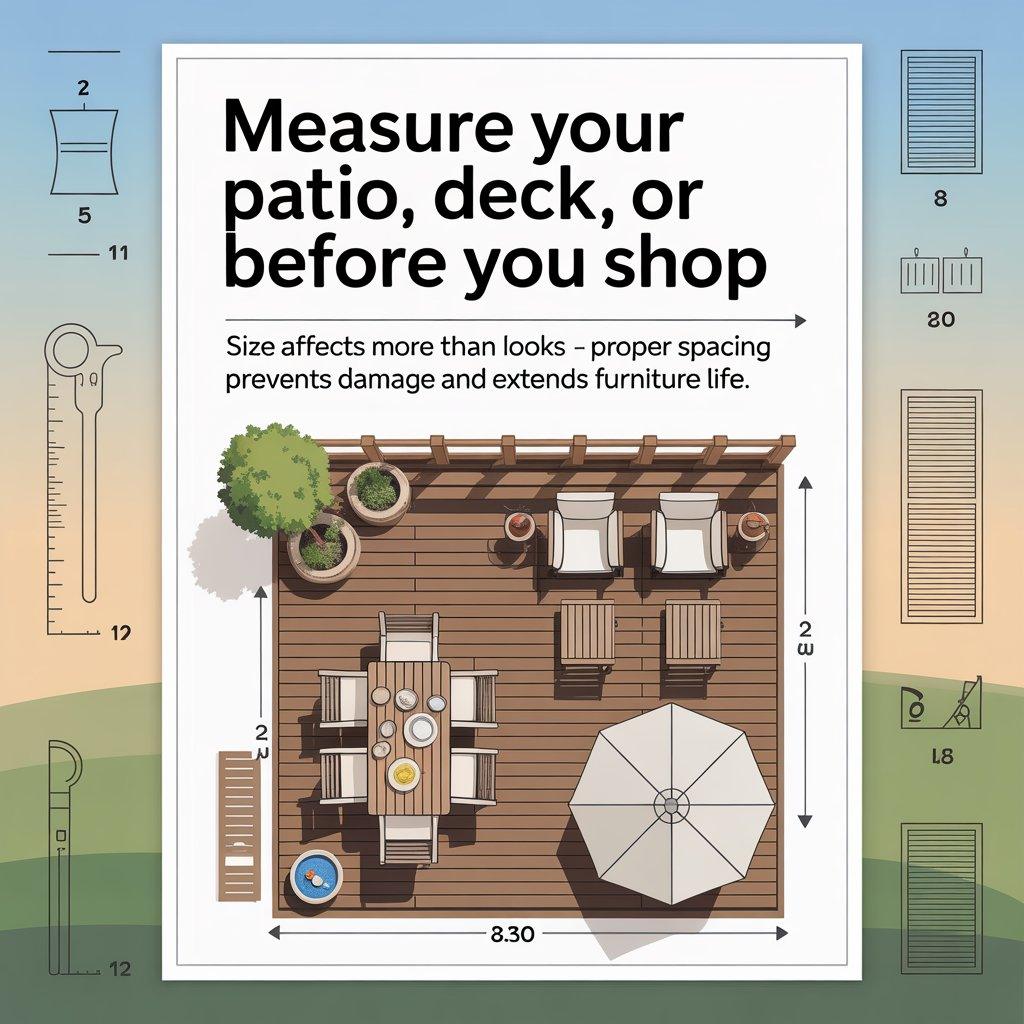
Size affects more than looks. When furniture barely fits, it gets bumped, dragged, scraped, and squeezed every time you use it. That extra friction adds up fast, and it can shorten the life of even a well-made set.
Start with the footprint of the space, then measure how you actually move through it. You need room to walk, pull out chairs, open an umbrella, and get covers on and off without wrestling the whole layout. Storage boxes, side tables, and planters also take up more space than most people expect.
A crowded setup often causes wear in all the wrong places. Chair arms hit railings. Frames scrape walls or deck boards. Cushions snag on rough surfaces. Fabric tears when pieces get shoved too close together, especially in small corners.
Before you buy, map out the space with a few basic checks:
- Measure the full area, then note doors, stairs, railings, grills, and built-in features.
- Leave clear paths for walking, ideally wide enough that people don’t brush past chair backs.
- Check chair pull-out space, especially at dining tables.
- Make sure umbrellas can open fully without hitting the house, trees, or overhead lines.
- Leave room to remove covers and move storage bins without dragging furniture.
Fit also changes how often you’ll use the furniture. If seats are too deep for a small balcony, or a dining set blocks the main path, the space starts to feel like work. People stop using it, move pieces around too often, or replace the set with something smaller after a season or two.
That wasted cycle is avoidable. A well-fitted layout protects the furniture because it reduces daily knocks and awkward movement. It also protects your budget because you’re less likely to replace pieces that were wrong for the space from the start.
If you’re choosing between two sizes, the slightly smaller option often lasts longer in real life. It gives the furniture space to breathe, and it gives you space to use it without beating it up.
Choose Materials That Hold Up, Not Just Ones That Look Nice
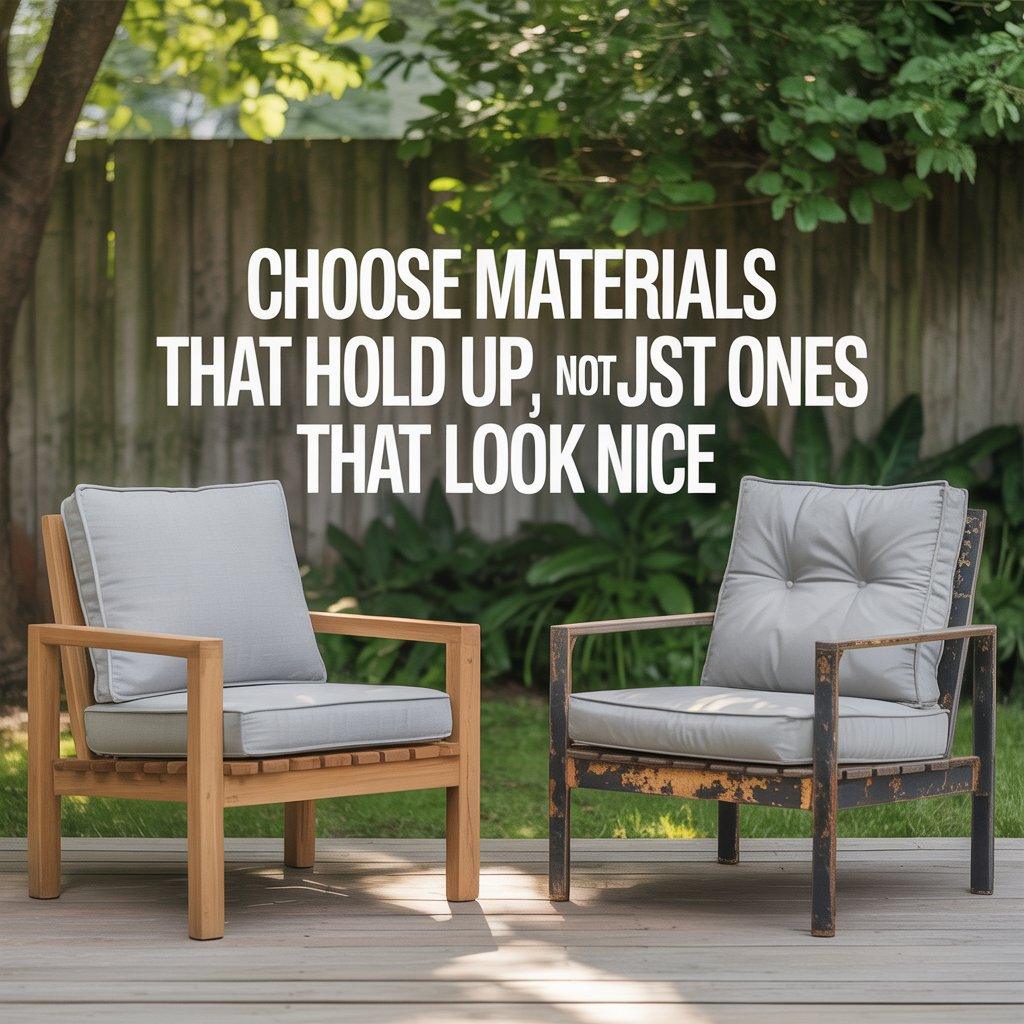
Material choice has more to do with long-term value than color, shape, or trend. A chair can look perfect on day one and still fail fast if the frame, finish, or weave can’t handle your weather.
When you’re buying outdoor furniture that lasts for years, focus on four things first: lifespan, upkeep, weather resistance, and weight. Those details tell you far more than a showroom photo ever will.
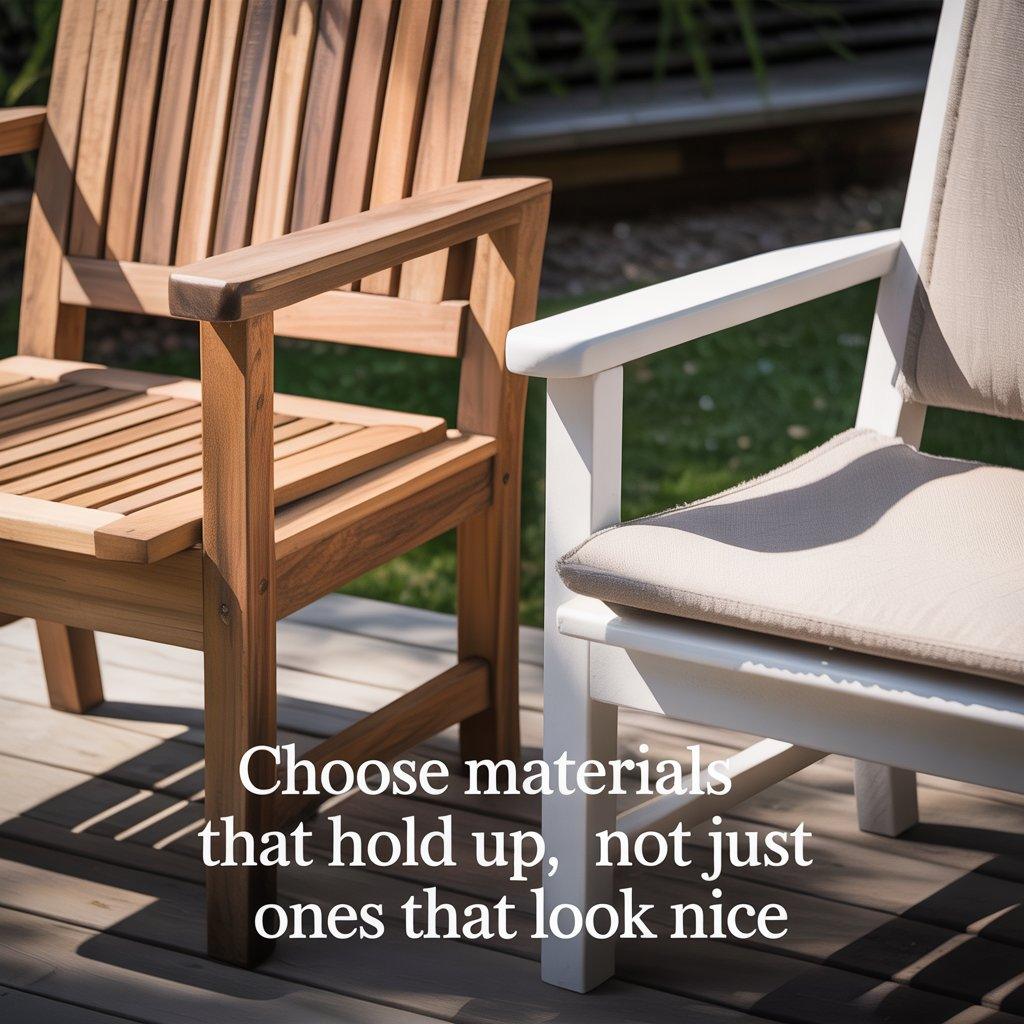
What to know about teak, eucalyptus, and other wood options
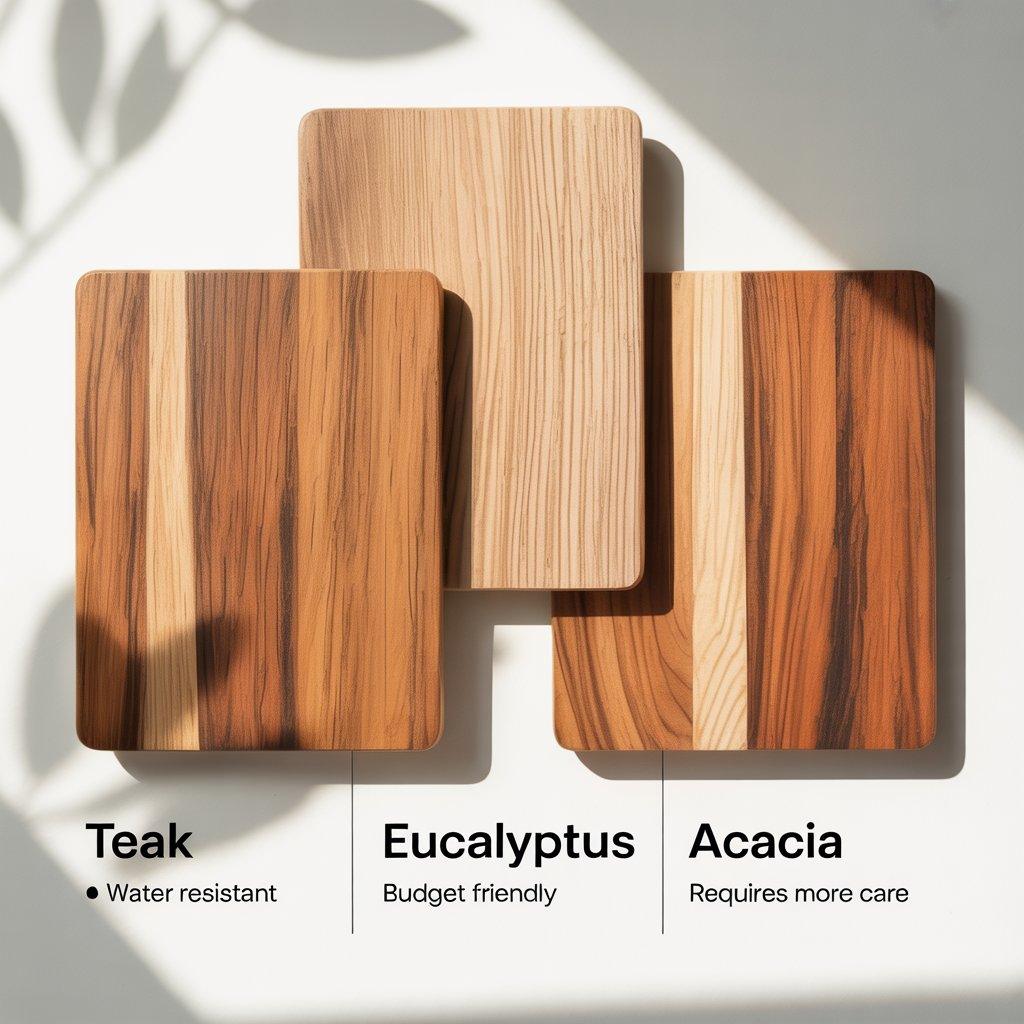
Wood gives outdoor furniture a warm, solid feel, and some species hold up far better than others. The biggest difference is how well the wood handles moisture, sun, and daily wear without cracking, warping, or rotting.
Teak is the benchmark for a reason. It has natural oils that help it resist water, insects, and weather damage, so it usually outlasts many other wood options outdoors. In wet climates or exposed patios, teak often earns its higher price because it needs less babying over time.
Eucalyptus and acacia can be smart budget picks, especially if you want the look of wood without paying teak prices. Still, they usually need more care. They can dry out faster, fade sooner, and may be more likely to split or wear if left exposed season after season.
Build quality matters just as much as the species. Before you buy, check for:
- Solid wood, not thin veneer or mixed low-grade parts
- A smooth, even finish with no rough patches or splinters
- Tight, sturdy joinery, especially at arms, legs, and seat supports
If the piece wobbles in the store, it won’t improve at home. Also look at the hardware. Rust-prone screws can shorten the life of an otherwise decent wooden set.
Wood is a good choice if you like a natural look and don’t mind some upkeep. It will last for years when you clean it regularly and seal or oil it as needed. Without that care, even a nice set can age faster than it should.
Teak usually costs more up front, but lower upkeep and longer life can make it the better value.
If you want wood furniture for a covered porch, eucalyptus or acacia may be enough. For full exposure to sun and rain, teak is usually the safer long-term buy.
When aluminum, steel, and wrought iron make the most sense
Metal outdoor furniture works best when the right metal matches the right climate. Some pieces are easy to move and simple to maintain. Others are stronger and heavier, but they ask more from you over time.
This side-by-side view makes the tradeoffs easier to see:
| Material | Rust resistance | Weight | Strength | Upkeep | Best for |
| Powder-coated aluminum | High | Light | Good | Low | Wet climates, coastal areas, people who rearrange often |
| Steel | Moderate to low, depends on coating | Medium to heavy | Very strong | Medium to high | Windy areas, heavy-use dining sets, buyers who want a lower price |
| Wrought iron | Moderate, needs finish care | Very heavy | Excellent | Medium to high | Permanent layouts, windy patios, classic style |
Powder-coated aluminum is one of the safest all-around choices for long-lasting outdoor furniture. It doesn’t rust like steel, it’s easy to move, and it usually needs only simple cleaning. That’s a big win if you like to shift furniture around, store it seasonally, or live where rain is common.
Steel is sturdy and often feels more substantial than aluminum. It can be a good value, especially for dining sets and benches. However, steel needs strong rust protection. If the finish chips and bare metal shows, corrosion can start quickly, especially in humid or coastal areas.
Wrought iron is the heavyweight of the group, in every sense. It is durable, stable in wind, and often lasts for many years. On the other hand, it is harder to move, can get very hot in the sun, and still needs finish care to prevent rust.
Your climate should steer the choice:
- In rainy or coastal areas, aluminum is usually the safer pick.
- In windy spaces, steel or wrought iron can stay put better.
- On small patios where you move chairs often, lighter aluminum is easier to live with.
Also pay attention to the finish quality. A good powder coat should look even and feel smooth. Thin paint, rough spots, or early chips are warning signs. Rust often starts where water sits, such as joints, bolt holes, and the underside of the frame.
If you want low effort, aluminum wins for most homes. If you want extra heft and don’t mind maintenance, steel or wrought iron can still be worth it.
How wicker, resin, and plastic perform over time
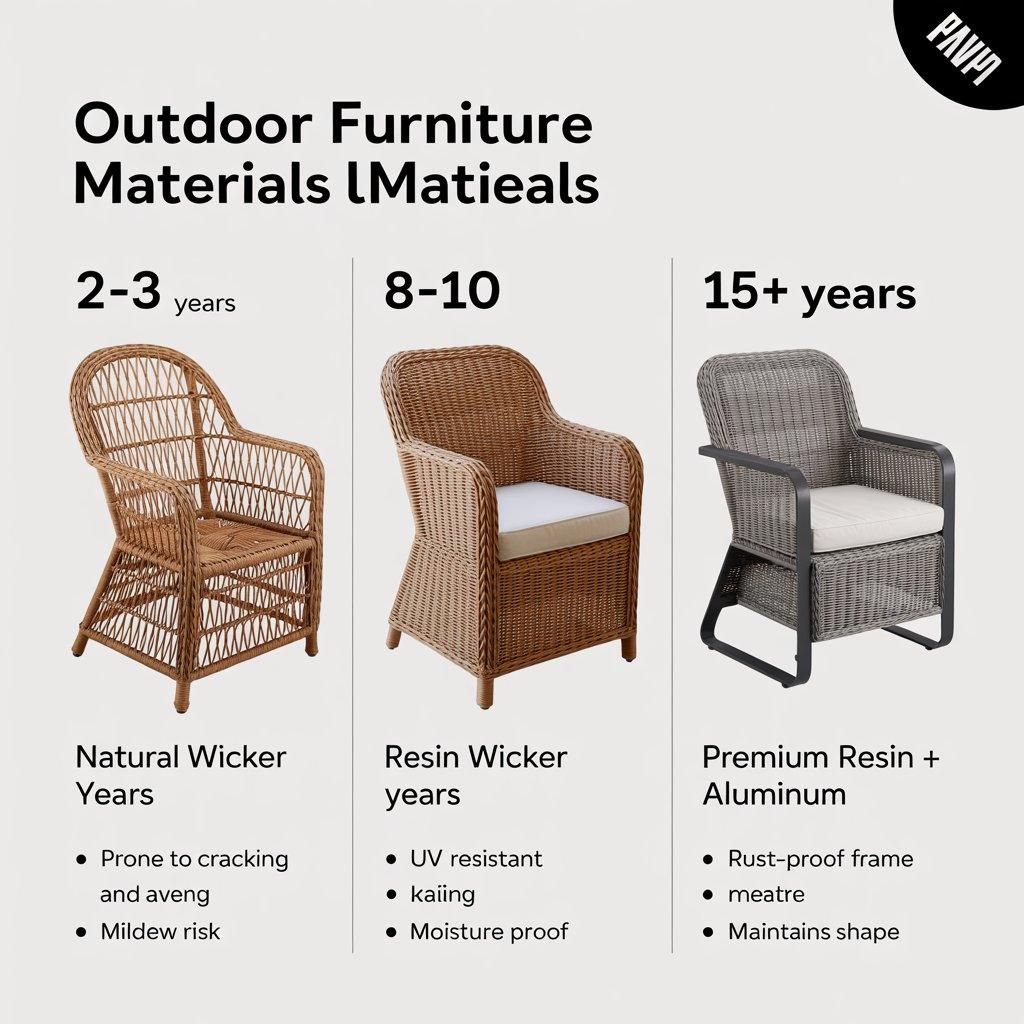
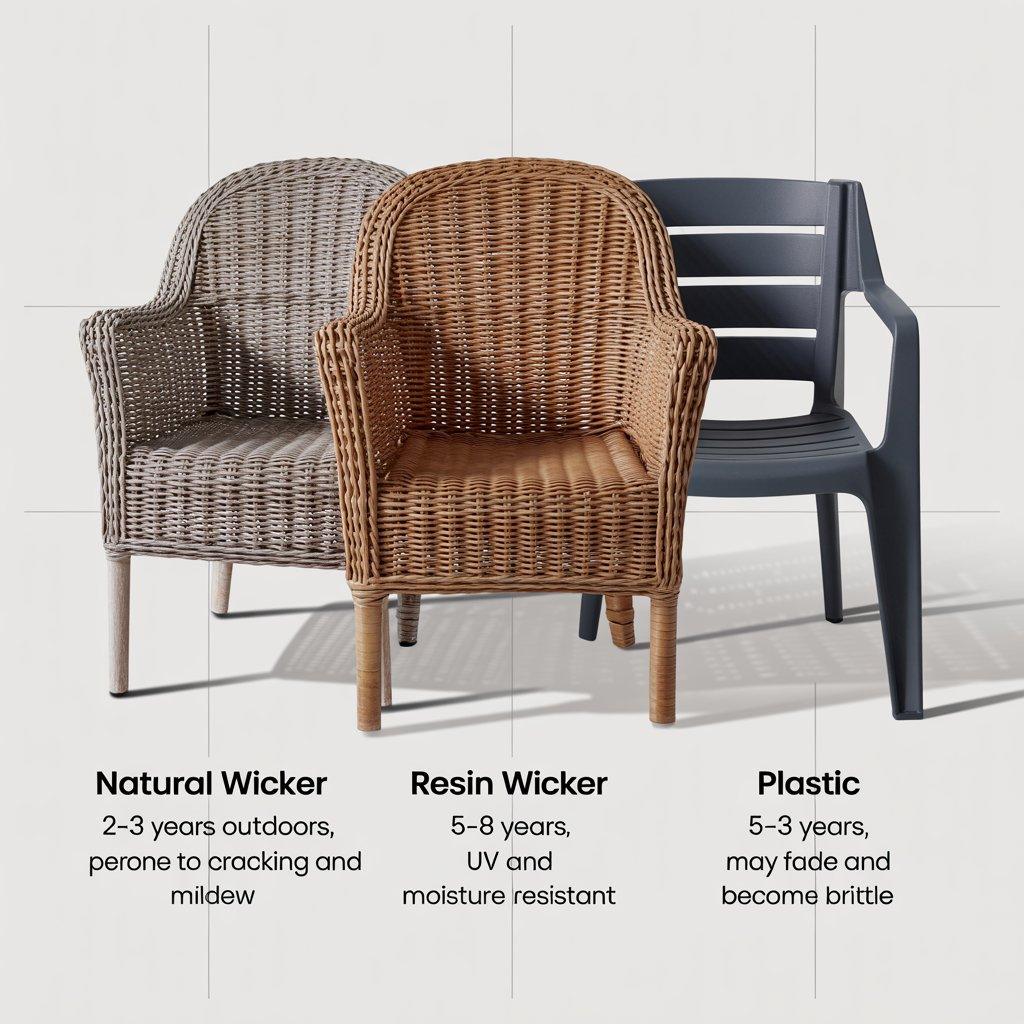
Wicker furniture can last for years, but only if you buy the right kind. The word “wicker” often describes the weaving style, not the actual material, and that detail matters a lot outdoors.
Natural wicker is usually made from plant fibers. It looks great in covered spaces, but it doesn’t handle constant rain, strong sun, or damp air very well. Over time, it can dry out, loosen, crack, or grow mildew if it stays outside full-time.
For open patios and backyards, all-weather resin wicker is the better choice. It resists moisture better, handles sun more reliably, and usually keeps its shape longer. The strongest option is resin wicker woven over an aluminum frame, because the weave and the frame both handle outdoor exposure well.
Cheap wicker-look furniture often fails in two places: the weave starts to break, or the hidden frame rusts. That’s why the frame matters as much as the outer look. If the seller doesn’t say what the frame is made of, that’s a reason to pause.
Plastic furniture also ranges from flimsy to surprisingly durable. Low-cost plastic chairs may seem like a bargain, but they often fade, warp, or turn brittle after long sun exposure. Once that happens, cracks can show up fast, especially around the legs and seat.
Higher-quality plastic is a different story. Recycled plastic and HDPE (high-density polyethylene) are much better long-term options. They resist moisture, don’t splinter, and usually need little more than soap and water. In many climates, they hold color and structure far better than cheap molded plastic.
A few quick buying tips can save you from the weak stuff:
- Check that resin wicker feels tight and secure, not loose or thin.
- Look for an aluminum frame under wicker whenever possible.
- Avoid plastic that feels light, chalky, or bendy.
- For sunny yards, choose HDPE or high-quality recycled plastic over bargain plastic.
If you want the woven look, resin wicker over aluminum is often the best mix of comfort, weather resistance, and lifespan. If you want the lowest upkeep possible, better-grade recycled plastic or HDPE is hard to beat.